Bank Jobs
The bank robbery gave film noir one of its most potent dramatic structures: the perfect plan that comes apart in the execution. These films are exercises in anticipation and dread, counting down to the inevitable moment when human weakness — greed, lust, cowardice — unravels the meticulous scheme. The bank itself represents the American financial order, and to rob it is to declare war on stability and normalcy. Noir’s bank robbers are rarely straightforward criminals; they are often desperate men who see one last chance at a life they feel they have been unfairly denied.
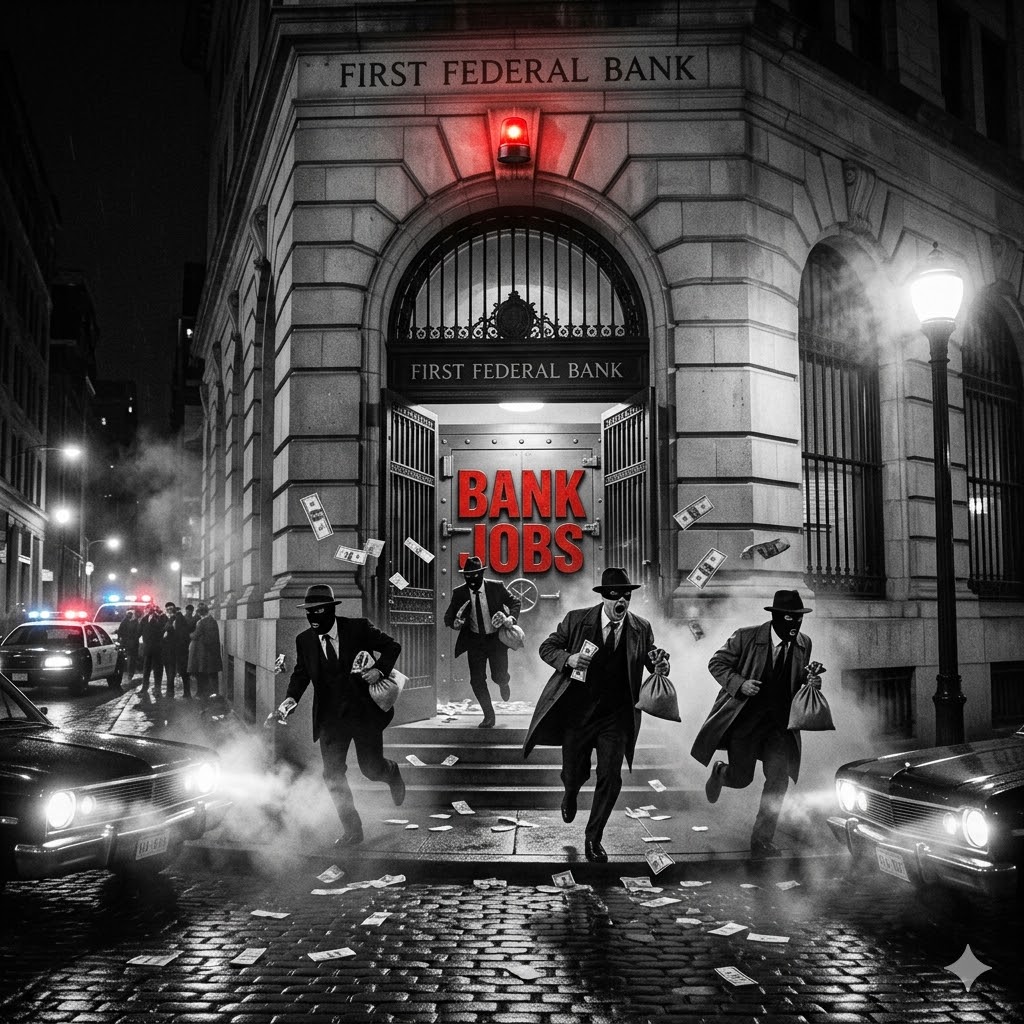
10 Bank Jobs Noir Films:
Gun Crazy
A sharpshooter falls under the spell of a carnival markswoman and together they embark on a bank-robbing spree that can only end in destruction. Lewis’s in-car tracking shots during robberies were decades ahead of their time.
The Asphalt Jungle
A meticulous jewel heist is planned by a criminal mastermind newly released from prison, only to be undone by the human failings of each member of the crew. John Huston’s procedural approach and the tragic dignity he gives his criminals define the classic caper film.
The Killing
An ex-con masterminds a racetrack robbery with a team of desperate men, told in Kubrick’s fractured chronological style that mirrors the plan’s own fatal disorder. Sterling Hayden leads an ensemble of losers whose greed is their undoing.
Armored Car Robbery
A desperate gang plots the robbery of an armored car during a baseball game, with a relentless detective pursuing them in its wake. Charles McGraw’s steely performance as the pursuing cop gives this lean B-picture its spine.
5 Against the House
A group of college friends concoct a ‘perfect’ plan to rob a Reno casino, but one psychologically damaged Korean War veteran pushes the plan toward violence. The film is unusually interested in post-war trauma as the engine of criminal behavior.
Odds Against Tomorrow
Three men — an ex-cop, a jazz musician, and a bitter ex-convict — plan a bank robbery in upstate New York, with racial tension between them threatening to destroy the scheme before it begins. Harry Belafonte produced this socially conscious final testament to classic noir.
Criss Cross
An armored car driver allows himself to be used in a heist by his ex-wife’s new gangster husband, in a spiral of self-destructive desire that he cannot break free from. Burt Lancaster is perfectly cast as a man who knows he is walking into a trap and cannot stop himself.
Kansas City Confidential
An innocent man is framed by a masked criminal mastermind who used him as an unwitting pawn in a bank job, and sets out to clear his name through the criminal underworld. Phil Karlson’s direction is taut and brutal, setting a template for hard-edged crime films.
Plunder Road
Five men steal gold from a government train and attempt a cross-country getaway under the pressure of an ever-tightening police net. This small, tight, largely dialogue-free film is a masterpiece of pure procedural suspense.
Raw Deal
An escaped convict with two women — one who loves him, one who manipulates him — executes a desperate plan to reach the crime boss who framed him. John Alton’s expressionist photography, with its swirls of fog and flame, makes this one of the most visually beautiful of all noir films.
 CLASSIC NOIR