Cover-Ups
Film noir is obsessed with the architecture of concealment — the stories we tell ourselves and others to paper over crimes that, in a truly just world, could not stay hidden. The cover-up noir follows its protagonists into the suffocating space between the act and its discovery, showing how one desperate decision requires another until the entire structure becomes too fragile to sustain. These films understand that guilt is never fully buried; it resurfaces in nightmares, in slips of the tongue, in the face of the investigating cop who seems to know more than he lets on.
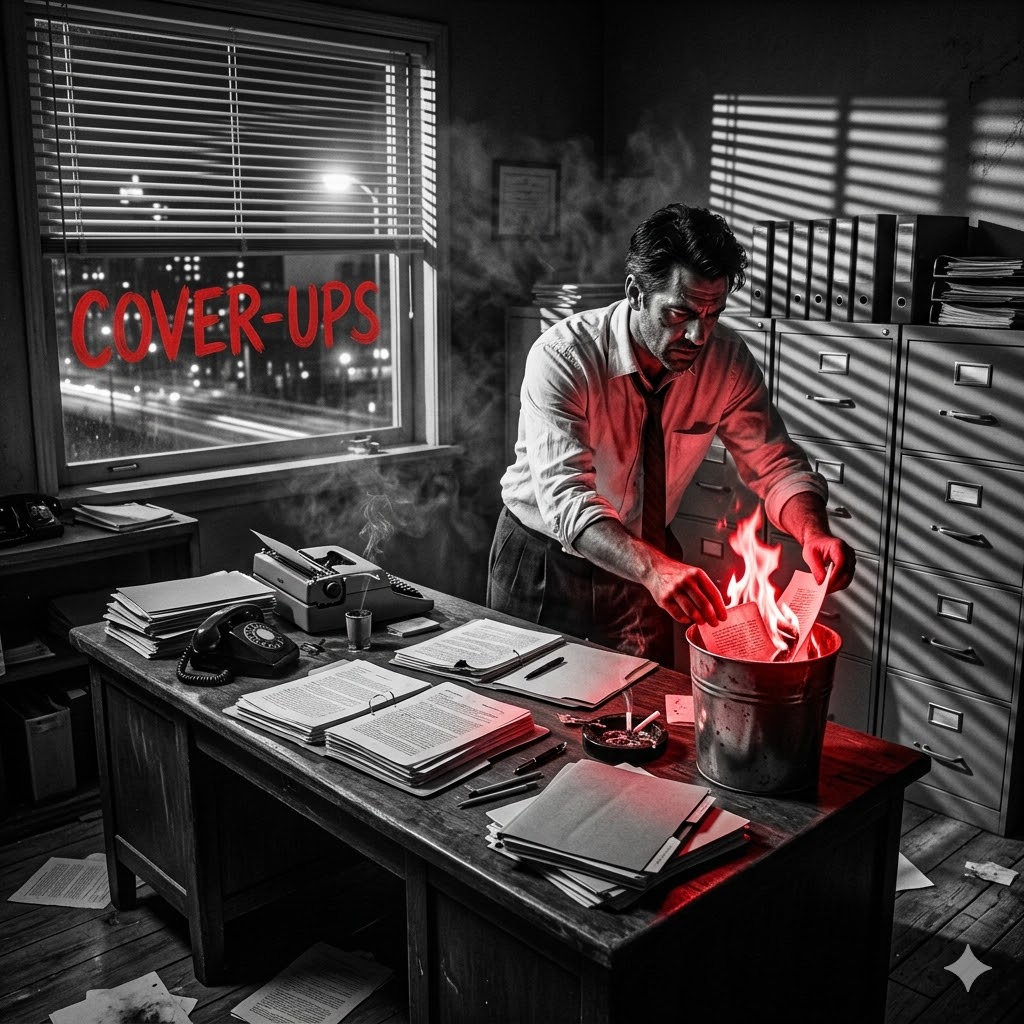
10 Cover-Ups Noir Films:
Mildred Pierce
A self-made restaurateur confesses to a murder in order to protect her monstrous daughter, whose entitlement has been fueled by her mother’s relentless sacrifices. Joan Crawford won an Oscar for this remarkable performance, and Michael Curtiz wraps the domestic melodrama in impeccable noir cinematography.
Where the Sidewalk Ends
A brutal NYPD detective accidentally kills a suspect and spends the rest of the film desperately trying to cover his tracks while running his own investigation. Dana Andrews creates a psychologically complex portrait of a violent man undone by the one crime he cannot justify.
The Big Heat
A straight-arrow detective investigates the suicide of a fellow officer and uncovers a web of police corruption and organized crime that stretches to the highest levels of city government. Glenn Ford and Gloria Grahame are both extraordinary in one of Lang’s most brutal and focused films.
Pushover
A police detective assigned to surveil the girlfriend of a bank robber plots to steal the money with her, creating an ever-more-dangerous web of deception. Fred MacMurray’s third visit to the territory of Double Indemnity is leaner and meaner, with Kim Novak as a luminous femme fatale.
Whirlpool
A society wife who is a compulsive shoplifter falls under the hypnotic influence of a sinister charlatan who plans to use her as his alibi for murder. Gene Tierney is a vulnerable, sympathetic figure caught in a tightening psychological trap.
The House on Telegraph Hill
A concentration camp survivor assumes a dead woman’s identity to come to America and then discovers her new husband may be trying to kill her. Robert Wise builds an atmosphere of paranoia and dread in San Francisco’s fog-shrouded Victorian landscape.
Act of Violence
A prosperous contractor’s wartime betrayal of fellow POWs is about to catch up with him as one of the survivors hunts him through the night streets with murderous intent. Van Heflin and Robert Ryan are perfectly matched as the compromised villain and the righteous avenger.
The Dark Mirror
A detective investigating a murder narrows the suspects to identical twin sisters but cannot determine which one committed the crime. Olivia de Havilland plays both twins with remarkable psychological precision in this proto-psychoanalytic noir.
Suddenly
Three hired assassins take a family hostage in a small California town as they prepare to shoot the President from an upstairs window. Frank Sinatra is frighteningly effective as the flat-eyed hitman whose cover story unravels under his own compulsive need to explain himself.
Illegal
A district attorney who has wrongfully executed an innocent man resigns in guilt and becomes a criminal lawyer, only to find himself defending the very mob boss whose machinations destroy his integrity again. Edward G. Robinson plays both the DA’s guilt and corruption with complete authority.
 CLASSIC NOIR