Docks and Warehouses
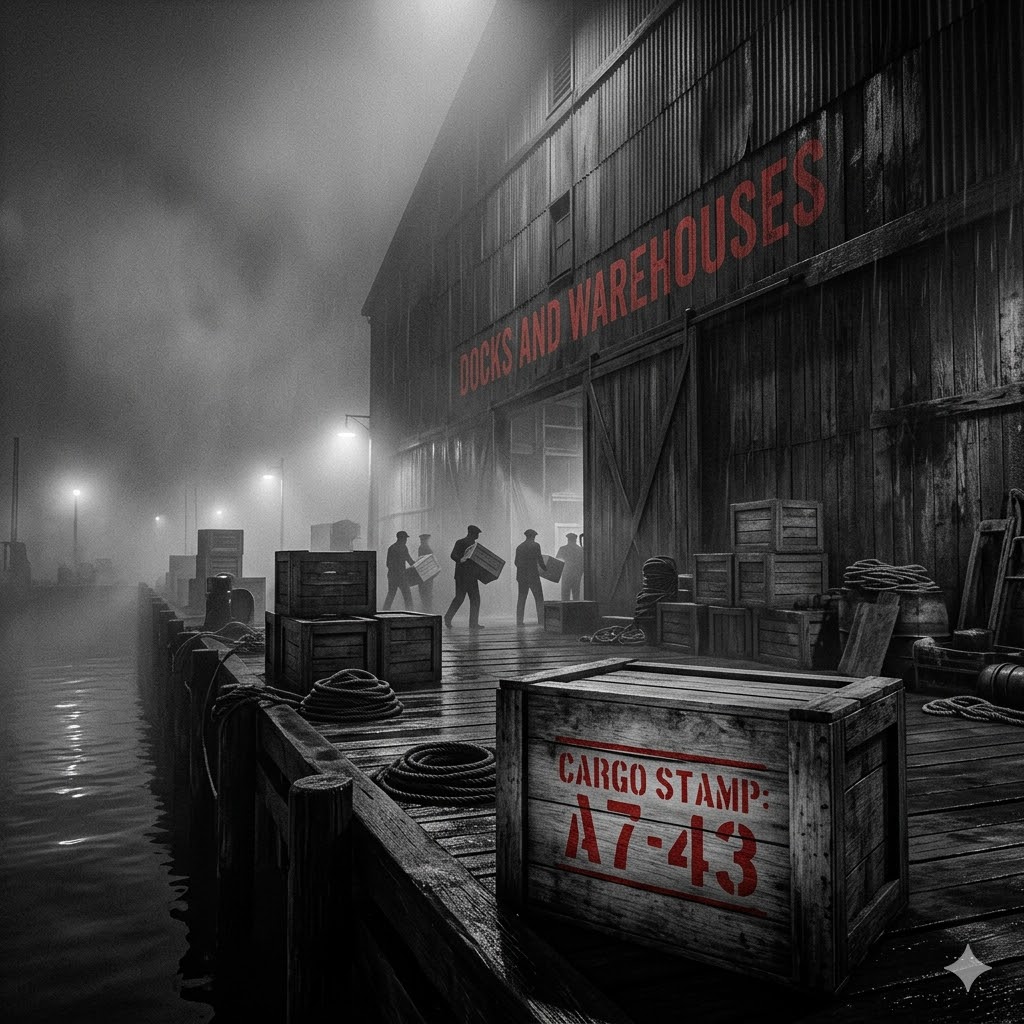
The waterfront is film noir’s frontier space — a place where the organized world dissolves into darkness, fog, and the constant sound of water against pilings. Docks and warehouses represent the city’s industrial unconscious, where goods of uncertain provenance change hands in the night, where men live outside of daylight society, and where violence can be committed and bodies disposed of with the complicity of the indifferent harbor. Fog is the waterfront’s natural element, concealing and revealing as it chooses, a perfect metaphor for the obfuscated truths of the noir universe.
10 Docks and Warehouses Noir Films:
Brute Force
Six prisoners plan a desperate escape from a brutal prison run by a sadistic captain, their backstories told in flashbacks that explain the desires and betrayals that landed them there. Jules Dassin’s film is one of the most politically charged documents of the post-war noir cycle.
Cry of the City
A cop pursues a childhood friend turned criminal through the nocturnal streets and waterfronts of New York, in a morally complex chase that questions the nature of duty and loyalty. Siodmak makes extraordinary use of the actual urban locations, particularly the nighttime waterfront sequences.
Thieves’ Highway
A truck driver investigates the accident that crippled his father and discovers the corrupt merchant who caused it, setting off a violent confrontation in San Francisco’s produce district. Dassin’s documentary eye for working-class labor and the film’s unglamorized brutality make this an essential noir.
On the Waterfront
A longshoreman with a history as a protected mob pawn must choose between silence and testifying against the corrupt union boss who controls the docks. Marlon Brando’s performance is the defining statement of Method acting in American cinema.
The Long Night
A factory worker barricades himself in his boarding house after killing a manipulative magician, recounting his story to police through an extended flashback. Henry Fonda’s tightly wound performance in this American remake of Le Jour se Lève gives the film unexpected power.
The Port of New York
Federal narcotics agents work to break a drug smuggling ring operating through New York’s busy harbor in a semi-documentary style that anticipates the procedural dramas of the following decade. Yul Brynner makes his American film debut as the cold-blooded drug lord.
I Walk Alone
An ex-bootlegger released after fourteen years in prison returns to collect the nightclub empire he built with his former partner, who has no intention of sharing. Burt Lancaster and Kirk Douglas face off for the first time in a film that pits muscle against brains, loyalty against opportunism.
The Lady from Shanghai
An Irish sailor hired aboard a yacht by a mysterious wealthy couple is drawn into a murder conspiracy that reaches its hallucinatory climax in an amusement park’s hall of mirrors. Welles transforms Rita Hayworth’s star image into something dangerous and strange.
Johnny O’Clock
A suave gambling club operator finds himself implicated in a hatcheck girl’s murder and in the crossfire between his corrupt cop partner and a grieving sister determined to know the truth. Dick Powell plays his urban pragmatist with unusual moral authority.
The Harder They Fall
A broken-down sports journalist takes a job promoting a talentless heavyweight boxer for a ruthless syndicate, and is gradually forced to confront his own complicity. Humphrey Bogart’s final film is a powerful indictment of corruption in professional sports, shot in a stark, reportorial style.
 CLASSIC NOIR