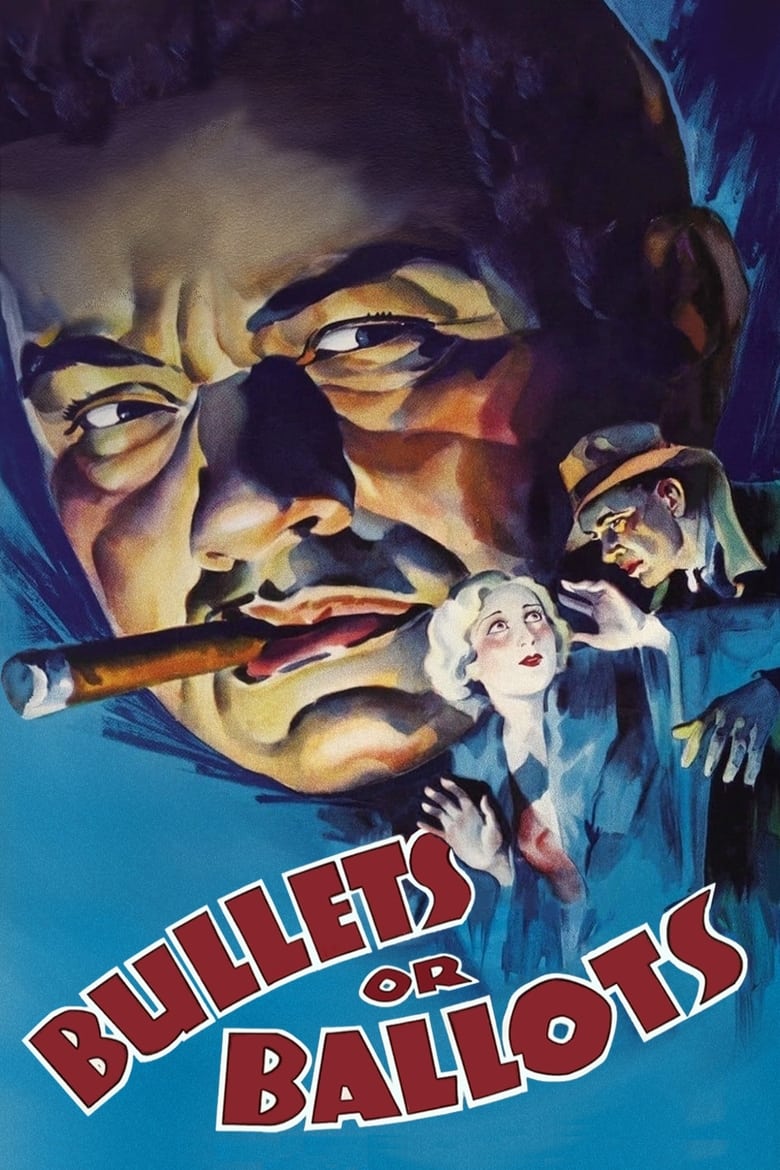
New York detective Johnny Blake is publicly dismissed from the police force after a dispute with his superior, Captain McLaren. The firing appears genuine enough to convince Al Kruger, the calculating boss of a numbers racket, that Blake is available for hire. Blake takes the job, sliding into Kruger's operation alongside Bugs Fenner, a volatile lieutenant who trusts no one, and Lee Morgan, a nightclub owner with her own complicated loyalties and a sharper instinct for danger than most men in the room.
Blake's undercover assignment is to map the syndicate's structure from the inside and deliver evidence that will bring the whole operation down. The deeper he penetrates, the more precarious his position becomes. Fenner suspects Blake from the start and pushes against Kruger's authority at every turn, while the organization itself is revealed to be far larger than street-level numbers running – an operation with tendrils reaching into legitimate business, the banks, and the institutional machinery of the city itself.
Bullets or Ballots belongs to the cycle of gangster procedurals Warner Bros. refined through the mid-1930s, films that displaced the romantic outlaw with the institutional criminal and the undercover operative. The film works the tension between legality and efficacy, asking whether a man can work inside corruption long enough to dismantle it without becoming it. Robinson's performance is the hinge on which that question turns, and the film does not let him escape it cleanly.
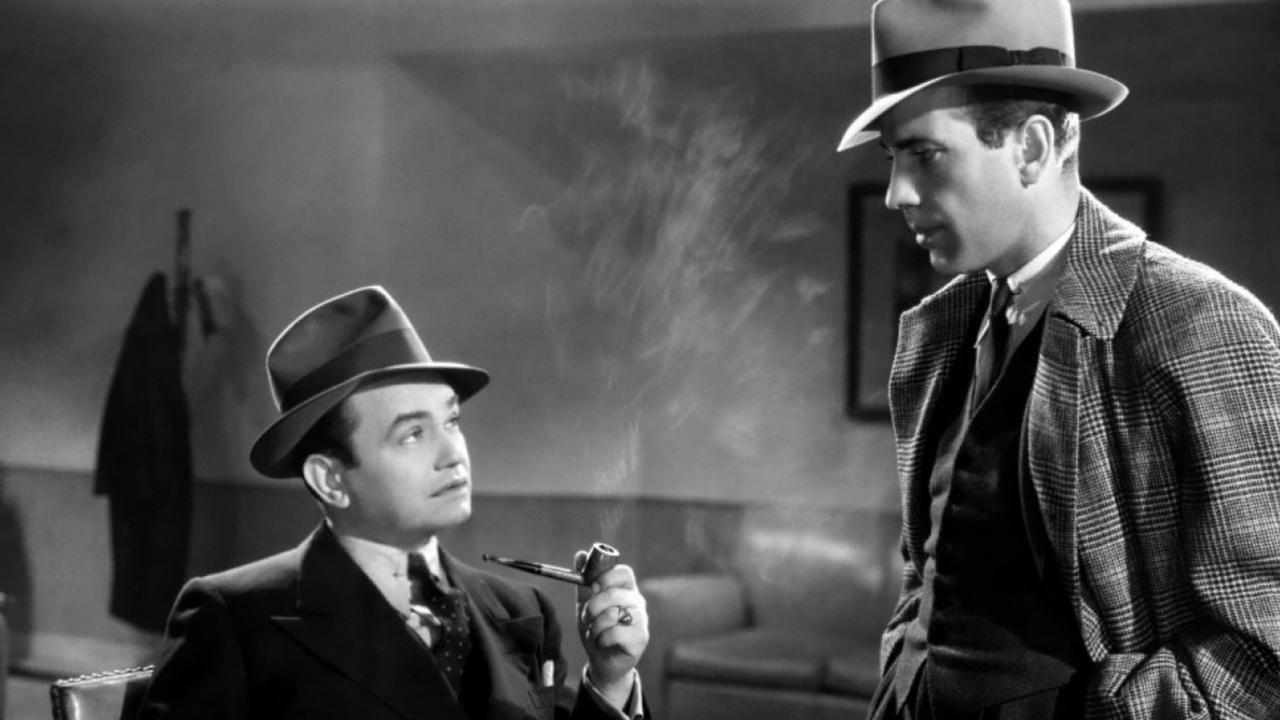
Bullets or Ballots arrives at a transitional moment in the American gangster film, after the Production Code had foreclosed the sympathetic criminal protagonist and before noir's postwar fatalism had fully crystallized. What William Keighley and screenwriter Seton I. Miller construct is a procedural with genuine moral friction: the undercover premise is not a device for adventure but an examination of what institutional loyalty costs a man who has spent his career in proximity to violence. Robinson holds the film together through sheer economy of expression – his Blake is watchful, controlled, never quite readable even to the audience. Bogart, cast against type as the volatile Fenner, supplies the film's dangerous energy, and the antagonism between the two actors generates heat that survives the screenplay's occasional softness. The film's broader argument – that organized crime is not aberrant but structural, embedded in finance and civic life – was pointed for 1936 and remains the detail that most clearly marks Bullets or Ballots as something more than a programmer.
– Classic Noir
Hal Mohr frames the confrontation between Blake and Fenner in a low-ceilinged back room where the practical lighting from a single overhead fixture cuts hard shadows across both men's faces. The camera holds at medium distance, refusing close-ups that would editorialize, letting the geometry of the room – a door behind Fenner, a desk between them, no neutral ground – do the compositional work. When Fenner moves, the frame adjusts only slightly, keeping both figures in a tension that the staging has already established as a zero-sum arrangement.
The scene concentrates the film's central argument in physical space: Blake's authority rests on performance and proximity, Fenner's on instinct and a willingness to act first. The room is too small for both of them, and Mohr's refusal to cut away from that compression forces the viewer to feel the arithmetic before the characters resolve it. What the scene reveals is not treachery or loyalty in isolation but the point at which those categories stop being distinguishable.
Hal Mohr's work on Bullets or Ballots is disciplined studio craft deployed with a clarity of moral purpose that anticipates the more self-conscious visual rhetoric of postwar noir. Shooting on Warner Bros. back lots and standing sets, Mohr uses high-contrast lighting not for expressionist atmosphere but for information management – a face pulled into shadow signals withheld intention, a room flooded with flat light exposes the bureaucratic ordinariness of criminal enterprise. His lens choices favor medium focal lengths that keep characters rooted in their environments rather than isolated against them, reinforcing the film's argument that crime is structural rather than personal. The nightclub sequences use practical sources and bounced fill to suggest a world that looks legitimate from the right angle, while the back-room interiors strip that veneer away with single-source overhead lighting that makes every transaction look exactly as transactional as it is. The cinematography earns the screenplay's ambitions without exceeding them.
Warner Bros. catalog titles from this era have appeared on Max; confirm current availability before viewing as library rotation applies.
TCMBroadcast/StreamingTCM remains the most reliable broadcast home for Warner Bros. pre-Code and early Code gangster programmers, often presented with contextual introduction.
Archive.orgFreeA public domain print has circulated on Archive.org; quality varies by source, but it offers the most immediate access at no cost.