Films People Pull a Fast One Night Beat Reading Room On TV Shop
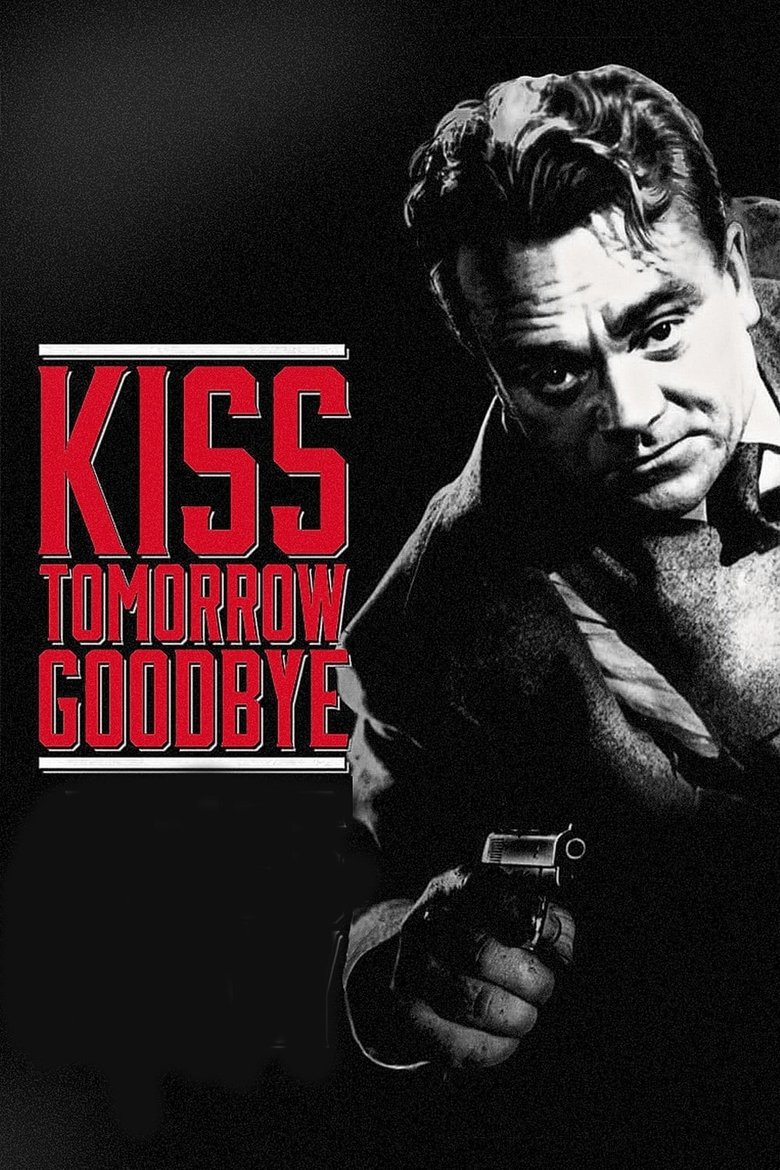
Kiss Tomorrow Goodbye 1950
1950 William Cagney Productions
★★★☆☆ Notable
Film Noir · 103 minutes · Black & White

Kiss Tomorrow Goodbye

Directed by Gordon Douglas
Year 1950
Runtime 103 min
Studio William Cagney Productions
TMDB 6.9 / 10
"A man without conscience moves through a world that has not yet learned to stop him."

Ralph Cotter (James Cagney) escapes from a prison farm with the help of Holiday Carleton (Barbara Payton), killing her brother in the process without a flicker of remorse. Ruthless, calculating, and contemptuous of weakness in others, Cotter wastes no time reasserting himself in the criminal landscape, using Holiday as both accomplice and instrument while keeping his intentions entirely his own.

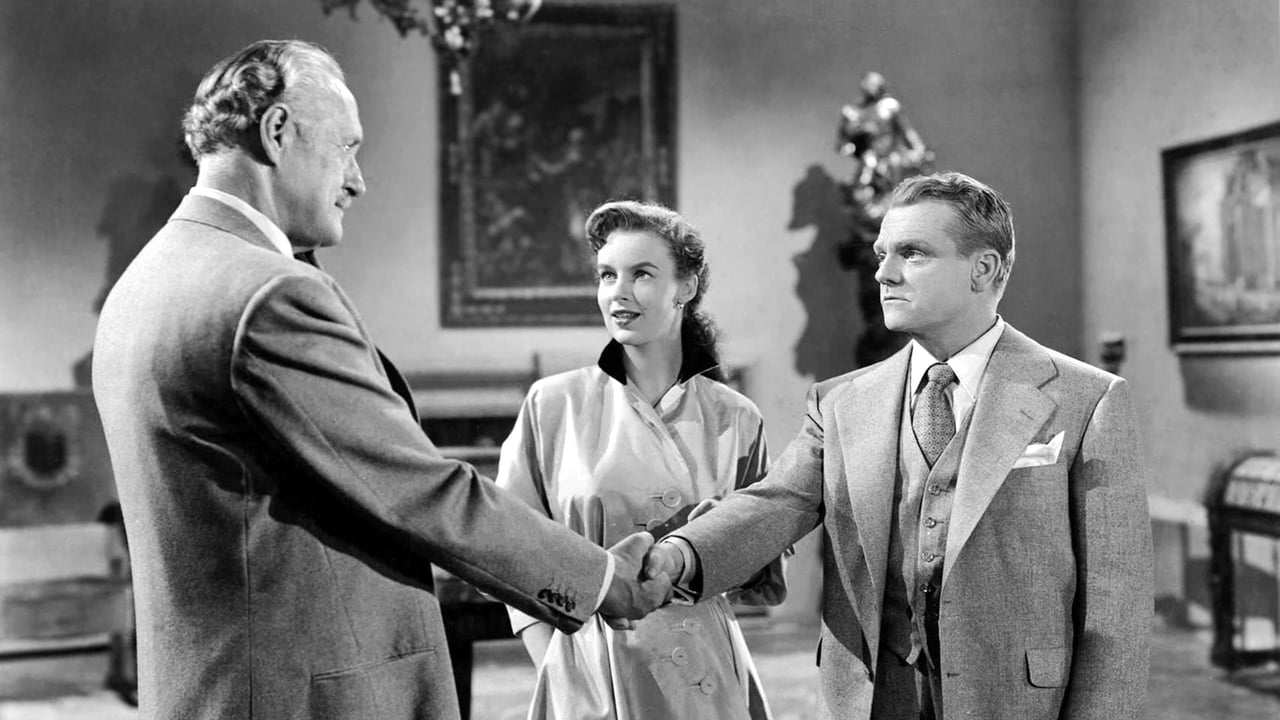
Cotter's ambitions pull him toward Margaret Dobson (Helena Carter), the sheltered daughter of a wealthy family, whose world he infiltrates with cold deliberation. Simultaneously, he draws the corrupt Inspector Weber (Ward Bond) and Lieutenant Reece (Barton MacLane) into his orbit, paying them off and then leveraging that corruption as a weapon. His alliance with the lawyer Cherokee Mandon (Luther Adler) provides legal cover even as the circle of those who distrust or fear him tightens around him.

Kiss Tomorrow Goodbye positions itself in the tradition of the criminal-as-force-of-nature film rather than the morally conflicted noir. Cotter is not a man undone by desire or circumstance but a predator operating in a system rotten enough to accommodate him – until the film's various aggrieved parties converge in a courtroom framing device that gives the story its retrospective structure.
Classic Noir

Kiss Tomorrow Goodbye is a harder, meaner picture than White Heat, the Cagney-Cagney production that preceded it by a year, and that severity is both its distinction and its limitation. James Cagney plays Ralph Cotter with no interest in sympathy – there is no traumatic origin, no Oedipal complexity, no woman capable of softening him. The film's producer-star seems to be testing how far an audience will follow a protagonist who offers them nothing. Gordon Douglas directs with efficiency rather than style, and the script, adapted from Horace McCoy's novel, carries McCoy's clinical brutality without fully translating his prose intelligence to the screen. What the film documents with unintended clarity is the postwar appetite for criminal narratives that refused redemption arcs – stories in which the system's corruption is matched only by the individual's capacity for violence. Ward Bond and Barton MacLane as venal policemen anchor that social critique. The result is a film of genuine interest to genre historians, if not a complete achievement.

– Classic Noir
3 ★★★☆☆ Notable
Credits

The Crew

DirectorGordon Douglas
ScreenplayHarry Brown
CinematographyJ. Peverell Marley
MusicCarmen Dragon
EditingWalter Hannemann
ProducerWilliam Cagney
Performances

The Cast

Close Reading

The Signature Scene

Kiss Tomorrow Goodbye – scene
The Beating in the Apartment Cotter Takes What He Needs

The camera holds close during Cotter's assault on Holiday, keeping Marley's lighting hard and overhead so that shadow falls across the lower half of Cagney's face while his eyes remain lit – a choice that registers control rather than fury. The room is small, the frame deliberately compressed, and Douglas does not cut away to spare the viewer. Objects in the middleground – furniture, a lamp – anchor the domestic space that Cotter has instantly made violent, the contrast between setting and action doing work that the dialogue does not need to do.

The scene functions as the film's thesis statement: Cotter's violence is not emotional but instrumental, and the woman he is brutalizing will return to him because the film understands, without excusing, the geometry of dependency. What is revealed here is not passion but power, and the willingness to stage it without modulation defines the film's refusal to locate any sympathetic register in its central figure.

Visual Language

The Cinematography

🎞️
J. Peverell Marley – Director of Photography

J. Peverell Marley's cinematography on Kiss Tomorrow Goodbye operates in a register distinct from the more expressionistic noir work of the period. Marley, a veteran whose career stretched back to the silent era, favors a harder, more frontal light than cinematographers drawn to German Expressionist shadow architecture. His work here is less interested in menace through abstraction than in the clarity of exposure – faces caught in unforgiving light, interiors that refuse the romantic obscurity noir often grants its criminals. The effect is appropriate to the material: Cotter is not a figure of shadow but of blunt, visible force, and Marley's setups reflect that. Studio interiors dominate, and the occasional location work reads as deliberately ordinary, denying Cotter the glamour of a nocturnal cityscape. The visual language argues that evil of this kind does not require darkness to conceal it – it operates in plain sight, which is its own form of indictment.

In the Catalogue

Themes & Motifs

Availability

Where to Watch

Also in the Directory

See Also