Films People Pull a Fast One Night Beat Reading Room On TV Shop
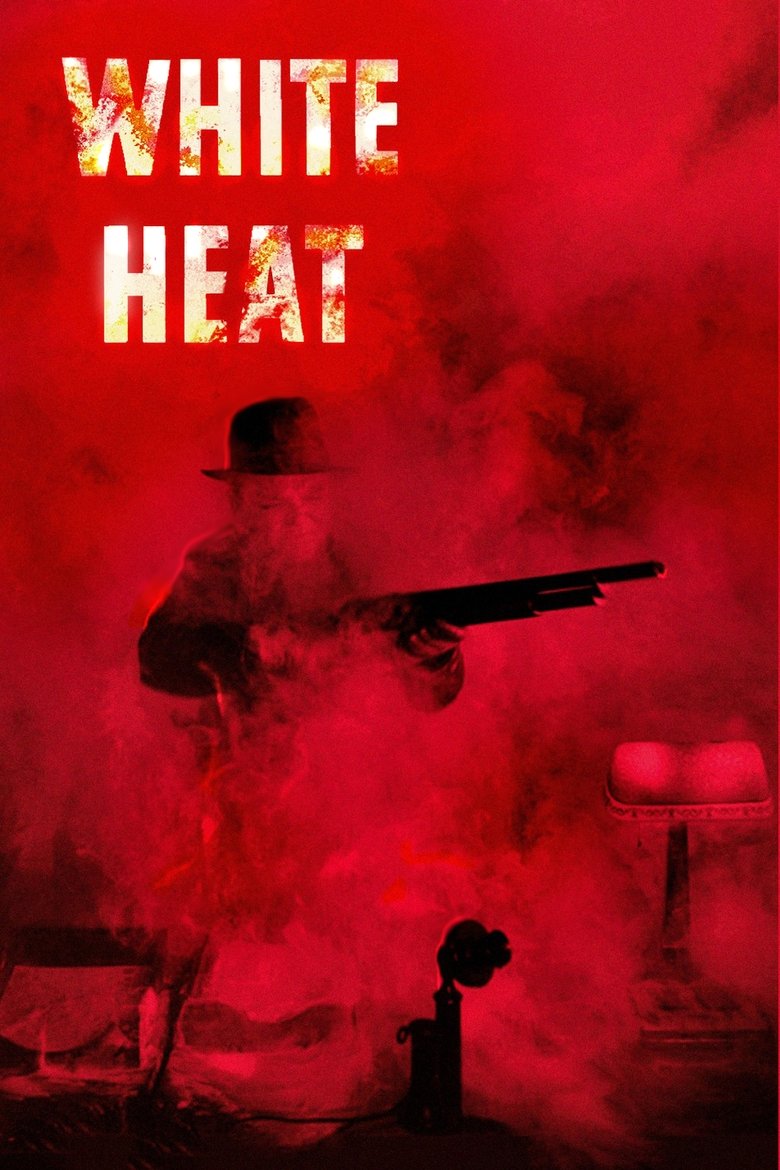
White Heat 1949
1949 Warner Bros. Pictures
★★★☆☆ Notable
Film Noir · 75 minutes · Black & White

White Heat

Directed by Raoul Walsh
Year 1949
Runtime 75 min
Studio Warner Bros. Pictures
TMDB 7.7 / 10
"Top of the world, Ma!"

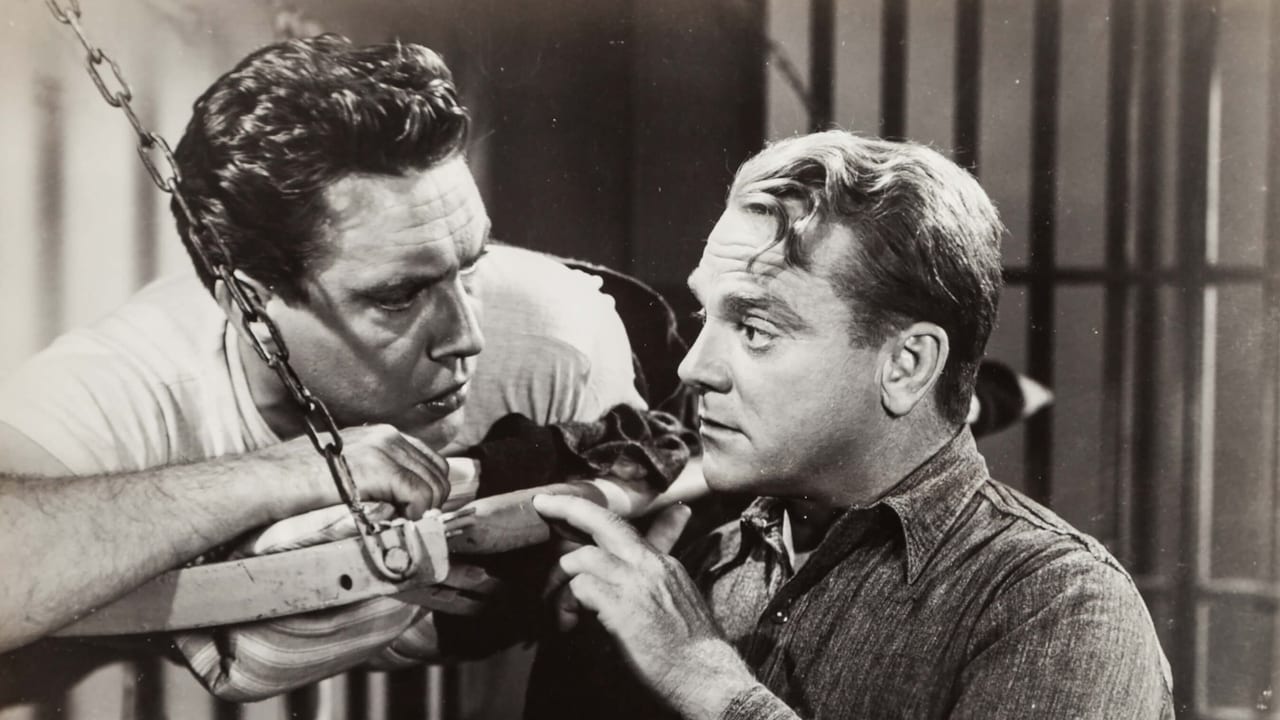
Cody Jarrett (James Cagney) leads a gang of violent criminals with a ferocity powered less by greed than by pathology. He is subject to sudden, overwhelming headaches that drop him to his knees and that only his mother, Ma Jarrett (Margaret Wycherly), can soothe; she is the fixed point around which his volatile world organizes itself. After a mail train robbery leaves federal agents with enough evidence to pursue the gang, Cody accepts a lesser prison sentence for an unrelated crime to establish an alibi – a calculated move that places him temporarily beyond the law's reach.

Inside Fulsom, Treasury agent Hank Fallon (Edmond O'Brien) infiltrates the prison under the alias Vic Pardo, befriending Cody with the aim of learning where the train robbery proceeds are hidden. Meanwhile, Cody's wife Verna (Virginia Mayo) drifts toward Big Ed Somers (Steve Cochran), the gang member left in charge outside. When Cody learns from a prison informant that his mother has been murdered – killed by Big Ed – he erupts in a prison dining hall scene of terrifying, uncontrolled grief that is among the most nakedly raw moments in the American gangster film. He escapes, settles scores, and gathers the gang for one last job: a refinery payroll heist that will end not in the score but in a cataclysm.

The film culminates at a chemical plant, where Cody, cornered and already wounded, climbs to the top of a gas storage sphere as it detonates beneath him. His final shout – "Made it, Ma! Top of the world!" – transforms catastrophe into a deranged declaration of triumph. White Heat is the terminus of the classic gangster cycle Cagney had helped define two decades earlier, and Raoul Walsh handles its late-noir darkness, psychological extremity, and spectacular violence with a hard, unsentimental authority.
Classic Noir

White Heat stands as the most concentrated expression of Cagney's gangster persona and one of the most psychologically extreme films produced within the major studio system. Raoul Walsh, never a director interested in psychological subtlety for its own sake, here meets material that demands it: Cody Jarrett is not a sociological case study in criminality but a man governed by something older and stranger, a mother-fixation so total that Ma Jarrett functions less as character than as organizing pathology. Margaret Wycherly plays her with a cold-eyed competence that refuses sentimentality. Virginia Mayo's Verna is among the genre's more interesting minor characters – not femme fatale in the classic sense but a woman whose disloyalty is a survival strategy, which the film acknowledges without exactly forgiving. Edmond O'Brien's undercover agent carries the procedural weight without ever quite becoming the film's moral anchor; Walsh is too honest a filmmaker to pretend the law's interest in Cody constitutes a compelling counter-argument to his force of personality. Sidney Hickox's cinematography and Max Steiner's score serve the film's escalating pressure without competing with it. The prison dining hall sequence and the final refinery explosion are among the genre's indelible set-pieces, each one earning its scale. "Top of the world, Ma!" is the line by which the film is remembered, but its weight depends on everything Walsh and Cagney have built toward it.

– Classic Noir
3 ★★★☆☆ Notable
Credits

The Crew

DirectorRaoul Walsh
ScreenplayIvan Goff
CinematographySidney Hickox
MusicMax Steiner
EditingOwen Marks
Art DirectionEdward Carrere
CostumesLeah Rhodes
ProducerLouis F. Edelman
Performances

The Cast

Close Reading

The Signature Scene

White Heat – scene
The Prison Dining Hall Grief Without a Floor

Sidney Hickox frames Cody at the center of the long institutional table as the news of his mother's death reaches him by whisper. What follows is entirely without preparation in the film's visual grammar: Cagney moves from contained stillness to a violent, climbing, table-clearing derangement in a matter of seconds, the camera pulling back as if physically repelled by the intensity of the response. The guards close in but cannot contain him; the other prisoners watch with the specific blankness of men who understand they are witnessing something unclassifiable.

The scene's argument is not about violence – Cody's capacity for violence has been established – but about the single point at which his self-command collapses. Ma Jarrett has been the organizing principle of everything Cody is, and her death does not grieve him so much as undo him structurally. Walsh's directorial choice to hold in wide shot for the peak of the breakdown refuses to glamorize it; the distance makes the grief larger, not smaller, because there is nowhere for the audience to take cover in a close-up.

Visual Language

The Cinematography

🎞️
Sidney Hickox – Director of Photography

Sidney Hickox, a Warner Bros. house cameraman with a long history of genre work, shoots White Heat with an efficiency that matches Walsh's directorial temperament: nothing decorative, nothing wasted, every shadow in service of a specific dramatic pressure rather than atmospheric accumulation. His work on the film's interiors – the gang's hideouts, the prison, the motel rooms where Verna and Big Ed conduct their betrayal – uses low-key lighting with a matter-of-fact dryness that refuses to romanticize the criminal world it depicts. The final refinery sequence is the exception: Hickox uses the industrial architecture of the chemical plant to create an almost abstract geography of pipes, catwalks, and spherical tanks that gives Cody's final ascent a scale that feels genuinely mythic without straining for it. The explosion itself is handled with spectacular directness, the fire consuming the frame as Cody's final shout hangs in the air. It is the one moment where Hickox and Walsh allow the image to exceed its narrative function, and the excess is precisely proportioned to the character it memorializes.

In the Catalogue

Themes & Motifs

Availability

Where to Watch

Also in the Directory

See Also