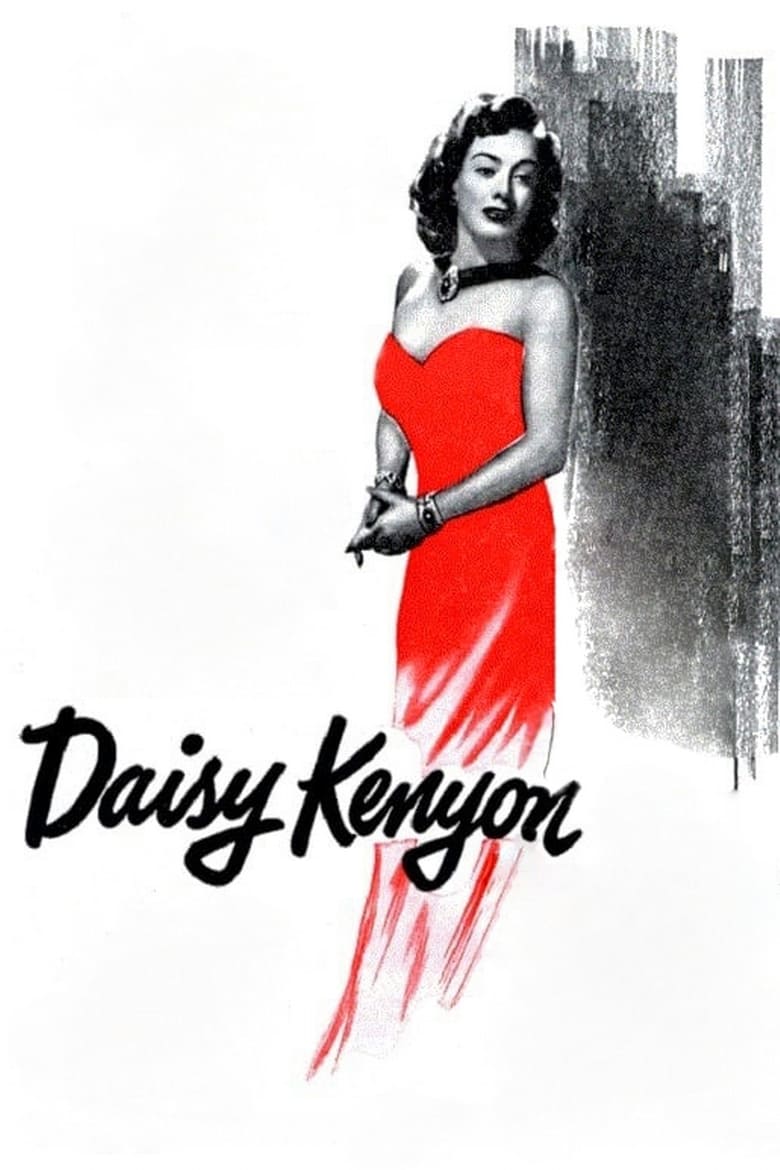
Daisy Kenyon is a New York commercial artist carrying on a long affair with Dan O'Mara, a married corporate lawyer whose ambition is matched only by his capacity for self-deception. Dan is charming, possessive, and unwilling to leave his wife Lucille, even as he insists his feeling for Daisy is genuine. Into this suspended arrangement arrives Peter Lapham, a quiet, deliberate war veteran who courts Daisy with a directness Dan has never offered.
Daisy marries Peter, partly from exhaustion and partly from a real if cautious affection, but Dan refuses to recede. His marriage to Lucille fractures over a custody dispute involving their two daughters, and he redirects his energy toward reclaiming Daisy, framing his pursuit as love while behaving with the entitlement of a man who has never been told no. Peter, perceptive and wounded in ways he seldom articulates, understands the geometry of the situation clearly and waits.
Preminger stages the film less as a thriller than as a study in the slow damage of prolonged compromise. The noirish register enters not through violence but through the pressure of withheld truths, legal machinery, and the quiet desperation of characters who have organized their lives around what they cannot admit. Daisy herself – pragmatic, tired, genuinely uncertain – becomes the moral center of a film that refuses easy resolution.
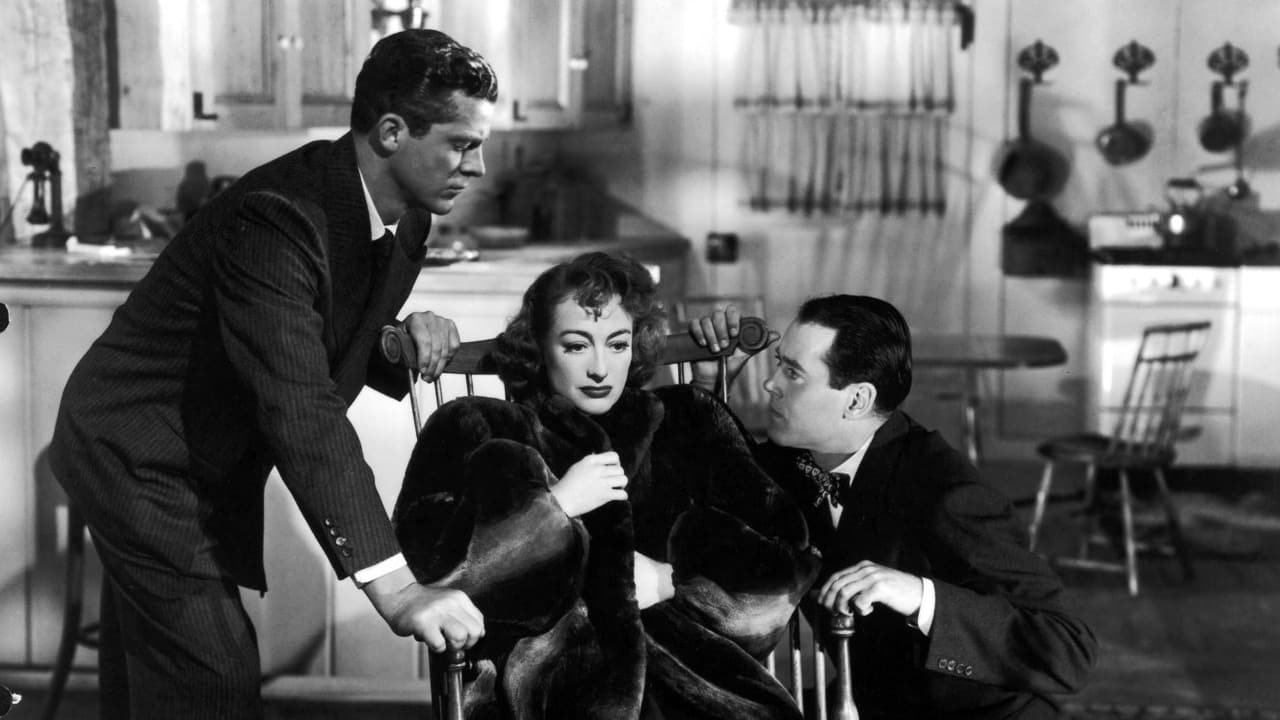
Daisy Kenyon occupies an instructive margin in the noir catalogue: it carries the genre's atmospheric weight and moral ambivalence without deploying its standard mechanics of crime or detection. Preminger, working the year after Laura and the year before Whirlpool, treats the domestic triangle as a site of genuine psychological pressure, and his direction is characteristically cool – observational rather than expressionist. Crawford's performance resists the suffering-woman iconography she was often handed; Daisy thinks, calculates, and occasionally makes the wrong call for reasons the film respects. Dana Andrews brings to O'Mara the same veneer of competent authority he had used to more sinister effect in Where the Sidewalk Ends, and the casting rewards viewers who know his range. What the film reveals about its postwar moment is precise: the returning veteran as a figure of moral clarity set against the civilian world's accumulated compromises, the legal system as an arena where emotional violence is conducted through procedure, and feminine autonomy as something the culture acknowledged in theory while constraining in practice.
– Classic Noir
Shamroy lights Daisy's apartment with the kind of concentrated domestic warmth that registers as oppressive rather than comfortable – pools of lamplight that do not quite reach the walls, leaving corners in soft shadow. When Dan arrives unannounced, the camera holds at a measured distance, framing both figures within the doorway so that the threshold functions as a compositional argument: he is neither invited nor refused. The depth of the room behind Daisy suggests an interior life the scene will not fully enter.
The shot communicates, without underlining it, that Dan's presence has always operated this way – occupying space by force of assumption rather than invitation. Daisy's stillness in the frame is not passivity; it is the stillness of someone who has run through the available responses and found none of them clean. The scene makes the film's central argument visible: that the real coercion in this story is not dramatic but architectural, built from repetition and the absence of a door that closes firmly.
Leon Shamroy's cinematography for Daisy Kenyon operates against the grain of 20th Century Fox's prevailing high-key glossiness. Working with Crawford's established screen persona in mind, Shamroy uses diffused but directional light that models her face without the softening halos of earlier studio portraiture, giving Daisy a legibility that suits the character's pragmatism. The New York locations – briefly glimpsed – anchor the film in a postwar metropolitan reality before the story retreats into studio interiors where shadow work can be controlled more precisely. Shamroy favors moderate focal lengths that keep background elements in mild but readable focus, ensuring that the domestic spaces carry information rather than blur into neutral backdrops. The frame compositions frequently place characters at slight distance from one another within the same shot, a spatial grammar that communicates emotional non-arrival more efficiently than dialogue. The visual language is restrained rather than expressionistic, which suits Preminger's argument: the damage in this film is administered in ordinary rooms under ordinary light.
The most reliably curated streaming home for this film; check current availability as rights rotate periodically.
TCMSubscriptionTCM broadcasts Daisy Kenyon with some regularity as part of Crawford and Preminger retrospective programming; the TCM app allows on-demand access for subscribers.
TubiFreeTubi has carried the film intermittently in a watchable transfer; confirm current availability before seeking it here.