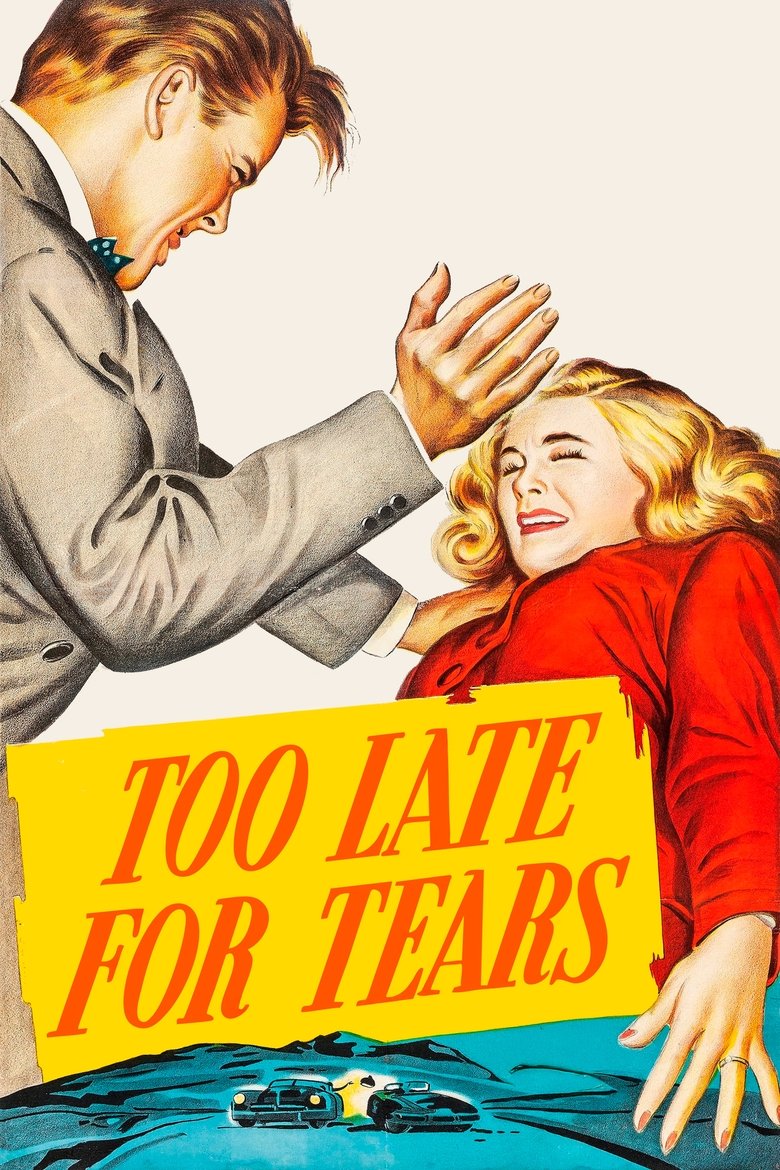
On a California highway at night, a bag of cash lands in the back seat of Alan and Jane Palmer's convertible, thrown by mistake from another car. Alan wants to turn the money over to the police; Jane refuses. The forty-thousand dollars represents escape from a life she has always resented, and she will not surrender it. Their argument establishes the film's central fracture: a marriage in which one partner treats morality as a convenience and the other has not yet understood what he married.
The money's owner, a small-time blackmailer named Danny Fuller, tracks the Palmers down and moves through their lives with the easy menace of a man accustomed to leverage. Jane handles him with a cold efficiency that surprises even Fuller. Meanwhile, Alan's sister Kathy and her friend Don Blake begin to sense that something in the Palmer household has shifted, and that Jane's composure conceals calculation rather than innocence. Allegiances form and dissolve as each character takes the measure of the others.
Too Late for Tears belongs to the postwar cycle of noir in which the femme fatale operates not from passion but from an almost administrative will to survive and advance. The film refuses the melodramatic excess that often softened such figures, keeping Jane Palmer at a cool remove that makes her more troubling than the genre's more theatrical villains. The screenplay, adapted by Roy Huggins from his own serial novel, holds its design together through character logic rather than coincidence, and the resolution arrives with the weight of arithmetic.
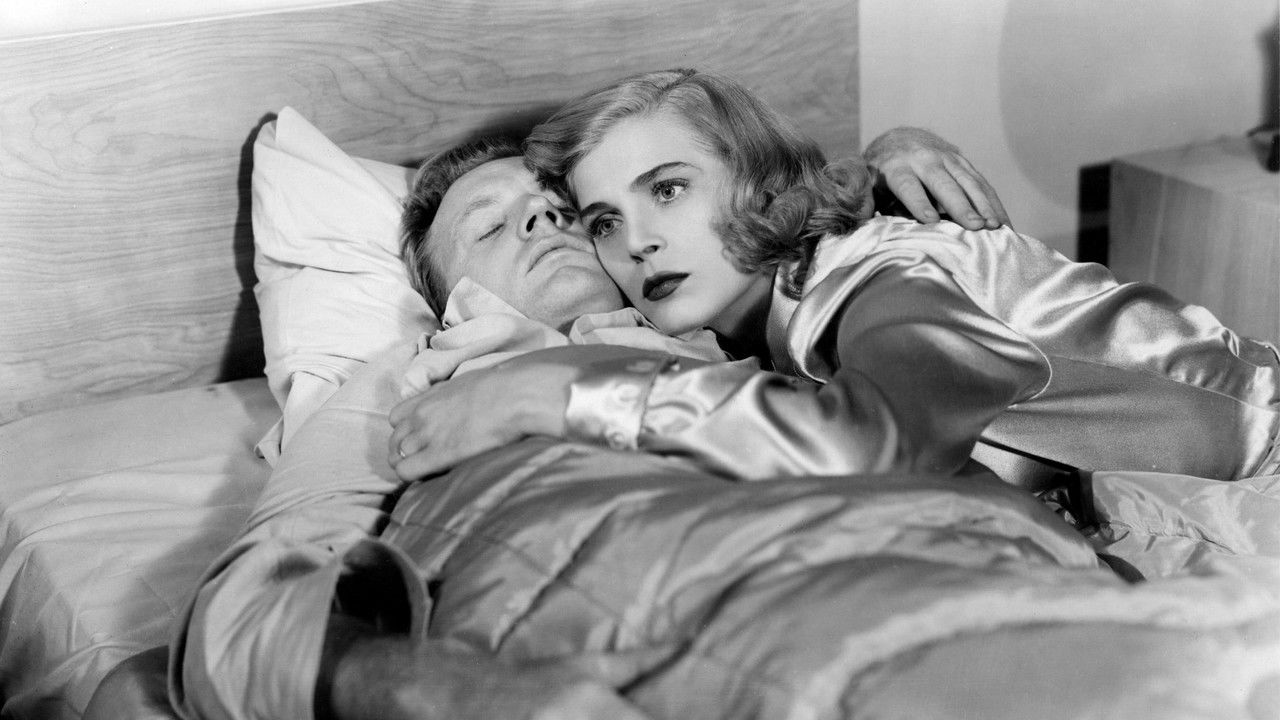
Too Late for Tears occupies a precise coordinates in postwar American noir: it is one of the few films of its cycle in which the femme fatale is not ultimately explained or redeemed by desire. Lizabeth Scott's Jane Palmer does not kill for love or fear; she kills for comfort and for the refusal to return to poverty. That distinction matters. Roy Huggins's screenplay, lean and structured, understands that the most frightening version of this character is the one who has simply done a cost-benefit analysis. Byron Haskin directs without ornament, trusting the material and his cast. Dan Duryea, working a variation on his customary sniveling menace, finds unexpected depth in Fuller's misreading of Jane – he thinks he recognizes a kindred spirit and is wrong in the most terminal way. The film was a low-budget independent production from Hunt Stromberg, which may account for its freedom from the studio compromises that sometimes blunted the genre's edges. Recovered from near-obscurity after decades of copyright neglect, it now reads as one of the more honest documents of its era's anxieties about women, money, and the costs of respectability.
– Classic Noir
William C. Mellor frames the boathouse interior with low-key lighting that renders the water reflections as restless, broken lines across the ceiling and walls – an environment that refuses stillness. Jane and Fuller occupy opposite sides of the frame, the bag of money between them like a fulcrum. Mellor keeps the camera at a measured distance, resisting the close-up reaction shots that would invite sympathy; we observe rather than experience, which is precisely the moral position the film wants us to occupy.
The scene argues that Fuller has consistently mistaken Jane for something recognizable – a grifter, a partner, a woman who can be managed. The framing proves him wrong before the dialogue does. Jane never loses composure, and it is that composure, held in medium shot against the shivering reflections, that signals the scene's outcome. The film's central argument – that the most dangerous person in the room is the one who has already made their decision – is stated here in visual terms before it is confirmed by action.
William C. Mellor, who would later shoot A Place in the Sun and Peyton Place for George Stevens, brings to Too Late for Tears a visual discipline suited to its cold subject. Working largely on studio sets dressed to suggest Los Angeles domesticity, Mellor avoids the expressionist excess that sometimes tips noir into self-parody. His lighting setups favor hard source light from practical lamps and windows, creating shadows that fall predictably – the geometry of a world that operates by its own internal logic. Lens choices stay conservative, with the occasional shift to a slightly longer focal length that flattens space and compresses characters against their environments, implying entrapment without announcing it. Exterior sequences use actual Los Angeles locations sparingly but effectively; the night highway at the film's opening is shot with a flat, factual quality that makes the sudden arrival of the money bag feel like an intrusion of another film's reality. Mellor's cinematography serves the screenplay's moral argument: nothing is lit to suggest innocence.
The film entered the public domain after a lapse in copyright renewal, and Archive.org hosts multiple transfers; quality varies, but the better uploads offer a watchable full-length version at no cost.
TubiFreeTubi has carried the film as a free, ad-supported stream; confirm current availability as rotating catalogues may affect listing status.
Criterion ChannelSubscriptionIf available in a curated noir programming block on the Criterion Channel, this would be the most reliably clean transfer; verify current scheduling as the film's public-domain status means it circulates across multiple platforms in varying conditions.