Films People Pull a Fast One Night Beat Reading Room On TV Shop
File on Thelma Jordon 1949
1949 Hal Wallis Productions
★★★☆☆ Notable
Film Noir · 100 minutes · Black & White

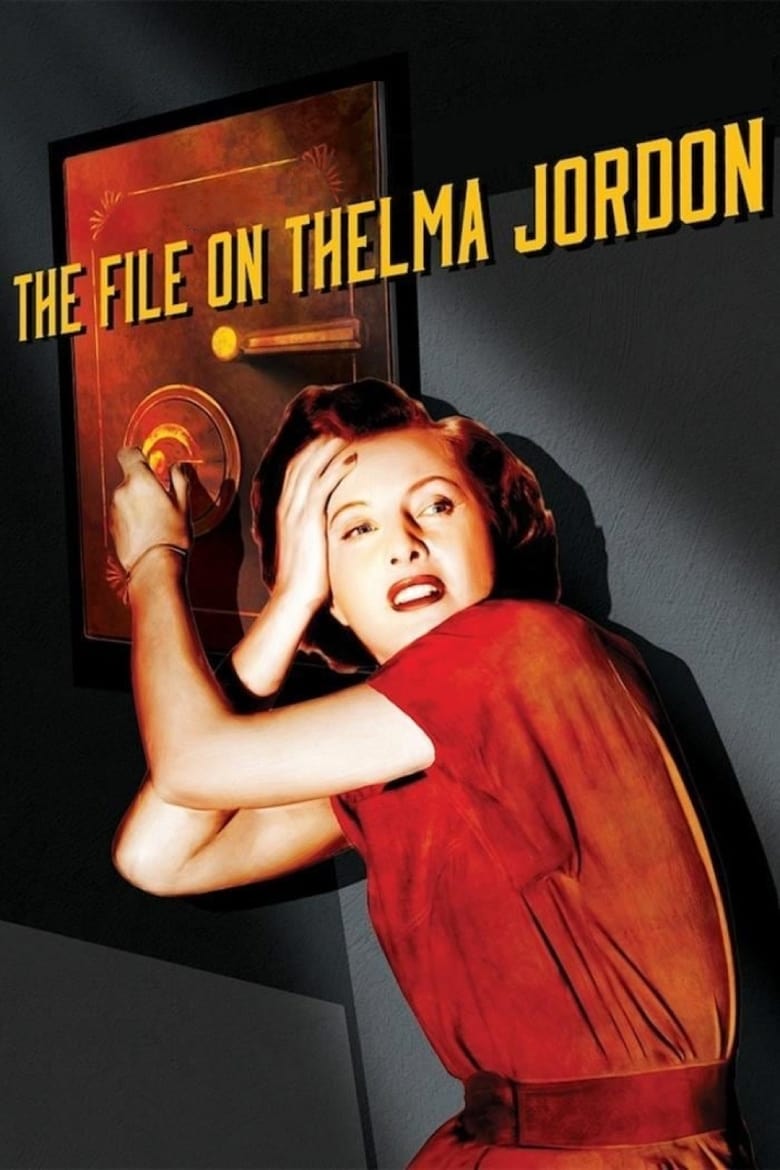
File on Thelma Jordon

Directed by Robert Siodmak
Year 1949
Runtime 100 min
Studio Hal Wallis Productions
TMDB 6.6 / 10
"A prosecutor falls for the woman he is paid to convict, and the law becomes the least of his problems."

Cleve Marshall is a deputy district attorney adrift in a loveless marriage, drinking away late evenings in his father-in-law's office when Thelma Jordon walks in to report a prowler at her elderly aunt's estate. The report comes to nothing, but Thelma stays. Cleve, weak where he should be resolute, begins an affair he cannot justify and cannot stop. Thelma is guarded, beautiful in a way that signals damage, and attached to a man named Tony Laredo whose business interests bear no scrutiny.

When the aunt is found murdered and valuable jewels go missing, Thelma becomes the prime suspect. Cleve, by now so thoroughly compromised that confession and self-preservation have become the same impossibility, maneuvers himself onto the prosecution team – then engineers its failure from within. His colleague Miles Scott watches, suspects, and says nothing. The trial proceeds as a prolonged act of institutional betrayal, with Cleve performing the law while hollowing it out, and Thelma's true allegiances remaining opaque even to the audience.

The film belongs to the tradition of the femme fatale procedural, in which the legal apparatus serves less as a mechanism of justice than as a stage for male self-destruction. What distinguishes it is the degree to which the narrative refuses to let Thelma carry all the moral weight. Cleve's ruin is substantially his own construction, and the film is as interested in the bureaucratic textures of the DA's office – the case files, the courtroom protocols, the collegial silences – as it is in the woman who detonates his life.
Classic Noir

Robert Siodmak's File on Thelma Jordon arrives near the end of his most concentrated American period, and it shows both the command and the slight cooling of energy that marks late-cycle work. The film is structurally closer to Double Indemnity than to Siodmak's own Killers: it proceeds through institutional channels, the DA's office standing in for the insurance firm as a site of corrupted professional duty. Wendell Corey's Cleve Marshall is a deliberate departure from the glamorous fall-guy – he is provincial, morally soft, credibly ordinary, and that ordinariness makes his capitulation more depressing than tragic. Barbara Stanwyck brings her full professional weight to a role that asks her to remain illegible for most of the runtime, and she obliges without vanity. What the film reveals about its era is a pervasive anxiety about institutional trust: the DA's office, the marriage, the courtroom are all surfaces behind which private corrosion advances unchecked. George Barnes's photography keeps everything in a register of controlled unease – no expressionist excess, just a systematic draining of comfort from ordinary spaces.

– Classic Noir
3 ★★★☆☆ Notable
Credits

The Crew

DirectorRobert Siodmak
ScreenplayMarty Holland
CinematographyGeorge Barnes
MusicVictor Young
Art DirectionHans Dreier
CostumesEdith Head
ProducerHal B. Wallis
Performances

The Cast

Close Reading

The Signature Scene

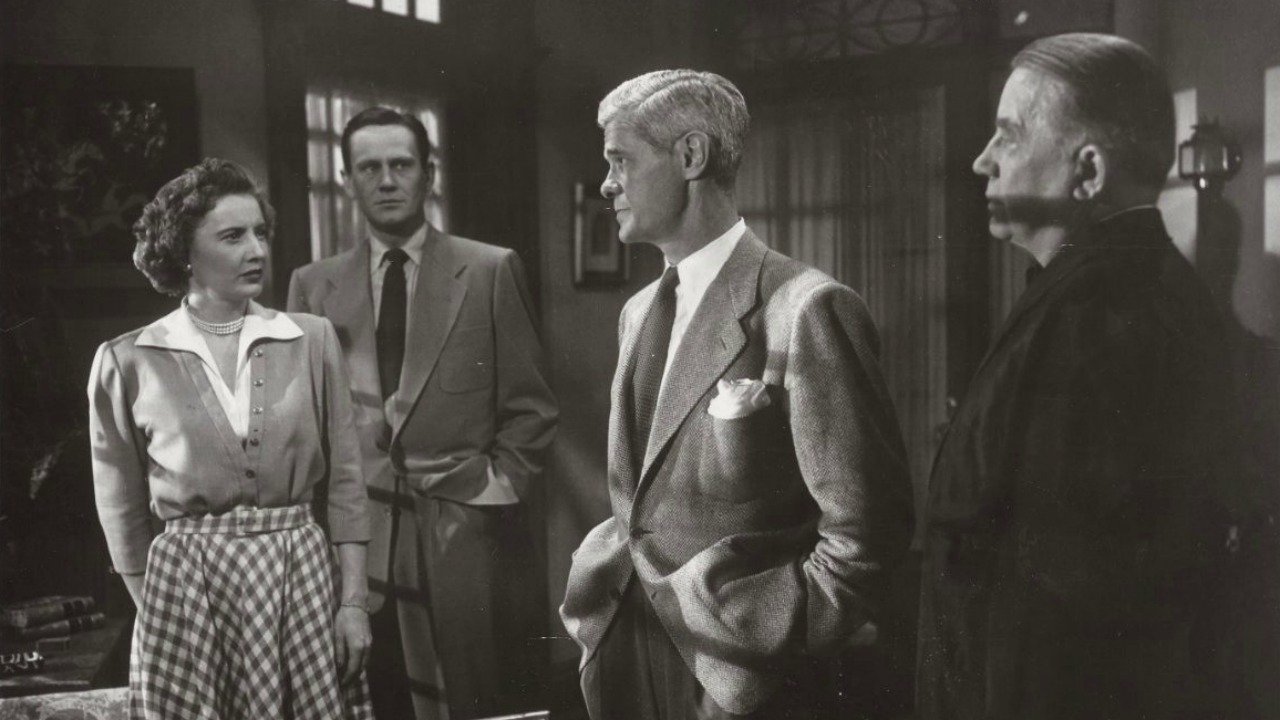
File on Thelma Jordon – scene
The Courthouse Corridor Cleve Watches Her Acquitted

Barnes frames Cleve in a medium shot against the corridor's institutional architecture – hard marble, flat overhead light that allows no flattering shadow – as the verdict reaches him through the ambient noise of the courtroom crowd. The camera holds rather than cuts, letting the stillness of Corey's face do the work. When it does move, it is a slow pull back that leaves Cleve diminished within the frame, the corridor extending behind him like a sentence that has no end.

The scene crystallizes the film's central irony: Cleve has achieved the outcome he engineered, and the achievement destroys him in plain sight. Thelma walks free, the law has been satisfied in form while gutted in fact, and the only person who bears the cost visibly is the man who held the office meant to prevent exactly this. The frame's refusal to editorialize – no dramatic shadow, no musical swell from Young's score – gives the moment a documentary coldness that is more damning than any expressionist flourish would be.

Visual Language

The Cinematography

🎞️
George Barnes – Director of Photography

George Barnes, whose career ran from silent melodrama through Hitchcock's Rebecca, brings to File on Thelma Jordon a disciplined restraint that suits Siodmak's intentions precisely. Rather than leaning on the deep-focus chiaroscuro that defines the period's most exhibitionistic noir cinematography, Barnes works in a flatter, more institutional register – offices and courtrooms rendered with a bureaucratic evenness that makes the shadows, when they do fall, feel genuinely threatening rather than decorative. The aunt's house is the exception: Barnes allows the estate sequences a heavier shadow architecture, isolating Stanwyck in pools of motivated light that recall the visual grammar of the Gothic. Elsewhere the lens work is sober, the compositions weighted toward mid-range depths that keep Cleve perpetually readable and Thelma perpetually slightly out of reach. The effect is moral as much as aesthetic: the film's visual language insists that corruption here occurs not in the dark margins but in the fully lit center of civic life.

In the Catalogue

Themes & Motifs

Availability

Where to Watch

Also in the Directory

See Also