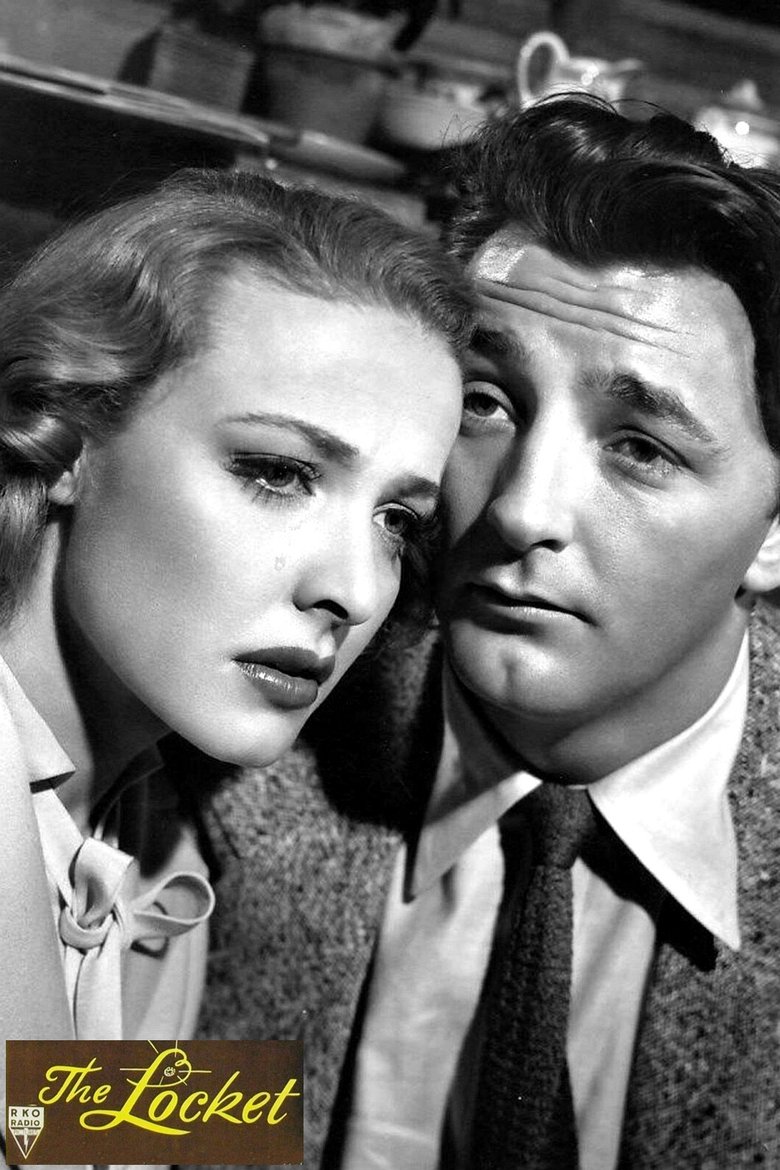
On the morning of his wedding to Nancy (Laraine Day), psychiatrist Dr. Harry Blair (Brian Aherne) receives a disturbing visitor: Norman Clyde (Robert Mitchum), Nancy's former husband, who arrives not to object to the marriage but to warn Blair against it. Clyde is a man visibly undone, and what he carries is not jealousy but dread. He recounts, in careful and troubled detail, his history with Nancy – a history that reaches back through years of deception, obsession, and at least one death.
The film unfolds in a nested series of flashbacks – a flashback within a flashback within a flashback – each layer peeling away another version of Nancy and exposing fresh contradictions. A childhood incident involving a stolen locket establishes the psychological wound at the center of her character. As an adult, Nancy moves through men and circumstances with a composure that reads, depending on the witness, as either innocence or calculation. John Willis (Gene Raymond), a painter who becomes her first husband, and the art dealer Drew Bonner (Ricardo Cortez) are drawn into her orbit with consequences neither fully understands until it is too late.
The Locket positions itself within the noir tradition of the unreliable past – narratives in which memory, testimony, and moral certainty are systematically dismantled. Its unusual structural conceit, stacking flashbacks to an almost vertiginous depth, makes the question of Nancy's guilt not merely a plot problem but a formal one: the film asks whether any account of a person can be trusted when every account is filtered through the interest of the teller. The femme fatale archetype is here neither celebrated nor simply condemned but held at a diagnostic distance that the film never quite resolves.
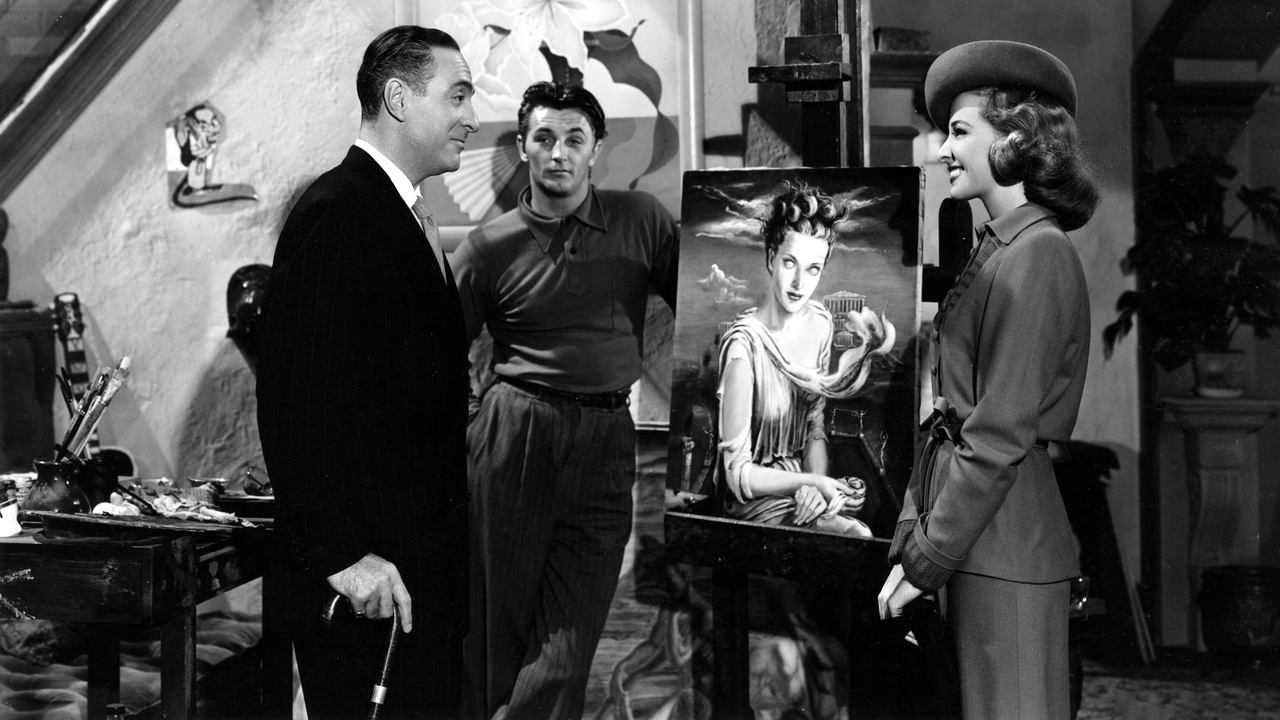
The Locket is a structurally ambitious mid-decade noir that has never received the attention its construction warrants. John Brahm, working with a script by Sheridan Gibney, employs a triple-nested flashback architecture that was unusual in 1946 and remains formally distinctive today. The device serves a precise psychological argument: Nancy's character cannot be fixed because no single narrator possesses sufficient access to the truth. Laraine Day's performance is calibrated to this ambiguity – she is never demonstrably guilty within any single layer of the narrative, only in the accumulated weight of testimony. The film belongs to a postwar cycle preoccupied with psychoanalysis and the instability of the feminine, and it shares that preoccupation with both Dark Mirror and Spiral Staircase. What distinguishes it is the degree to which the structure itself becomes the argument. Mitchum, in a secondary role, brings characteristic economy. The film's central weakness is that its clinical frame ultimately works against emotional investment, producing a thesis more legible than felt.
– Classic Noir
Mitchum appears in the opening sequence drained of the physical authority he typically projects – pale, contained, and positioned in medium close-up against a hallway of indifferent brightness. Nicholas Musuraca's lighting withholds the expressionistic shadow work that marks the film's later interiors, keeping Clyde in a flat, exposing light that offers nowhere to hide. The camera holds on his face as he speaks, cutting only reluctantly to Blair, as though Clyde's account demands continuous visual scrutiny.
The scene establishes the film's central epistemological proposition before a single flashback begins: that the most dangerous thing Nancy does is make the men around her doubt their own perception. Clyde is not raving; he is precise, which is exactly what makes him credible and exactly what makes his warning so difficult to dismiss. The film's moral architecture rests on this moment – a man who has survived Nancy attempting to save a man who has not yet been damaged by her, and failing.
Nicholas Musuraca, whose work on Out of the Past the same year represents the high-water mark of RKO noir cinematography, brings a more restrained palette to The Locket than his most celebrated assignments, and the restraint is purposeful. The film's studio interiors are lit with a surface propriety – the world Nancy inhabits is not the dockside or the back alley but the drawing room and the gallery – and Musuraca keeps the shadows contained rather than sprawling, suggesting a corruption that operates beneath respectable surfaces rather than in open darkness. As the flashbacks deepen and Nancy's history grows more troubling, the lighting grows incrementally more contrastive, the compositions tighter. The childhood sequences are rendered in a soft, almost undifferentiated gray that makes the past feel both real and slightly untrustworthy. It is precisely calibrated work: the cinematography never announces guilt but accumulates visual pressure in proportion to narrative suspicion.
The Locket has circulated on Tubi as part of its classic Hollywood catalogue – verify availability in your region, as titles rotate.
Archive.orgFreeAs a film whose copyright status has been disputed, versions have appeared on the Internet Archive; image quality varies and no restoration is confirmed.
TCMSubscriptionTCM periodically airs The Locket in broadcast-quality prints as part of RKO and noir programming blocks; the most reliable source for a clean presentation.