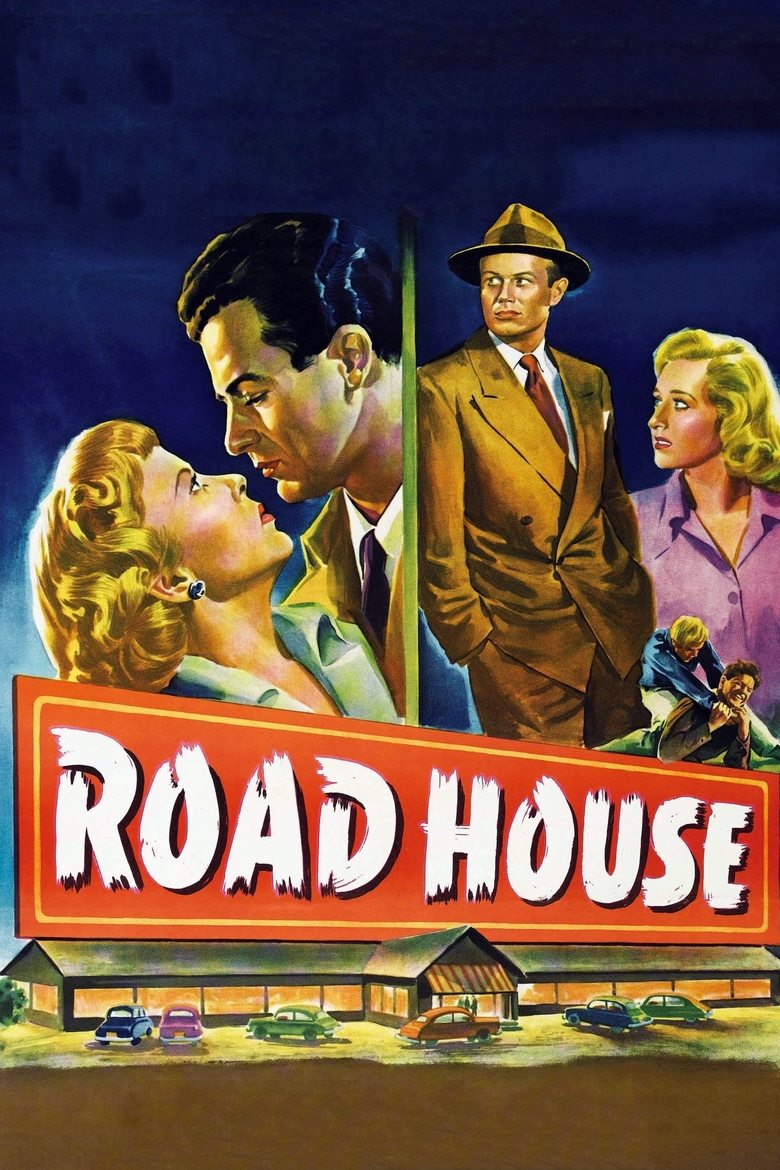
Jefty Robbins owns a roadhouse on the edge of a small town near the Canadian border – a place of modest ambitions and managed pleasures. Returning from Chicago, he brings with him Lily Stevens, a low-voiced singer he has hired to perform in his establishment. Pete Morgan, Jefty's manager and closest friend, is skeptical of the hire and dismissive of Lily from the start. Susie Smith, the bookkeeper who has quietly loved Pete for years, watches the new arrival with a wariness she cannot quite articulate.
Lily's act proves more compelling than Pete anticipated, and something between them begins to form – cautious, resistant, and ultimately unavoidable. Jefty, who imagined Lily as a possession he had acquired, reads this shift with the particular clarity of a man who has always gotten what he wanted. When Pete and Lily's bond becomes undeniable, Jefty engineers a frame-up, leveraging his influence in the community to have Pete convicted of theft and then released into his own custody, binding Pete to him through the law itself. What had been friendship curdles into something controlling and predatory.
Road House belongs to a specific strain of late-1940s noir in which psychological domination replaces physical violence as the primary instrument of menace. The film unfolds in close quarters – the roadhouse, the surrounding wilderness, a cabin across the border – and its tension derives not from criminal machinery but from the pressure one man's obsession exerts on everyone around him. Widmark's Jefty is a study in charm converting to coercion, and the film uses that conversion to examine what ownership means when it is directed at human beings.
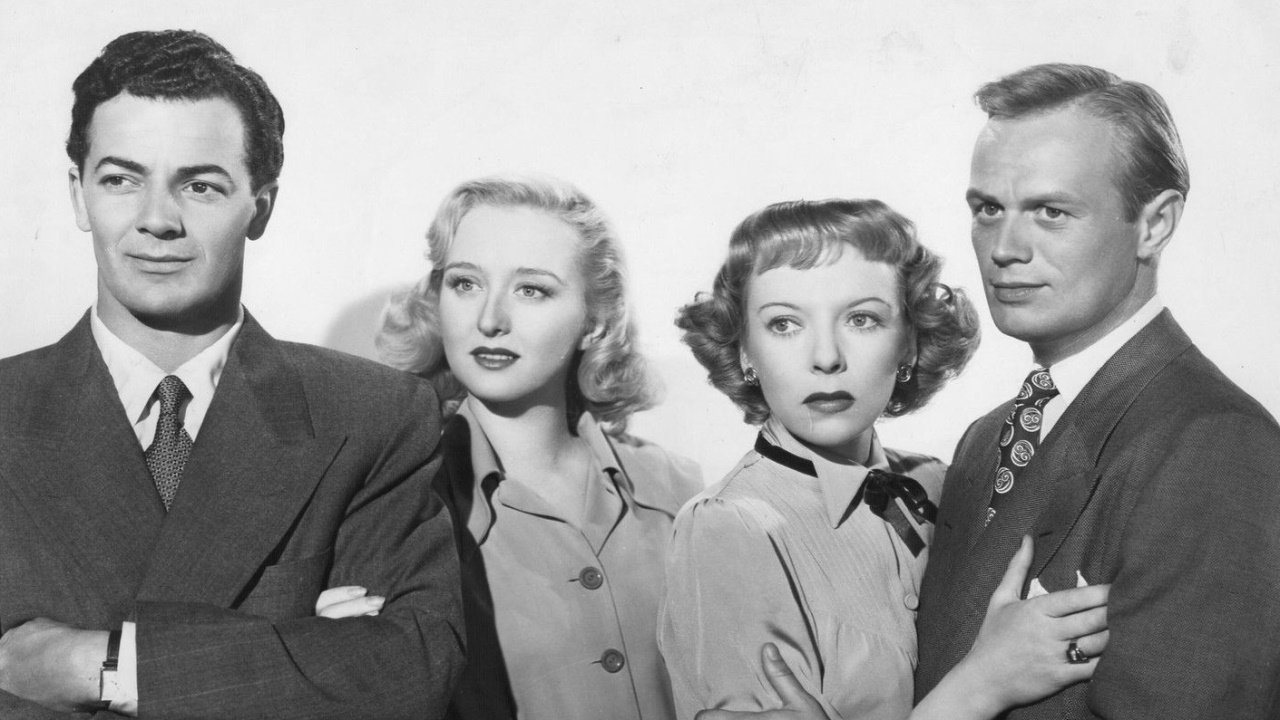
Road House arrives at a moment when noir was beginning to interrogate the postwar male as a figure of latent danger rather than heroic return. Richard Widmark, still working the volatile energy he had introduced in Kiss of Death the previous year, plays Jefty not as a criminal by trade but as a man whose social position has insulated his worst instincts until those instincts have nowhere left to go. Ida Lupino, characteristically, refuses sentiment. Her Lily Stevens is not a femme fatale in any conventional sense – she neither manipulates nor schemes – but her self-possession is precisely what the film identifies as threatening to a man like Jefty. Jean Negulesco directs with an economy that keeps the roadhouse feeling genuinely claustrophobic, and the Canadian wilderness sequences in the final act reframe the film's psychology in terms of geography: escape is possible, but it is not clean. The film does not rank among the period's essential works, but it is more rigorous than its entertainment surface suggests, and Lupino's performance in particular rewards sustained attention.
– Classic Noir
Negulesco and cinematographer Joseph LaShelle hold on Lupino in medium close-up as she performs, the frame tight enough to isolate her from the room's activity. The light is directed downward from a single source above the small stage, carving shadow beneath her cheekbones and leaving the audience in soft, undifferentiated darkness behind her. The camera does not cut to reaction shots in the rhythm a musical performance typically demands – it stays, almost stubbornly, on Lupino's face, as if the room beyond the frame has ceased to matter.
The scene establishes Lily's authority over her own presence at the same moment it makes that presence the cause of everything that follows. She is not performing for Jefty or for Pete; she is performing because it is what she does. The film uses this scene to draw the first clear line between a woman who occupies her own life and a man who has decided that life belongs to him – and that line, drawn here in light and stillness, is what the rest of Road House will spend its running time pulling taut.
Joseph LaShelle, working here in the year after his Oscar-winning work on Laura, brings to Road House a measured approach that favors compression over expressionist excess. The roadhouse interiors are lit with a studied awareness of ceilings and practical sources – bar lamps, stage lights, the glow from a jukebox – that keep the shadows motivated rather than imposed. LaShelle rarely reaches for the extreme low angles that marked flashier noir work of the period; instead, he uses close focal lengths to flatten backgrounds and press characters against their environment, reinforcing the film's central idea that no one in this story has room to move. When the action relocates to the Canadian wilderness for the final act, he opens the frame and raises the ambient light level, but the effect is disorienting rather than liberating – the space feels wrong after so much confinement. The visual grammar of the film consistently serves its moral logic: the more open the setting, the more exposed the characters become.
Criterion Channel periodically features Ida Lupino retrospectives and Fox noir collections; check current availability for a well-transferred print.
TubiFreeTubi has carried Road House in the past as part of its classic Hollywood catalogue; image quality varies but access is free and without registration.
TCMSubscriptionTCM broadcasts Road House periodically within Fox noir and Ida Lupino programming blocks and typically presents the best available broadcast transfer.