Films People Pull a Fast One Night Beat Reading Room On TV Shop
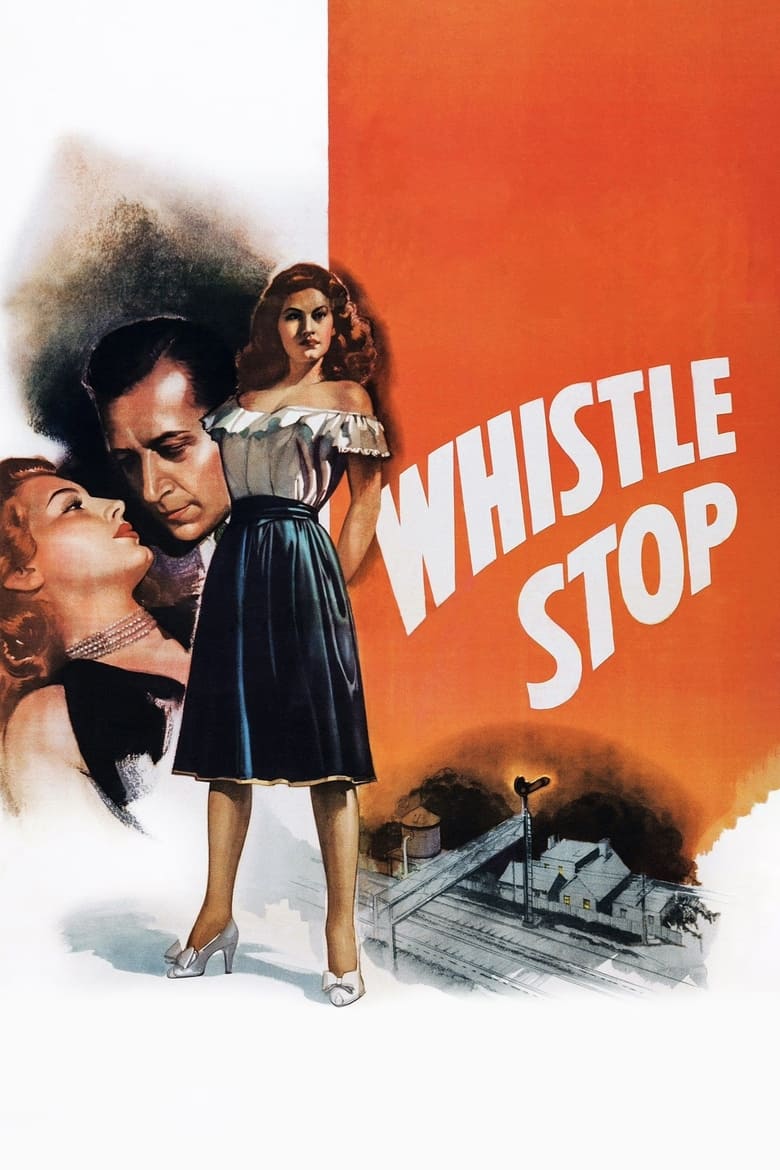
Whistle Stop 1946
1946 Nero Films
★★★☆☆ Notable
Film Noir · 85 minutes · Black & White

Whistle Stop

Directed by Léonide Moguy
Year 1946
Runtime 85 min
Studio Nero Films
TMDB 4.4 / 10
"A woman returns to a small town, and the men who want her begin to destroy each other."

Mary (Ava Gardner) steps off a train and back into the life of a small Midwestern town she left without explanation. Kenny Veech (George Raft), the man she once loved, has spent her absence drifting into idleness and drink, propped up by his tolerant mother Molly (Florence Bates) and watched over by his younger sister Josie (Jane Nigh). Mary's return reanimates Kenny, but it also reintroduces the question that hangs over every scene: whether she has come back out of feeling or calculation.

The town's dominant figure is Lew Lentz (Tom Conway), a nightclub owner of cultivated manners and predatory patience who has set his interest on Mary. His enforcer and business partner Gitlo (Victor McLaglen) operates in a cruder register, moving between loyalty and menace as the situation shifts. Kenny, offered a chance at real money through Lew's orbit, finds himself drawn into a scheme that requires him to compromise what little moral ground he still holds. The question of who is using whom – Mary using Kenny, Lew using both of them, Gitlo using his own resentments – gives the film its structural tension.

Whistle Stop belongs to that strand of mid-1940s noir built around desire as a form of entrapment rather than adventure. The small-town setting, far from softening the genre's edges, concentrates them: there is nowhere to go, no anonymity to hide in, and every relationship carries the weight of history. The film locates its darkness not in a cityscape but in the claustrophobia of a community where everyone already knows the worst about everyone else.
Classic Noir

Whistle Stop arrives in 1946 as a minor but coherent entry in the cycle of noir that followed the war, produced by the independent Nero Films and shaped by Léonide Moguy, a director whose European origins inflect the material without overwhelming it. George Raft, by this point a genre fixture, plays Kenny with the characteristic stillness that could read as repression or vacancy depending on the scene – and the film is shrewd enough to leave that ambiguity intact. Ava Gardner, in one of her earlier substantial roles, is not yet the fully mythologized figure she would become, and that relative rawness serves the part: Mary is readable as both genuine and calculating, and the film declines to arbitrate. What Whistle Stop achieves, modestly but honestly, is a portrait of small-town stagnation in which noir's usual urban alienation is reproduced through proximity rather than anonymity. The 1946 audience would have recognized in Kenny's postwar drift something close to a social type. The film does not push that observation far enough to be essential, but it handles it with more intelligence than its production circumstances might have predicted.

– Classic Noir
3 ★★★☆☆ Notable
Credits

The Crew

DirectorLéonide Moguy
ScreenplayPhilip Yordan
CinematographyRussell Metty
MusicDimitri Tiomkin
EditingGregg Tallas
Art DirectionRudi Feld
ProducerSeymour Nebenzal
Performances

The Cast

Close Reading

The Signature Scene

Whistle Stop – scene
The Nightclub Office Two Men, One Offer

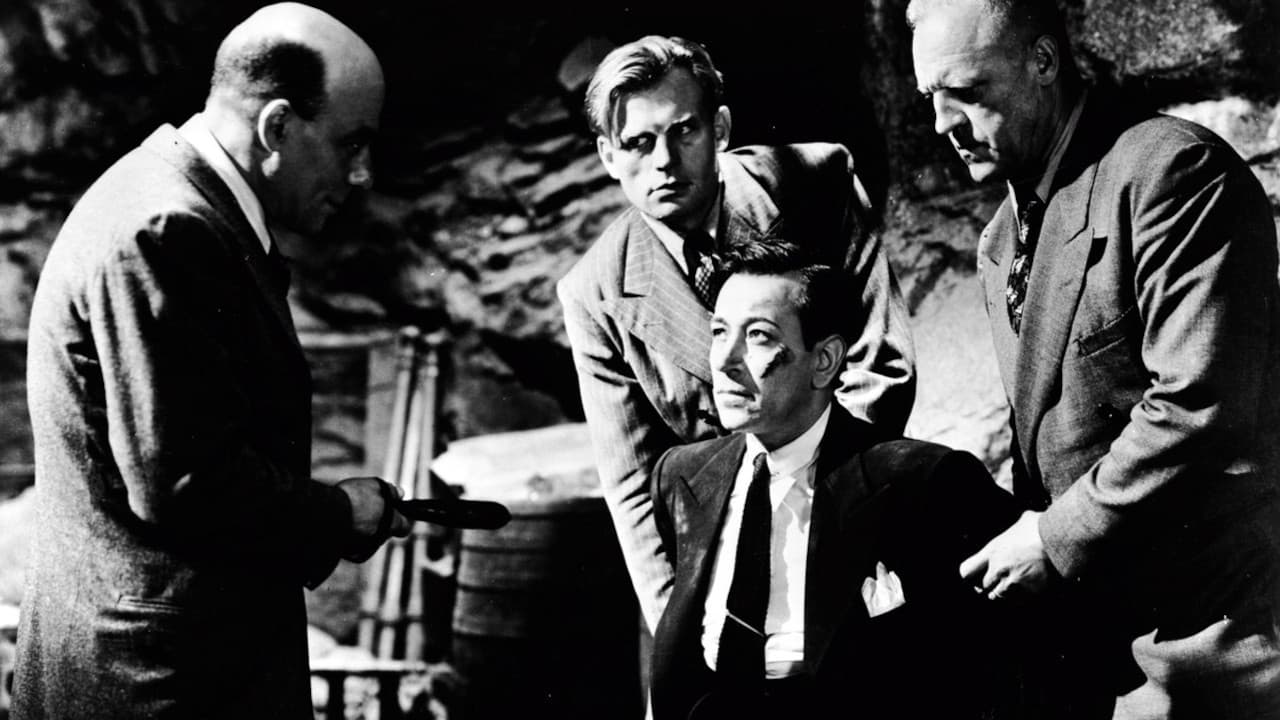
Russell Metty frames the exchange between Kenny and Lew in a space that is neither public nor private – Lew's office adjoining the nightclub floor, where the sound of the band bleeds through the wall without ever fully arriving. Lew sits behind the desk in a pool of directed lamplight, his face composed and fully legible; Kenny stands at a slight remove, caught between the lamp's reach and the ambient murk of the room's edges. The camera holds at a medium distance that refuses to privilege either man, offering instead a geometry of social pressure: one man seated and certain, the other standing and exposed.

The scene's function in the film is to externalize what the script keeps implicit – that Kenny's acceptance of Lew's proposition is not really about money. It is about the fact that Mary exists in Lew's world in a way she no longer exists in Kenny's, and that any path back to her runs through this desk. Raft plays the capitulation as fatigue rather than greed, which is the correct reading, and the staging supports it: the light does not fall on him as it falls on Lew, and the film is clear about what that means.

Visual Language

The Cinematography

🎞️
Russell Metty – Director of Photography

Russell Metty, who would later shoot Touch of Evil for Orson Welles, brings to Whistle Stop a controlled economy that suits a production working within tight independent-studio constraints. Working primarily on studio-built sets, Metty constructs the small town as a series of contained, slightly airless spaces – interiors where ceiling lines are visible and windows offer darkness rather than prospect. His lighting setups favor hard lateral sources that model faces with some severity, consistent with a story in which character is being assessed rather than celebrated. The nightclub sequences use a diffused overhead wash that flattens the crowd while keeping the principals in relief, a simple but effective hierarchy. Where Metty's work earns particular attention is in the quieter domestic scenes at the Veech house, where softer, more motivated light – lamps, windows – creates a surface warmth that the narrative systematically undermines. The cinematography does not call attention to itself, which is itself a choice: in a film about people performing normalcy while concealing intent, a restrained visual language is the appropriate moral register.

In the Catalogue

Themes & Motifs

Availability

Where to Watch

Also in the Directory

See Also