Films People Pull a Fast One Night Beat Reading Room On TV Shop
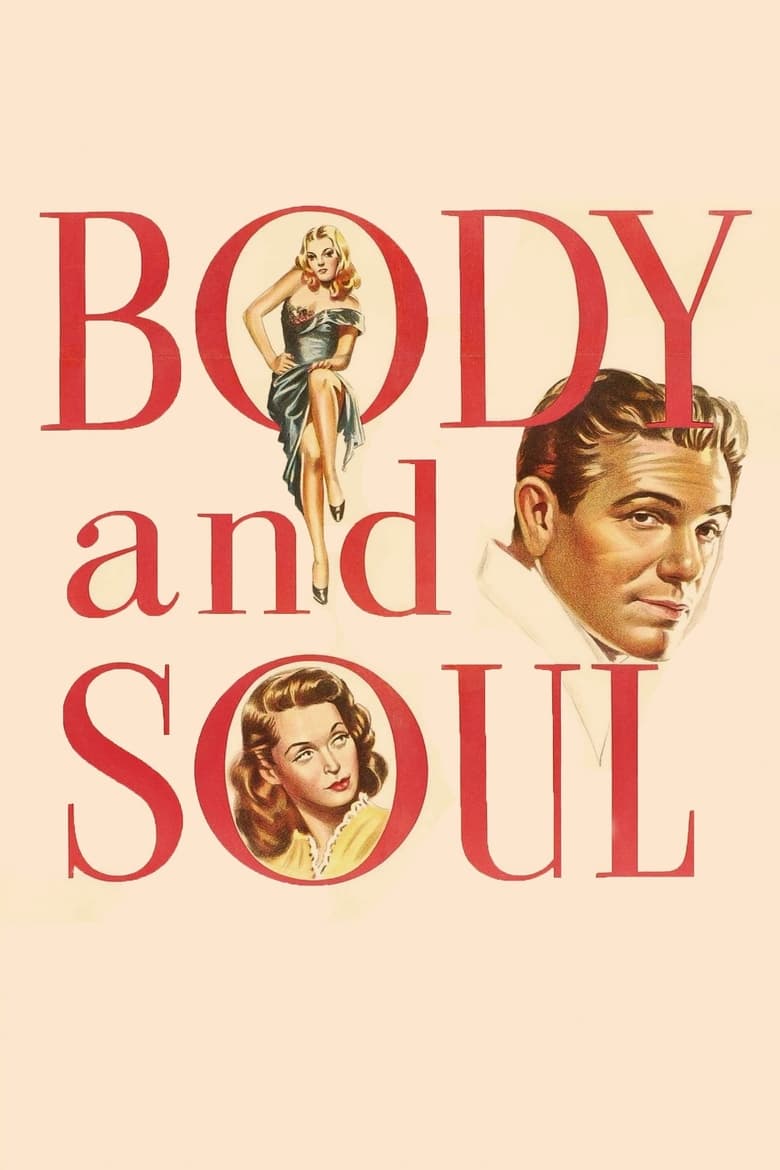
Body and Soul 1947
1947 Enterprise Productions
★★★★☆ Recommended
Film Noir · 104 minutes · Black & White

Body and Soul

Directed by Robert Rossen
Year 1947
Runtime 104 min
Studio Enterprise Productions
TMDB 6.7 / 10
"A fighter sells his soul one round at a time, and the price is always higher than he expected."

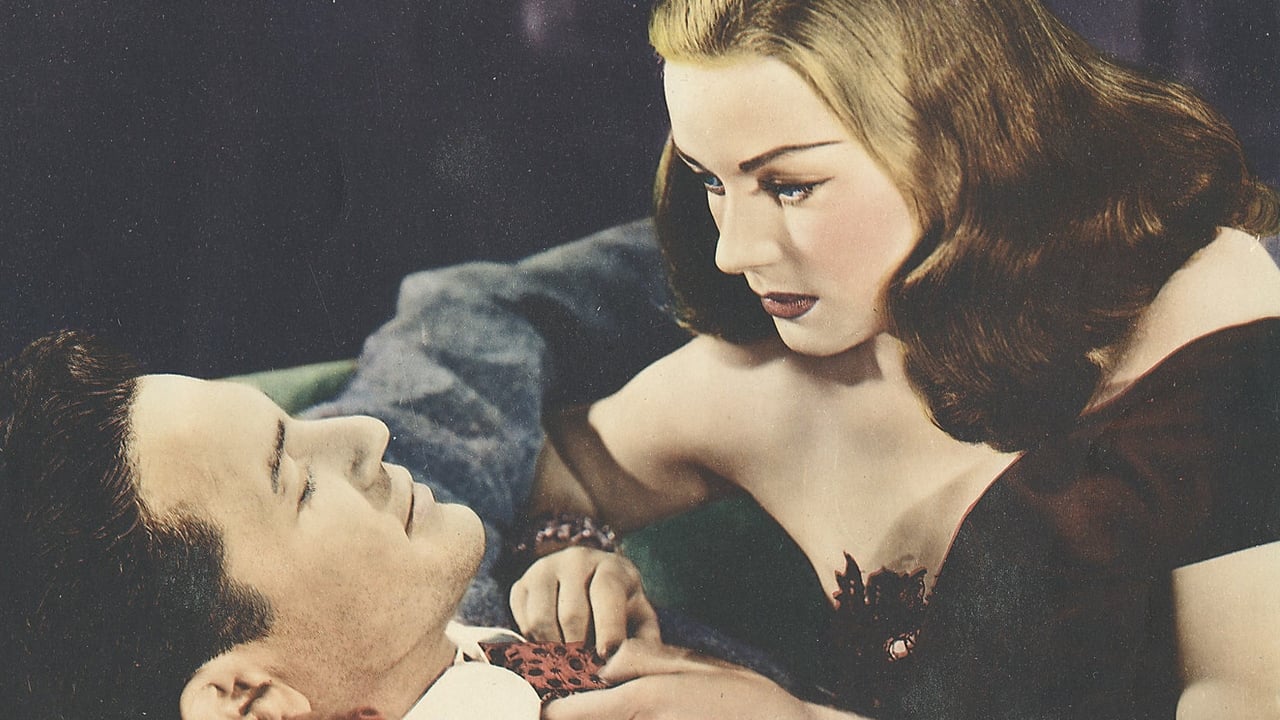
Charley Davis grows up poor on the Lower East Side, the son of Jewish immigrants whose candy store is destroyed in a mob hit meant for someone else. Determined to escape poverty and driven by a hunger for recognition his neighborhood can never satisfy, Charley turns to boxing, where raw talent quickly attracts the attention of promoter Roberts, a syndicate man who sees in the young fighter not a person but a commodity with legs.

As Charley rises through the ranks, the compromises accumulate. His relationship with the principled painter Peg Born pulls against the gravitational force of Roberts's money and the easier pleasures offered by Alice, a nightclub singer who asks nothing of him. His mother Anna watches the transformation with the undeceived clarity of someone who has already lost one man to the street. When Charley is maneuvered into a title fight against Ben Chaplin, a Black champion whose own exploitation by the same system is rendered without sentimentality, the fix is already in and Charley must decide how much of himself remains.

Body and Soul occupies a precise intersection in American noir: the rise-and-fall sports picture inflected with Popular Front social conscience and postwar disillusionment. It uses the boxing ring not as spectacle but as an arena where the logic of capitalism plays out in miniature, with bodies as the traded currency. The film holds the genre's characteristic tension between individual agency and systemic coercion without resolving it cheaply.
Classic Noir

Robert Rossen's film arrives at the moment when Hollywood's left-leaning talent was producing its most searching work before the blacklist closed down the conversation. Abraham Polonsky wrote the screenplay with a clarity about class and ethnic identity that mainstream studio product rarely permitted, and Enterprise Productions, operating outside the major studio system, gave the project unusual latitude. John Garfield, himself working-class Jewish and constitutionally unable to play false, brings an autobiographical density to Charley Davis that no more polished actor could have manufactured. Canada Lee's Ben Chaplin is one of the period's most dignified and tragic secondary figures, a man whose situation is structurally identical to Charley's yet without the exit Charley is offered. James Wong Howe's cinematography – he reportedly skated on roller skates through the ring sequences to achieve the fluid tracking shots – makes the film's moral arguments physical. Body and Soul is not the deepest noir of its decade, but it may be the most politically legible, a film that names its machinery.

– Classic Noir
4 ★★★★☆ Recommended
Credits

The Crew

DirectorRobert Rossen
ScreenplayAbraham Polonsky
CinematographyJames Wong Howe
MusicHugo Friedhofer
EditingRobert Parrish
Art DirectionNathan Juran
ProducerBob Roberts
Performances

The Cast

Close Reading

The Signature Scene

Body and Soul – scene
The Championship Bout Howe Among the Fighters

For the climactic title fight, James Wong Howe strapped on roller skates and moved through the ring itself, camera at near-body height, the frame lurching and recovering with the rhythm of the bout. The lighting is harsh and raked, throwing shadows upward across faces in a way that reverses the conventional studio glamour of top-lit portraiture. Sweat and canvas texture become visible information. The crowd at ringside exists as a blur of faces periodically sharpened into individual expressions of greed or indifference, framing the fighters as specimens observed rather than heroes celebrated.

The scene's formal restlessness enacts Charley's psychological condition. The camera never finds a stable vantage point because there is no stable vantage point available to him – every position is compromised, every corner owned by someone else. When Charley looks out between rounds, the faces he sees are Roberts, Alice, the syndicate men who hold his contract. Peg is not ringside. The composition makes the moral accounting visible without dialogue: the ring is the world Roberts has built, and Charley is fighting inside it on Roberts's terms until, in the final exchange, he briefly is not.

Visual Language

The Cinematography

🎞️
James Wong Howe – Director of Photography

James Wong Howe's work on Body and Soul is among the most purposeful cinematography in postwar American film. Shooting for Enterprise on a compressed budget, Howe made deliberate choices that turned constraint into grammar. The roller-skate rig for the fight sequences was practical improvisation that produced images no conventional dolly could replicate – the frame seems to breathe with the fighters, unstable and close. Outside the ring, Howe favors deep shadows that eat the edges of the frame, keeping characters partially submerged in the environments that define them. The Lower East Side sequences use available-feeling light that carries social information: these are not glamorized interiors. Contrast is high throughout, with faces frequently split between illumination and shadow in ways that literalize the film's moral bifurcations. Howe understood that the story's argument about exploitation required a visual language of confinement and surveillance, and he built it through lens proximity, low angles, and a disciplined refusal of the kind of compositional elegance that would aestheticize suffering.

In the Catalogue

Themes & Motifs

Availability

Where to Watch

Also in the Directory

See Also