Films People Pull a Fast One Night Beat Reading Room On TV Shop
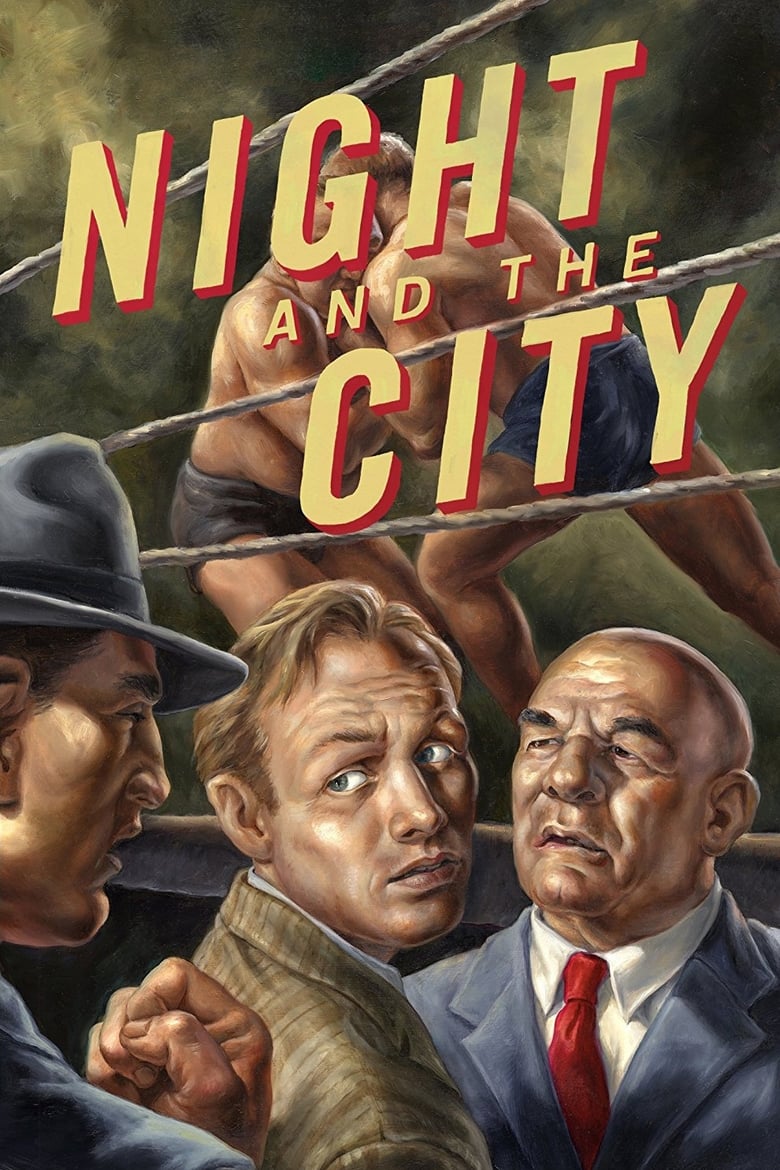
Night and the City 1950
1950 20th Century Fox
★★★★☆ Recommended
Film Noir · 95 minutes · Black & White

Night and the City

Directed by Jules Dassin
Year 1950
Runtime 95 min
Studio 20th Century Fox
TMDB 7.5 / 10
"A man runs through London's underworld until the city itself closes behind him."

Harry Fabian is a small-time American hustler living in postwar London, surviving on schemes that never quite materialize and the patience of Mary Bristol, the woman who believes in him past the point of reason. He works the margins of the Soho club scene, steering tourists toward the Nosseross establishment – a nightclub owned by the corpulent, calculating Philip Nosseross and his restless, predatory wife Helen. Harry is perpetually in debt, perpetually planning his escape into something larger, and perpetually unable to see that his ambitions exceed both his talent and his luck.

Harry's apparent breakthrough comes when he ingratiates himself with Gregorius, an aging Greco-Roman wrestling patriarch, and positions himself as a promoter who can challenge the iron control that Kristo – Gregorius's own son and London's wrestling syndicate boss – holds over the sport. To fund the venture Harry accepts dangerous help from Helen Nosseross, whose motives are entirely self-serving. Philip, aware of the betrayal, quietly ensures that Kristo learns of Harry's operation, setting in motion a city-wide manhunt that money and charm can no longer deflect.

Night and the City belongs to the strand of noir that treats ambition itself as the fatal flaw. Where many films in the genre give their protagonists a crime or a passion to explain their fall, Dassin and screenwriter Jo Eisinger frame Harry's destruction as the almost inevitable product of who he is – a man constitutionally unable to stop. Shot entirely on location in London, the film uses the bombed-out, fog-laced city as both backdrop and moral landscape, a world in which there are no exits that Harry has not already compromised.
Classic Noir

Night and the City stands among the more unsparing character studies the genre produced. Jules Dassin, working in London after the House Un-American Activities Committee rendered him unemployable in Hollywood, brought to the film a political exile's acute awareness of entrapment and erasure. Richard Widmark's Harry Fabian is not simply a loser in the classic noir sense; he is a man whose energy, charm, and relentless forward motion constitute a kind of self-consuming engine. The film refuses him the dignity of a coherent plan or a genuine wrong turn – he is undone by character, not circumstance. Francis L. Sullivan's Nosseross and Herbert Lom's Kristo represent two different registers of power, both of them patient in ways Harry cannot be. Stanislaus Zbyszko, a genuine wrestling champion performing what amounts to his own elegy, gives the film its one moment of something approaching tragedy. The London locations – Hammersmith Bridge, the Embankment, the warren of Soho streets – do more than establish atmosphere; they function as an inescapable geography, a city that Harry mistakes for a field of opportunity and that the film reveals, incrementally, as a trap.

– Classic Noir
4 ★★★★☆ Recommended
Credits

The Crew

DirectorJules Dassin
ScreenplayJo Eisinger
CinematographyMutz Greenbaum
MusicFranz Waxman
EditingSidney Stone
Art DirectionC.P. Norman
CostumesOleg Cassini
ProducerSamuel G. Engel
Performances

The Cast

Close Reading

The Signature Scene

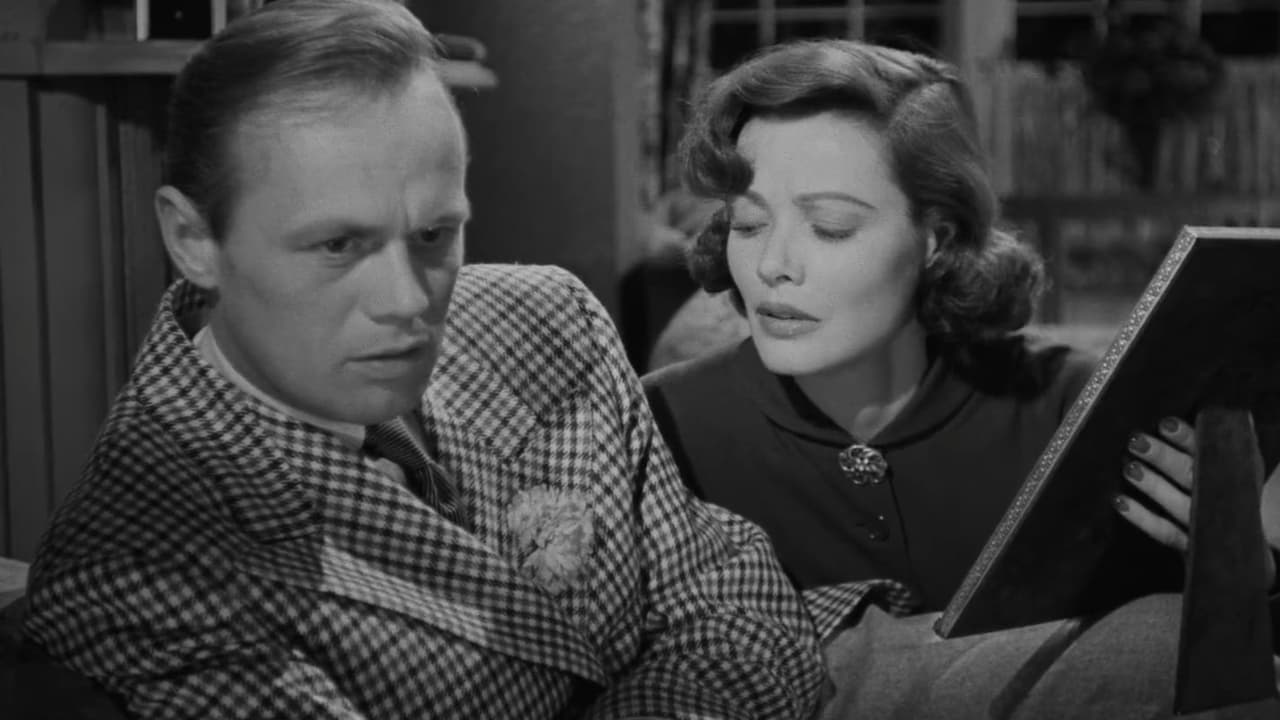
Night and the City – scene
The Embankment Chase The River Swallows Him

Mutz Greenbaum shoots the final pursuit with a camera that keeps low and close, fragmenting Harry's flight into a series of pools of lamplight separated by absolute darkness. The Thames Embankment becomes a corridor without exits, its stone walls reflecting wet light back at the lens. Long shots place Widmark as a small, pale figure against architectural mass; sudden close-ups isolate his face mid-motion, the sweat and the terror registering as a kind of concentrated information. The river is always present in the frame – not as escape route but as terminus.

The sequence completes the film's argument about the relationship between movement and doom. Harry has been running throughout the picture, and Dassin refuses to let the final run feel different in kind, only in destination. The chase does not accelerate into action-film momentum; it contracts, becomes quieter, more deliberate, the city reducing Harry to a figure of diminishing options. What the camera records is not pursuit but arithmetic.

Visual Language

The Cinematography

🎞️
Mutz Greenbaum – Director of Photography

Mutz Greenbaum, working under the anglicized credit Max Greene, photographed Night and the City on the actual streets of London at a moment when postwar austerity had left the city scarred and incompletely rebuilt – a condition the film turns into a consistent visual argument. Greenbaum uses deep-focus compositions to keep both foreground figures and receding urban geometry sharp, ensuring the environment reads not as backdrop but as active element. His lighting on location favors single-source practical lamps – streetlights, window spill, the glow of a sign – rather than the modeled studio lighting that characterized Hollywood noir of the same period. The result is a grainier, more contingent image, shadows that pool irregularly and light that falls where the city happens to place it. In interior scenes, Greenbaum tightens the frame around Sullivan and Lom, using low ceilings and compressed space to encode the power relations that Harry fails to read. The cinematography does not aestheticize the world Harry inhabits; it refuses him any glamour.

In the Catalogue

Themes & Motifs

Availability

Where to Watch

Also in the Directory

See Also