Films People Pull a Fast One Night Beat Reading Room On TV Shop
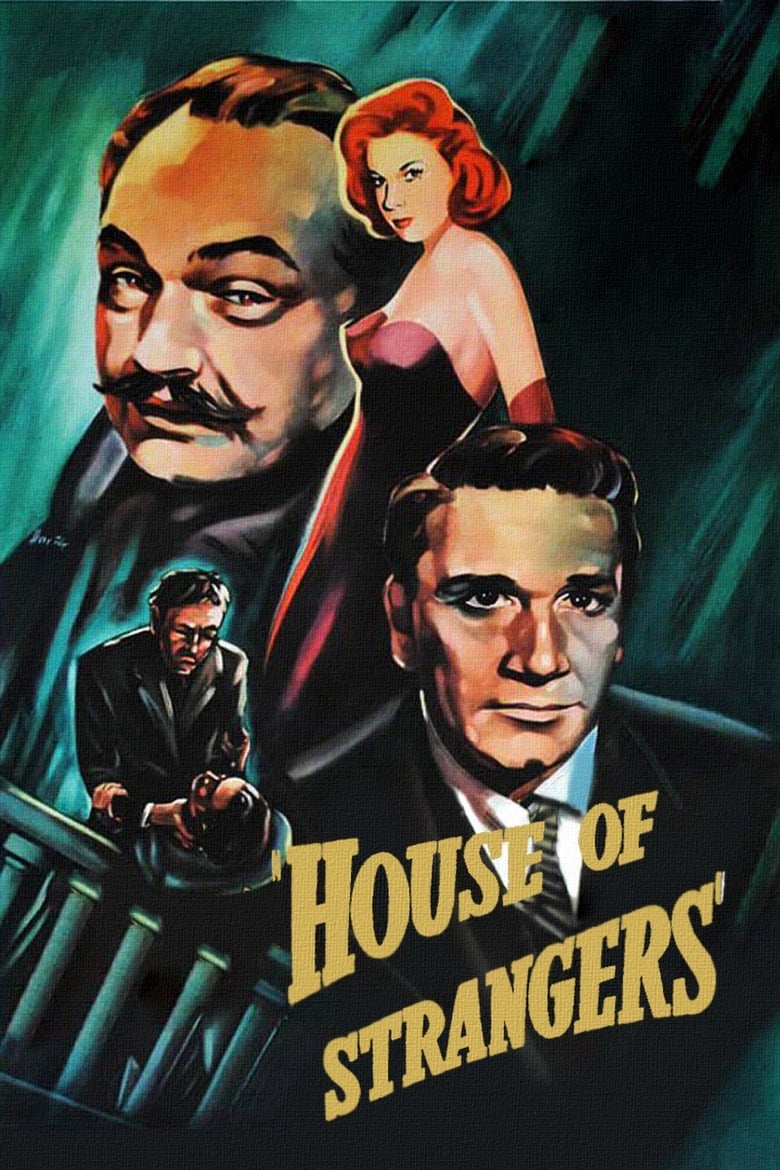
House of Strangers 1949
1949 20th Century Fox
★★★☆☆ Notable
Film Noir · 101 minutes · Black & White

House of Strangers

Directed by Joseph L. Mankiewicz
Year 1949
Runtime 101 min
Studio 20th Century Fox
TMDB 7.0 / 10
"A man walks out of prison and back into the family that put him there."

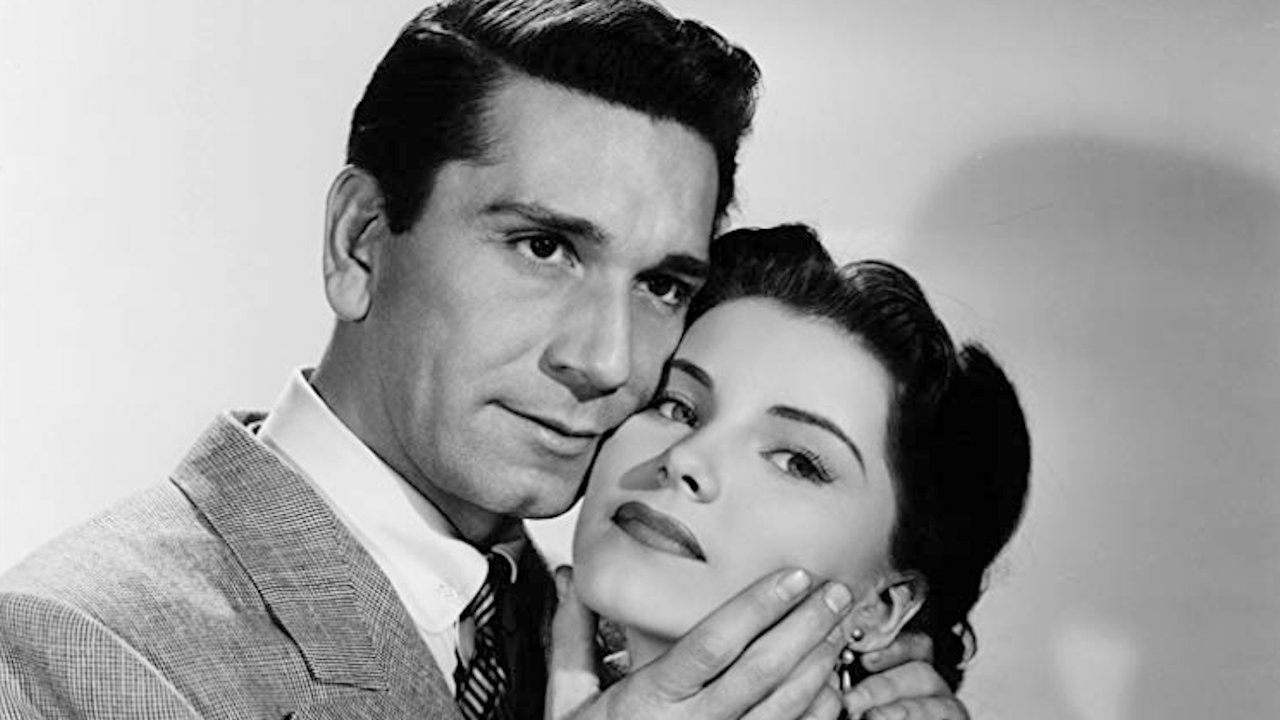
In postwar New York, Gino Monetti is a first-generation Italian immigrant who has built a small banking empire on sheer will and Old World authority. His four sons work under him, but only Max – the youngest, played by Richard Conte – has earned his father's genuine regard. The film opens in the present tense with Max's release from prison, then pulls back into an extended flashback that reconstructs how the Monetti family collapsed under the weight of its patriarch's pride and his sons' resentments.

The flashback reveals Gino's illegal banking practices and the treachery of the three elder sons – Joe, Pietro, and Tony – who report him to authorities rather than lose their inheritance to Max. Max, who tried and failed to bribe a juror on Gino's behalf, serves the prison sentence while his brothers divide the business. His relationship with Irene Bennett, a sharp and self-possessed woman who loves him without illusion, is left suspended. When Max walks free, the question is not whether he will confront his brothers, but on what terms.

House of Strangers sits at the intersection of family melodrama and revenge noir, using the immigrant saga as a framework to examine what loyalty costs and what ambition corrupts. Joseph L. Mankiewicz, working from Philip Yordan's screenplay and Jerome Weidman's novel, is more interested in the architecture of betrayal than in violence for its own sake, which gives the film a psychological weight that distinguishes it from the rougher crime pictures of the period.
Classic Noir

House of Strangers is one of the more precisely observed family noir films of its era, deriving its tension not from criminal machinery but from the slow erosion of blood loyalty under the pressure of money and filial rivalry. Edward G. Robinson's Gino Monetti is not simply a patriarch – he is a man who has confused dominance with love for so long that he cannot tell them apart, and Robinson plays that confusion with the full authority of an actor who understands that tyranny can be genuine and self-deceived at once. Mankiewicz keeps the courtroom and prison sequences functional, but the film lives in its interior scenes, where fathers and sons negotiate power at the dinner table. Richard Conte brings a bruised intelligence to Max that prevents the revenge plot from becoming mechanical. The film also marks an early and significant use of the extended flashback structure that would become a Mankiewicz signature. Its portrait of assimilation, patriarchal failure, and the American family as a site of coercion has lost none of its analytical sharpness.

– Classic Noir
3 ★★★☆☆ Notable
Credits

The Crew

DirectorJoseph L. Mankiewicz
ScreenplayPhilip Yordan
CinematographyMilton Krasner
MusicDaniele Amfitheatrof
EditingHarmon Jones
Art DirectionGeorge W. Davis
ProducerSol C. Siegel
Performances

The Cast

Close Reading

The Signature Scene

House of Strangers – scene
The Study Confrontation Father and Son, Divided

Mankiewicz and cinematographer Milton Krasner frame Gino behind his desk in a position of institutional authority – the lamp angled to cast strong light across Robinson's broad face while leaving the periphery of the room in soft shadow. The composition is nearly symmetrical but not quite: Gino is centered, Max slightly off-axis, a visual grammar that establishes who holds the power without making it diagrammatic. Krasner uses a medium shot that keeps both men in the frame without cutting away, forcing the viewer to read their relationship spatially rather than through reaction shots.

What the scene reveals is the film's central argument: that authority without reciprocity produces sons who are either broken or predatory. Gino believes he is educating Max; Max understands he is being possessed. The stillness of the camera at this moment is not neutrality – it is a formal refusal to take sides, which is itself a kind of judgment on the Monetti order. The scene encapsulates why the film's revenge plot feels like something closer to archaeology than payback.

Visual Language

The Cinematography

🎞️
Milton Krasner – Director of Photography

Milton Krasner's cinematography on House of Strangers works against the grain of the film's melodramatic material, favoring restrained shadow compositions over expressionist excess. Shooting on studio sets at 20th Century Fox, Krasner employs a controlled chiaroscuro that reserves its deepest blacks for interior spaces – banking offices, drawing rooms, prison corridors – where the film's real transactions take place. He avoids the wide-angle distortion common to the period's more theatrical noir, preferring a moderate focal length that keeps faces readable and spaces coherent, which suits Mankiewicz's preference for psychological realism over visual spectacle. Light sources are motivated throughout: desk lamps and practical fixtures anchor the lighting logic, preventing the shadow work from becoming arbitrary. The flashback structure gives Krasner the opportunity to modulate the visual temperature between past and present, using slightly softer fill in the memory sequences to distinguish them from the harsher present-tense scenes. The result is a visual language that serves the film's moral inquiry rather than decorating it.

In the Catalogue

Themes & Motifs

Availability

Where to Watch

Also in the Directory

See Also