Films People Pull a Fast One Night Beat Reading Room On TV Shop
Cry of the City 1948
1948 20th Century Fox
★★★☆☆ Notable
Film Noir · 95 minutes · Black & White

Cry of the City

Directed by Robert Siodmak
Year 1948
Runtime 95 min
Studio 20th Century Fox
TMDB 6.7 / 10
"Two men from the same street – one wears a badge, the other earns his grave."

In the tenements of postwar New York, Martin Rome (Richard Conte) lies in a prison hospital bed, wounded after a botched robbery and facing a murder charge that could send him to the electric chair. He is a product of the streets – cunning, willful, and without remorse – and the neighborhood that made him also made Lt. Candella (Victor Mature), the detective now assigned to build the case against him. The two men share a background, a block, a mother tongue; they have simply chosen opposite sides of the same city.

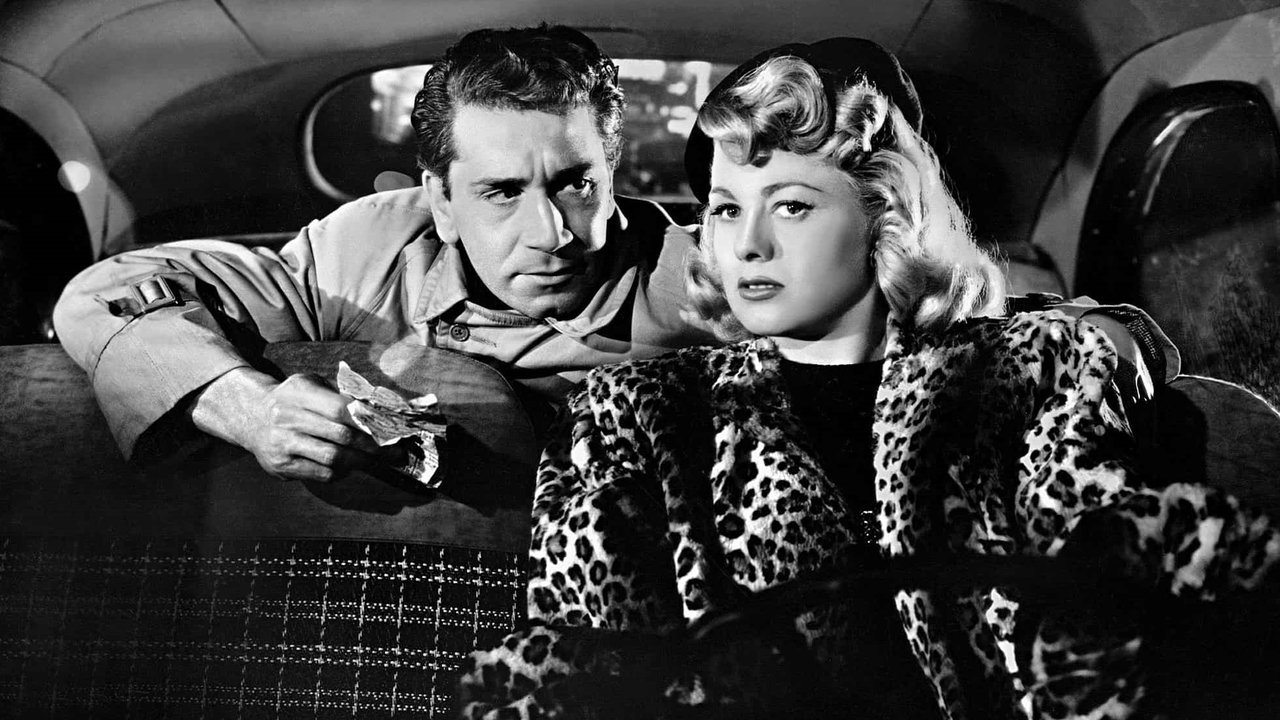
As Candella works to close the net, Rome engineers his own escape, pulling back into a nocturnal underworld of corrupt lawyers, desperate women, and small-time criminals who owe him favors or fear him too much to refuse. Brenda Martingale (Shelley Winters), a manicurist entangled in Rome's orbit, and the predatory attorney Niles (Berry Kroeger) each represent a distinct pressure on Rome's flight – one born of sentiment, the other of self-interest. Meanwhile, Candella's pursuit forces him into moral compromises that quietly erode the distance between pursuer and pursued.

Cry of the City belongs to a cycle of late-1940s Fox productions that pushed noir beyond the confines of the studio and into actual urban locations, using the physical city as both backdrop and argument. Robert Siodmak frames the conflict not as a procedural but as a study in parallel lives, asking what separates the man who enforces the law from the man who defies it when both were forged by the same circumstances – a question the film leaves productively open.
Classic Noir

Cry of the City arrives at a precise moment in the noir cycle – when the genre had acquired enough self-awareness to interrogate its own moral geometry. Siodmak, who had already demonstrated in Phantom Lady and The Killers a command of expressionist shadow and psychological compression, here works in a more naturalistic register enforced partly by Fox's commitment to location shooting. What distinguishes the film is its refusal to resolve the Candella–Rome opposition cleanly. Mature, against type, brings a quality of suppressed doubt to the detective; Conte's Rome is not romanticized but is granted a coherent internal logic. The supporting cast – particularly Kroeger's oleaginous Niles and Garde's chilling masseuse Pruett – fills in the architecture of a city that operates on fear and transaction. The film is less concerned with the mechanics of crime than with the sociology of its origins, placing it alongside Panic in the Streets and The Naked City as a document of urban American anxiety in the years immediately following the war.

– Classic Noir
3 ★★★☆☆ Notable
Credits

The Crew

DirectorRobert Siodmak
ScreenplayRichard Murphy
CinematographyLloyd Ahern Sr.
MusicAlfred Newman
EditingHarmon Jones
Art DirectionAlbert Hogsett
CostumesBonnie Cashin
ProducerSol C. Siegel
Performances

The Cast

Close Reading

The Signature Scene

Cry of the City – scene
The Massage Parlor Interrogation Light Through Frosted Glass

Siodmak stages the encounter between Rome and the masseuse Miss Pruett (Betty Garde) in a cramped, low-ceilinged room where the only illumination seems to seep through translucent partitions, diffusing into a flat, clinical pallor. The camera holds at mid-distance, resisting close-up sentiment, as Pruett moves with practiced efficiency around the table – her body blocking and revealing Rome in alternating rhythm. The frame is cluttered deliberately: equipment, towels, the geometry of a workspace that doubles as a chamber of threat. Shadow accumulates in the corners while the center of the image remains harshly, almost bureaucratically, lit.

The scene crystallizes the film's argument about the city as a system of mutual exploitation. Pruett is neither victim nor villain in the conventional sense; she is a functionary of the underworld economy, and her calm as she maneuvers around Rome – who is himself maneuvering, calculating his next move – suggests that violence in this city is simply another form of business. The lack of dramatic scoring during the encounter forces the viewer to attend to gesture and spatial pressure rather than emotional cue, and what emerges is a portrait of two people who understand each other's language completely.

Visual Language

The Cinematography

🎞️
Lloyd Ahern Sr. – Director of Photography

Lloyd Ahern Sr.'s cinematography on Cry of the City operates in productive tension between Fox's documentary impulse and Siodmak's Central European expressionism. Ahern shoots the New York location sequences with a semi-newsreel directness – wide lenses that keep architecture in frame, available-light textures that root the film in a specific, credible city – then, when the narrative retreats indoors, shifts register entirely. Interior scenes are constructed around hard sources: single practicals, light raking across walls at acute angles, faces caught at the boundary of shadow and exposure. The hospital sequences that open and close the film use high-contrast lighting to render the institution as both refuge and trap, whiteness functioning as a form of exposure rather than safety. Ahern avoids the baroque shadow-play that marks some studio noir, preferring instead a more controlled chiaroscuro in which the moral status of a character is legible in how much of their face the camera is permitted to see. The visual language serves the film's central argument: that the line between order and its absence is a matter of angle, not of essence.

In the Catalogue

Themes & Motifs

Availability

Where to Watch

Also in the Directory

See Also