Films People Pull a Fast One Night Beat Reading Room On TV Shop
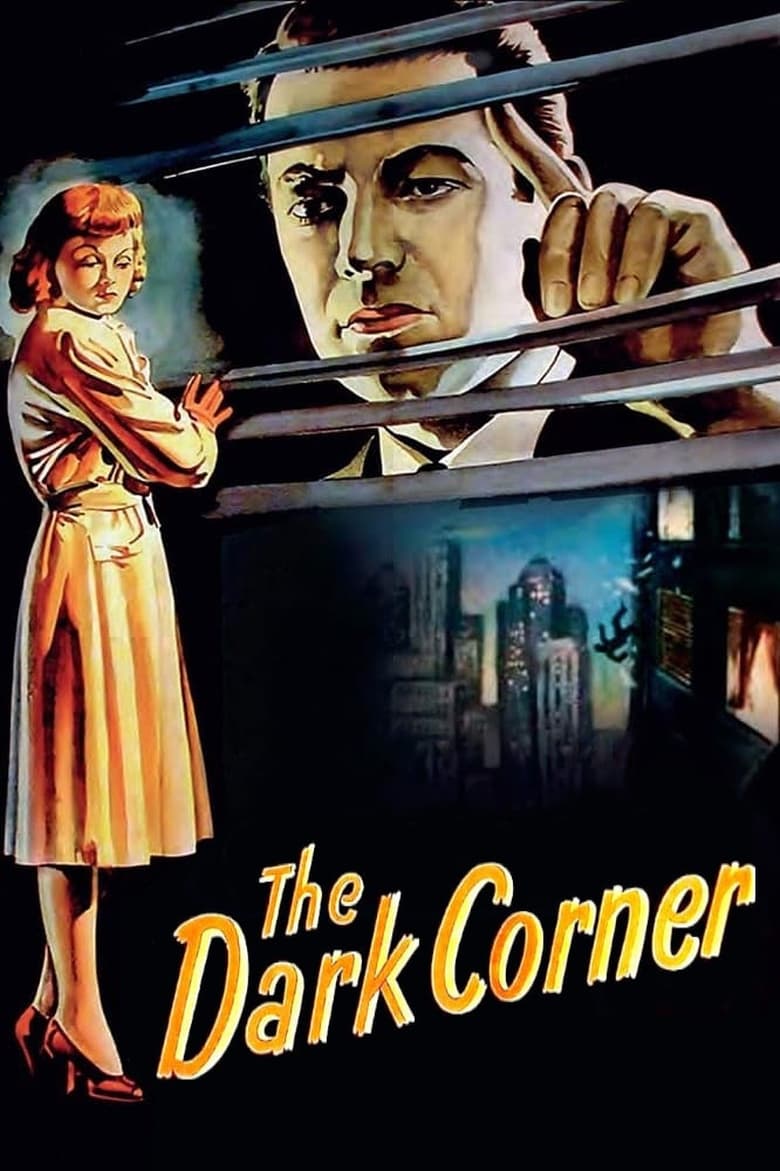
Dark Corner 1946
1946 20th Century Fox
★★★☆☆ Notable
Film Noir · 99 minutes · Black & White

Dark Corner

Directed by Henry Hathaway
Year 1946
Runtime 99 min
Studio 20th Century Fox
TMDB 6.7 / 10
"A man walks out of prison into a shadow that was waiting for him."

Bradford Galt is a private detective trying to rebuild a practice in New York after serving time on a frame-up charge engineered by his former partner, Anthony Jardine. When a white-suited stranger begins tailing him through the city streets, Galt finds himself pulled back into danger before he has fully escaped the last of it. His secretary, Kathleen Stewart – loyal, clear-eyed, and considerably more capable than the men around her – is the one stable presence in a situation that keeps shifting beneath his feet.

The tail leads Galt toward Hardy Cathcart, a wealthy, cultivated art dealer whose cold possessiveness extends from the paintings on his walls to the wife he keeps under close watch. Cathcart is operating his own agenda, using Stauffer – a brutal enforcer working under the alias Fred Foss – as an instrument of revenge against Jardine, who has been conducting an affair with Mari Cathcart. What Galt does not yet understand is that he is not an investigator in this case but a pawn, maneuvered into position by a man who prefers other people to absorb the consequences of his grievances.

The Dark Corner works the conventions of postwar urban noir with deliberate economy, placing an ordinary man inside a conspiracy that was never his to begin with. The film is less interested in mystery mechanics than in the particular helplessness of someone who cannot see the architecture of the trap around him – a condition that the period understood not merely as plot device but as a recognizable psychological state.
Classic Noir

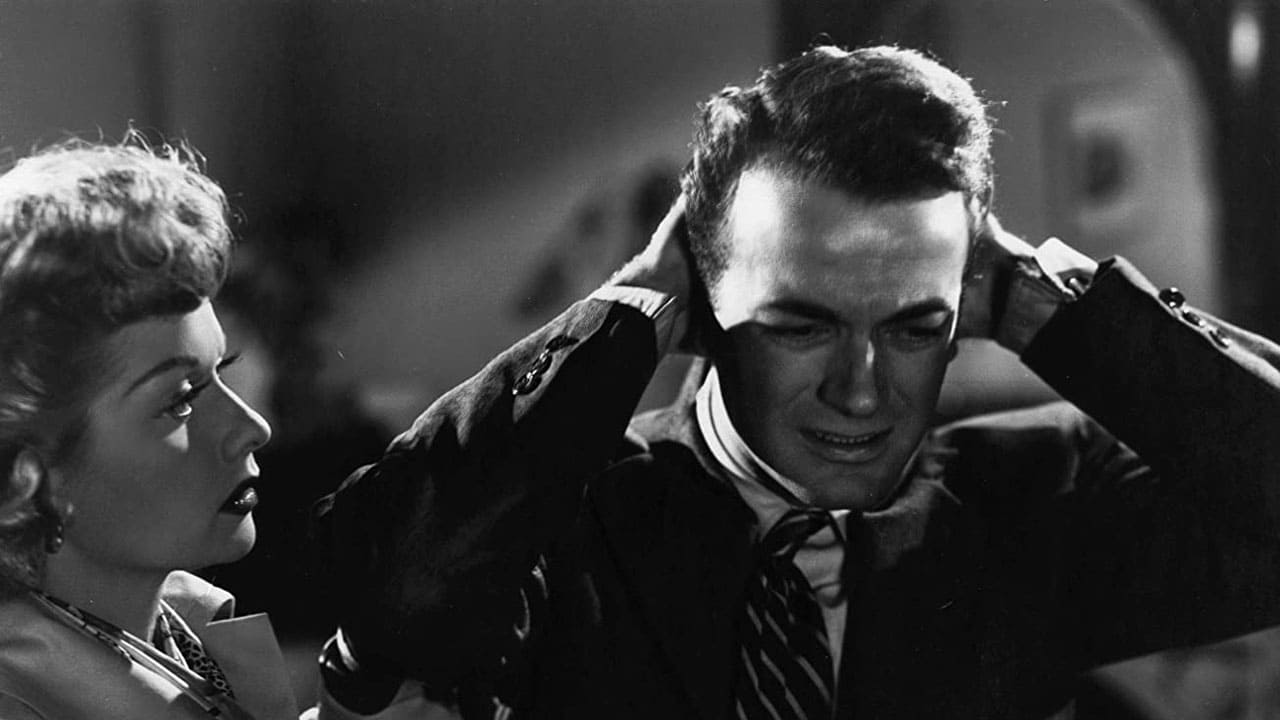
The Dark Corner occupies a precise and underappreciated position in the Fox noir cycle of the mid-1940s. Henry Hathaway, working from a screenplay by Jay Dratler and Bernard Schoenfeld, keeps the film's center of gravity unstable in a way that feels purposeful rather than confused: the nominal protagonist is passive, reactive, and periodically outmaneuvered by both the villain and his own secretary. Clifton Webb, deployed here one year after Laura established his screen persona, plays Cathcart as a man whose refinement is indistinguishable from his cruelty – the collector's possessive eye turned on human beings. Lucille Ball's Kathleen Stewart is one of the period's most functional femme figures, not a fatale but a competent partner whose presence consistently corrects Galt's failures of perception. The film does not resolve its moral tensions so much as disperse them, leaving the sense that the city itself remains indifferent to who survives. That unease, more than any individual set piece, is what earns the film its place in the genre's serious consideration.

– Classic Noir
3 ★★★☆☆ Notable
Credits

The Crew

DirectorHenry Hathaway
ScreenplayBernard C. Schoenfeld
CinematographyJoseph MacDonald
MusicCyril J. Mockridge
EditingJ. Watson Webb Jr.
Art DirectionLeland Fuller
CostumesKay Nelson
ProducerFred Kohlmar
Performances

The Cast

Close Reading

The Signature Scene

Dark Corner – scene
The Museum Corridor Cathcart Walks Past the Canvas

Hathaway and cinematographer Joseph MacDonald frame Cathcart moving through his private gallery in near-isolation, the camera tracking at a measured distance that keeps him small against the paintings he owns. The lighting is directional and cold, falling on the canvases more warmly than on the man inspecting them. Shadows pool at the edges of the frame, and MacDonald's composition consistently places Cathcart at the center of a space that feels less like a home than a vault – the objects arranged with the same precision he applies to everything else in his life.

The scene does not advance the plot. What it establishes is the film's central argument about the collector as a particular kind of predator – one whose violence is always mediated through ownership. Cathcart does not lose his temper here; he simply inventories what belongs to him, and the camera's quiet attention to that ritual makes it clear that Mari is listed somewhere in the same ledger as the Vermeer. The scene precedes every act of violence in the film and explains them all.

Visual Language

The Cinematography

🎞️
Joseph MacDonald – Director of Photography

Joseph MacDonald brings to The Dark Corner the same controlled location-to-studio tension that would mark his later work on Pickup on South Street. The New York exteriors are used sparingly but with precision – wet pavement, hard building edges, the sense of a city that does not notice its inhabitants – before the film retreats into Fox studio interiors where MacDonald's lighting can be fully regulated. His shadow work on the Cathcart apartment sequences is architectural rather than expressionistic: darkness fills corners and doorways not as stylistic flourish but as spatial fact, suggesting rooms that are never fully revealed. Close-ups of Webb are lit to flatten affect, the face presented as surface, consistent with the character's refusal of legible emotion. The camera rarely moves without motivation, and when it does track – as in the gallery sequence – the movement is slow enough to feel like surveillance rather than energy. MacDonald's restraint throughout serves the film's moral logic: in a story about concealed intentions, the image itself withholds.

In the Catalogue

Themes & Motifs

Availability

Where to Watch

Also in the Directory

See Also