Films People Pull a Fast One Night Beat Reading Room On TV Shop
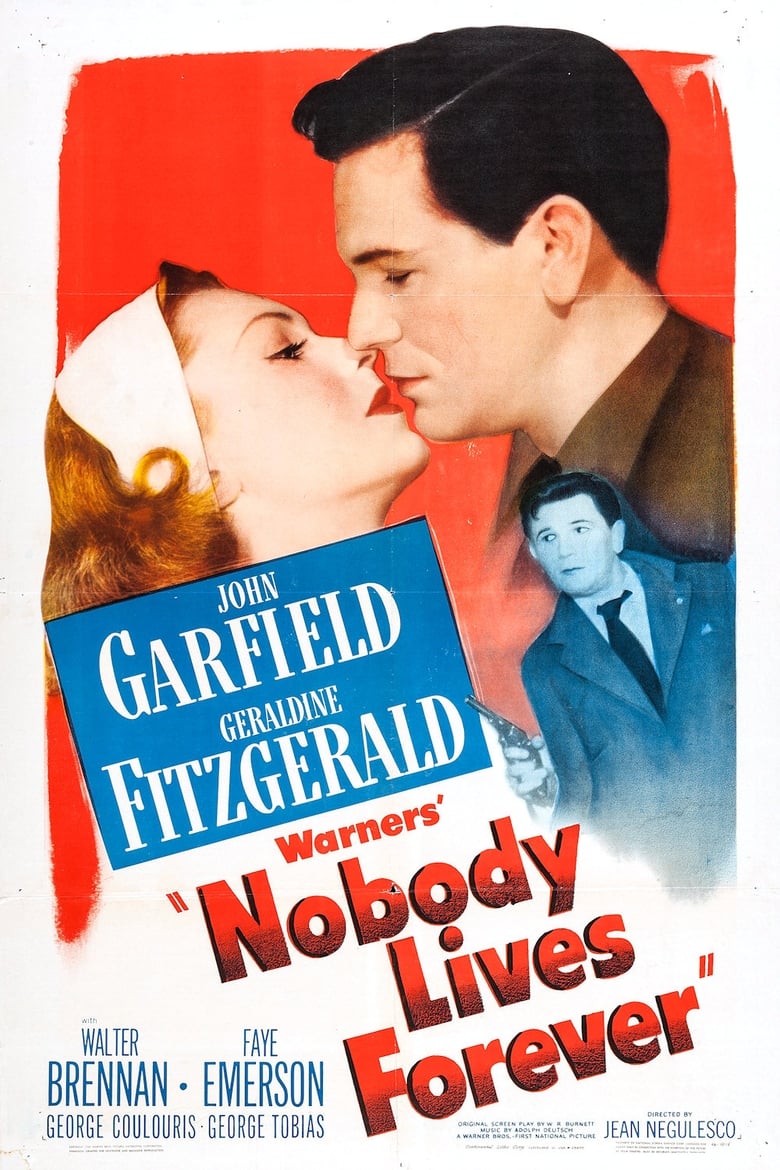
Nobody Lives Forever 1946
1946 Warner Bros. Pictures
★★★☆☆ Notable
Film Noir · 100 minutes · Black & White

Nobody Lives Forever

Directed by Jean Negulesco
Year 1946
Runtime 100 min
Studio Warner Bros. Pictures
TMDB 6.4 / 10
"A con man returns from the war with clean hands, but the old city has other plans."

Nick Blake comes back from the war a decorated soldier, intending to leave his grifter past behind him. His plan for a quiet life dissolves almost immediately when his former associates, led by the calculating Doc Ganson, pull him back into a long-con scheme targeting a wealthy widow named Gladys Halvorsen, who has recently inherited a considerable fortune. Nick's old partner Al Doyle and the reliable Pop Gruber round out the operation, while Toni Blackburn, Nick's prewar girlfriend, watches from the margins with a possessive interest in his return.

Nick's role is to seduce Gladys and position her for the swindle, but the relationship develops in a direction the scheme did not anticipate. What begins as calculated manipulation shifts register as Nick finds in Gladys a sincerity that his professional instincts cannot easily dismiss. Doc Ganson, who trusts neither sentiment nor loyalty, begins to suspect that Nick is going soft, and the operation's internal pressures mount. The question of who is deceiving whom, and for whose benefit, becomes harder to resolve as the money grows closer.

Nobody Lives Forever belongs to the cycle of postwar noir that interrogated whether a man shaped by deception could reorient himself toward something honest. The film takes seriously the idea that the con and the romance are not so easily separated, and that the world a veteran returns to may be as morally compromised as anything he left behind.
Classic Noir

Nobody Lives Forever occupies a specific and underexamined position in the Warner Bros. noir cycle of the mid-1940s. John Garfield, whose screen persona was built on the tension between street-level cynicism and suppressed idealism, finds in Nick Blake a role that uses both registers without resolving them cheaply. The film, adapted by W.R. Burnett from his own novel, is less interested in procedural mechanics than in the question of whether a man's professional identity can be shed like a coat. Jean Negulesco directs without flourish, keeping the camera oriented toward performance and moral implication rather than stylistic display. Geraldine Fitzgerald brings a measured intelligence to Gladys that prevents her from functioning as mere target or reward. What the film finally reveals about its era is a deep postwar ambivalence: the returning soldier as a figure not of triumph but of uncertain re-entry, carrying skills that have no clean civilian application.

– Classic Noir
3 ★★★☆☆ Notable
Credits

The Crew

DirectorJean Negulesco
ScreenplayW.R. Burnett
CinematographyArthur Edeson
MusicAdolph Deutsch
EditingRudi Fehr
Art DirectionMax Parker
CostumesMilo Anderson
ProducerRobert Buckner
Performances

The Cast

Close Reading

The Signature Scene

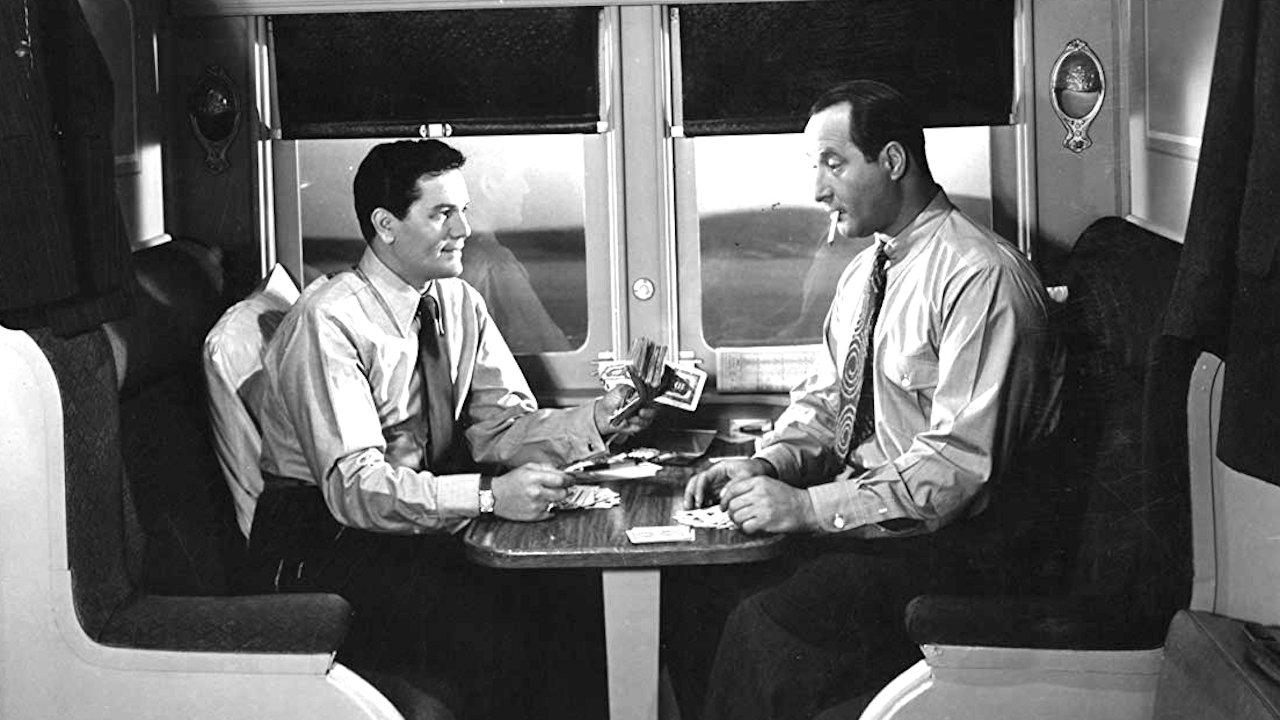
Nobody Lives Forever – scene
The Beachfront Approach The Con Begins in Sunlight

Negulesco and cinematographer Arthur Edeson stage the scene in unusual brightness for the genre, the California coast providing flat, even light that offers Nick nowhere to hide behind shadow. The camera holds a middle distance, observing him as he engineers the first encounter with Gladys, the wide frame underlining the calculated nature of his positioning. Edeson refuses the expressionist angles that might signal danger; the threat here is social and internal, and the visual grammar stays deliberately ordinary, which is itself a form of unease.

The scene's argument is that seduction and predation share identical surfaces, and that the absence of conventional noir darkness is precisely the point. Nick is most dangerous not in a back room but in daylight, performing normalcy. The film uses the scene to establish that moral corruption does not require shadows to operate, and that Gladys's vulnerability is not naivety but a reasonable response to a man presenting a credible version of himself.

Visual Language

The Cinematography

🎞️
Arthur Edeson – Director of Photography

Arthur Edeson, whose career stretched back to the early sound era and included work on The Maltese Falcon, brings to Nobody Lives Forever a controlled, studio-disciplined visual approach that resists the more expressionist tendencies of contemporary noir. The lighting setups favor defined but not theatrical shadow, using controlled key and fill arrangements that keep faces legible and psychologically exposed rather than obscured. Interior scenes in Ganson's operation use deeper shadow and tighter framing to signal institutional corruption, while sequences involving Gladys are lit with a cooler, more open quality that reflects Nick's shifting perception of what she represents. Edeson worked primarily on studio sets rather than location, and the controlled environment allows him to modulate the moral temperature of individual scenes through deliberate tonal shifts. The cinematography serves the story's central argument by making corruption and honesty visually adjacent, denying the audience the comfort of a clear visual register for each.

In the Catalogue

Themes & Motifs

Availability

Where to Watch

Also in the Directory

See Also