Films People Pull a Fast One Night Beat Reading Room On TV Shop
They Made Me a Killer 1946
1946 Paramount Pictures
★★★☆☆ Notable
Film Noir · 64 minutes · Black & White

They Made Me a Killer

Directed by William C. Thomas
Year 1946
Runtime 64 min
Studio Paramount Pictures
TMDB 5.7 / 10
"A man who never pulled a trigger finds himself holding the gun."

Tom Durling (Robert Lowery) is a drifter passing through a small town when he accepts a ride from the wrong strangers. Within hours, a bank has been robbed and two men are dead. Tom is the only witness without an alibi, and the local law is not inclined toward nuance. Forced to run with the gang to avoid immediate arrest, he finds himself moving deeper into criminal territory with every mile, accompanied by the calculating Betty Ford (Lola Lane) and the volatile Jack Conley (Edmund MacDonald), a man who operates under the alias Chance and earns it.

Tom's only thread back to respectability is June Reynolds (Barbara Britton), whose brother Steve (Byron Barr) is already entangled with Conley's outfit. The gang's matriarch, the coldly domestic 'Ma' Conley (Elisabeth Risdon), presides over a farmhouse hideout with the authority of someone who has buried trouble before. Two patrolmen, Wilson (Frank Albertson) and Roach (Ralph Sanford), close the net from the outside while Tom attempts to negotiate his innocence from within, a position that grows less tenable as the bodies accumulate.

They Made Me a Killer belongs to the postwar cycle of wrong-man pictures that treated American mobility itself as a source of danger – the open road as a place where identity collapses and circumstance substitutes for guilt. The film works within tight B-picture constraints, but its structure is coherent and its moral geography is clear: the institutions meant to protect the innocent are blunt instruments, and survival depends on a man's willingness to act outside the law he is trying to reenter.
Classic Noir

They Made Me a Killer is a competent, unpretentious entry in the Paramount B-noir cycle of the mid-1940s, directed by William C. Thomas with an economy that suits its sixty-four-minute frame. It does not reach for the expressionist distortion of its more celebrated contemporaries, but it understands its assignment: put an ordinary man in impossible geography and watch the exits disappear. Robert Lowery carries the film without straining; his Tom Durling is reactive rather than heroic, which is the honest reading of the character's situation. Lola Lane as Betty Ford supplies the film's only genuine moral ambiguity – a woman whose loyalties are provisional and whose calculations are never quite legible. Elisabeth Risdon's 'Ma' Conley is the more interesting villain, a figure of domestic authority twisted into something predatory. The film reflects 1946's particular unease about returned veterans and displaced men, the sense that the country's roads were full of men whose pasts were unclear and whose futures were contingent. As a document of that anxiety, it earns its place in the catalogue.

– Classic Noir
3 ★★★☆☆ Notable
Credits

The Crew

DirectorWilliam C. Thomas
ScreenplayDaniel Mainwaring
CinematographyFred Jackman Jr.
MusicAlexander Laszlo
EditingHenry Adams
Art DirectionFrank Paul Sylos
ProducerWilliam H. Pine
Performances

The Cast

Close Reading

The Signature Scene

They Made Me a Killer – scene
The Farmhouse Confrontation Ma Holds the Room

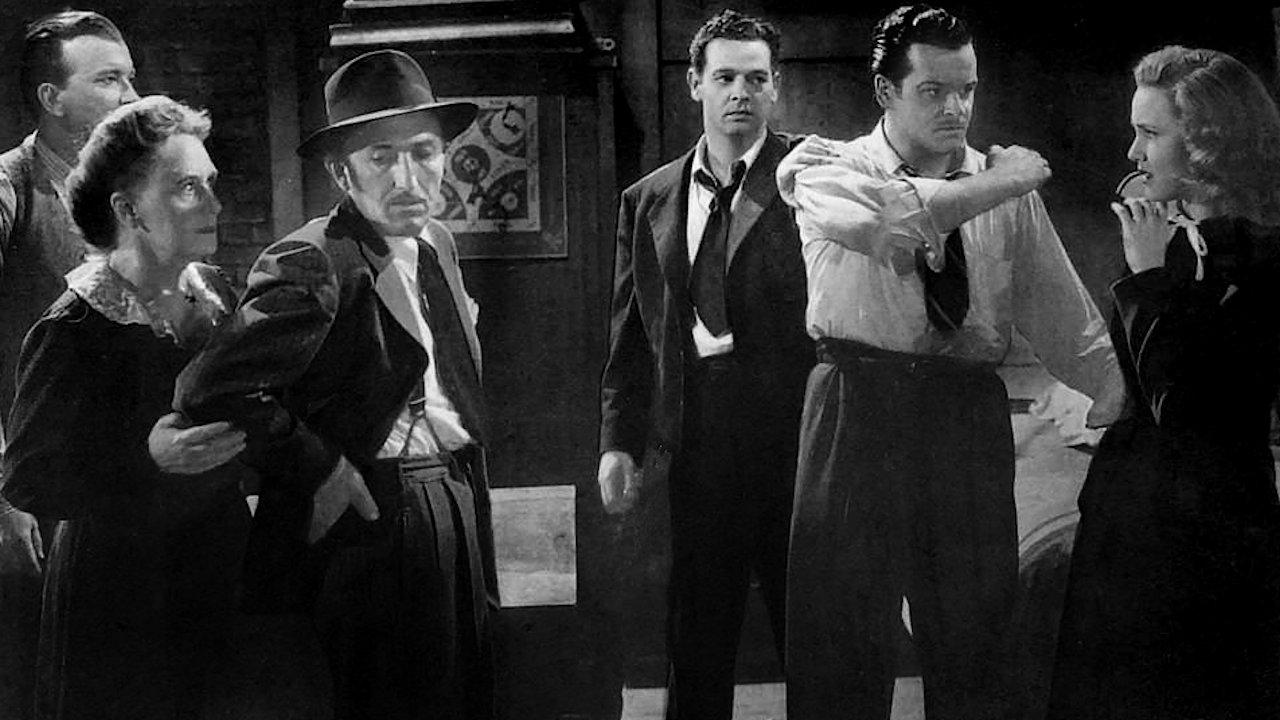
The camera settles into a medium shot of the farmhouse kitchen, Jackman's lighting sourced ostensibly from a single overhead fixture that throws hard shadows beneath every jawline. 'Ma' Conley stands at the table's head, the frame composed so that the gang members flank her in shallow depth, their faces partially obscured while hers remains in full, flat light. There is no Dutch angle, no rack focus – the geometry is almost classical, which makes the menace register as domestic rather than theatrical.

The scene argues the film's central point without dialogue: criminal authority in this world is not glamorous or urban but rooted and familial. Ma is not a gangster's moll or a femme fatale; she is something older and more troubling, a matriarch for whom the law is simply an exterior nuisance. Tom's helplessness in her presence is less about physical threat than about the illegibility of her moral system, one that the film never attempts to domesticate or redeem.

Visual Language

The Cinematography

🎞️
Fred Jackman Jr. – Director of Photography

Fred Jackman Jr. works within the disciplined poverty of Paramount's B-unit with evident craft. The film's visual language relies on tight interior compositions and high-contrast practical-source lighting that keeps the budget invisible: a window, a bare bulb, a car's headlamps are enough to establish threat or relief. Jackman does not indulge in the deep-focus experimentation that was reshaping A-picture cinematography at the time, but his framing is consistently purposeful – figures are placed at the edges of rooms, doors cut the frame into unequal thirds, and open landscape shots are kept brief, denying the audience the reassurance of space. The location work around rural Pennsylvania gives the film an unglamorous texture that studio-bound productions of the era could not replicate: the roads are real, the light is flat and unforgiving, and that flatness serves the story's moral logic, a world without shadow where there is nowhere to hide and no romantic darkness to shelter in.

In the Catalogue

Themes & Motifs

Availability

Where to Watch

Also in the Directory

See Also