Films People Pull a Fast One Night Beat Reading Room On TV Shop
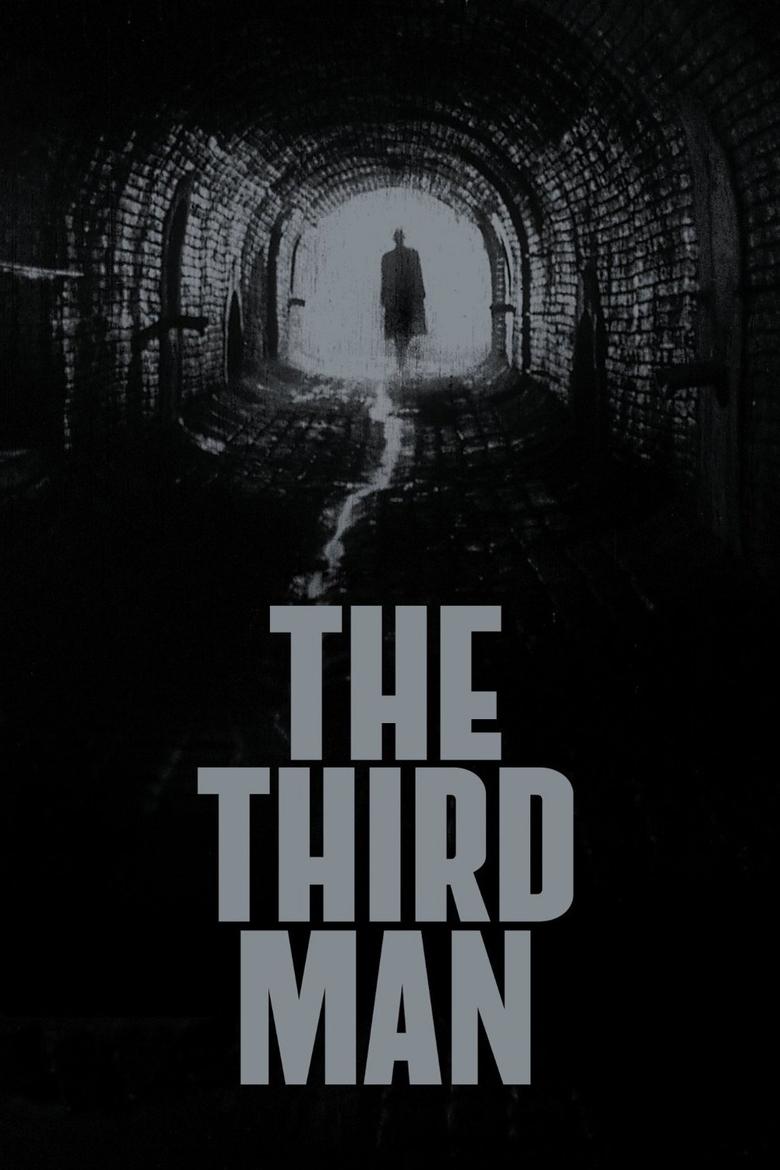
Third Man 1949
1949 London Films Productions
★★★★★ Essential
Film Noir · 105 minutes · Black & White

Third Man

Directed by Carol Reed
Year 1949
Runtime 105 min
Studio London Films Productions
TMDB 7.9 / 10
"A dead man walks Vienna's rubble, and the truth is worse than the lie."

Holly Martins, a writer of cheap Western novels, arrives in postwar Vienna at the invitation of his old friend Harry Lime, only to find that Lime has just been killed in a road accident. The city is divided among four occupying powers – British, American, French, and Soviet – and operates as a marketplace for black-market trade and compromised allegiance. Major Calloway of the British military police informs Martins that Lime was a racketeer and no friend worth mourning. Martins refuses to accept this and begins asking questions in a city that rewards silence.

What Martins uncovers is a third man present at the scene of Lime's death – a witness no one will name. His investigation draws him into the orbit of Anna Schmidt, Lime's Czech actress companion, who holds a forged passport and carries a loyalty to Lime that survives every revelation about his character. As the evidence against Lime accumulates – evidence pointing to a penicillin-dilution scheme that has killed children in the city's hospitals – Martins finds himself instrumentalized by Calloway, caught between the duty he feels to the truth and the affection he feels for Anna, who refuses to make the same accommodation.

The Third Man situates noir's moral architecture within the specific exhaustion of occupied Europe, where institutional authority is fragmented and personal loyalty has become the last available currency. The film operates as a study in how men and women assign value to people they should not trust, and how postwar disillusionment corrodes even that. Reed frames this not as tragedy but as a species of cold clarity – a world in which the worst man in the room is also the most vivid, and survival depends on recognizing that distinction too late.
Classic Noir

Carol Reed's film belongs to noir's European branch, where the genre's American cynicism is recalibrated by actual historical devastation. Shot on location in Vienna's bombed-out streets and sewers in 1948, it carries the moral weight of a continent still sorting through what it permitted. What distinguishes it from the American product is the absence of a conventional detective logic: Holly Martins is not a private eye but a naïf, and the film's argument depends on his inadequacy. Orson Welles appears for a fraction of the runtime, yet Harry Lime functions as the film's center of gravity because the story is structured around the damage one charming sociopath can distribute across lives that loved him. The film refuses to sentimentalize either Lime's punishment or Martins's position as agent of it. Anton Karas's zither score, recorded on a single instrument, is not atmospheric decoration but a tonal argument: bright, slightly carnivalesque, indifferent to human suffering – precisely the register Lime himself inhabits. The closing shot is among the most considered moral statements in postwar cinema.

– Classic Noir
5 ★★★★★ Essential
Credits

The Crew

DirectorCarol Reed
ScreenplayGraham Greene
CinematographyRobert Krasker
MusicAnton Karas
EditingOswald Hafenrichter
ProducerCarol Reed
Performances

The Cast

Close Reading

The Signature Scene

Third Man – scene
The Prater Ferris Wheel Cuckoo Clocks and Dots Below

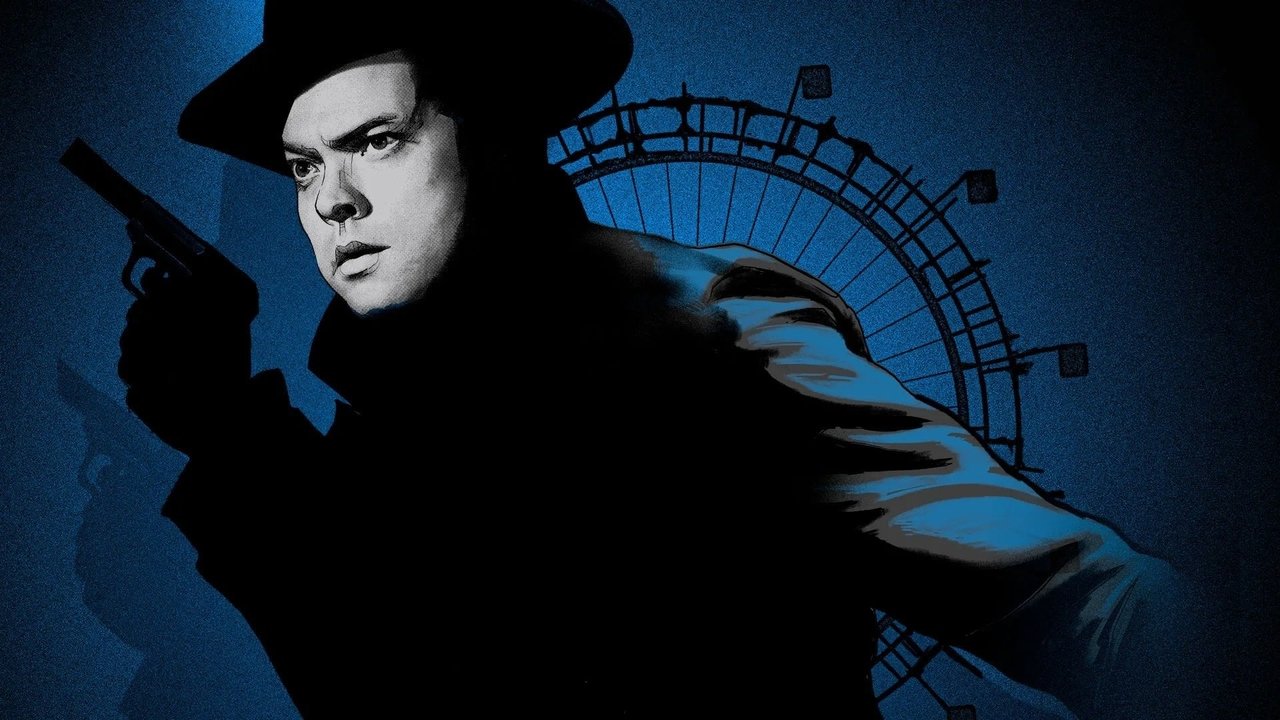
Reed and cinematographer Robert Krasker frame the Prater Riesenrad sequence in a series of tight two-shots inside a slowly rotating gondola, the frosted windows reducing Vienna beneath to an abstraction of light and dark. The camera stays close enough to read both men's faces without staging the scene as a confrontation – the gondola's movement substitutes for dramatic blocking, and Krasker uses the available window light to keep Lime's face partially in shade even in a confined, enclosed space. When the gondola opens briefly at the apex and Lime gestures down at the people below, Reed cuts to a high-angle shot that renders the figures as what Lime calls them: dots.

The sequence is the film's thesis made visible. Lime's offer – a share in the scheme, framed as pragmatism – is not presented as monstrous. Welles delivers it with the ease of a man who has thought through the arithmetic and found it comfortable. The film's moral claim is not that Lime is evil in a legible way, but that he is convincing, and that the distance required to see other people as dots is available to anyone willing to ride high enough. Martins's failure to answer immediately is the scene's most honest moment.

Visual Language

The Cinematography

🎞️
Robert Krasker – Director of Photography

Robert Krasker's work on The Third Man represents a rigorous application of German Expressionist compositional principles to a location-shot film, a combination that should not cohere as well as it does. Krasker deployed wide-angle lenses at low angles throughout, tilting the frame to degrees that in lesser hands would read as affectation; here the canted angles register as the visual equivalent of a world knocked from its foundations. Vienna's shattered postwar streets were shot at night or in low available light, with Krasker supplementing with hard arc lamps raked at steep angles to produce the deep-shadow pooling that defines the film's look. The sewer sequences in the third act required custom lighting rigs to illuminate the curved, water-slicked tunnel walls, producing a reflected ambient light that strips characters of any protective shadow precisely when danger is greatest. Studio interiors were matched to location work with uncommon precision, preserving the tonal consistency of a film whose moral argument depends on the world appearing permanently, irreparably wrong.

In the Catalogue

Themes & Motifs

Availability

Where to Watch

Also in the Directory

See Also