Martinique, 1940. Harry Morgan, an American charter-boat captain operating out of Vichy-controlled Fort-de-France, keeps his politics at arm's length and his business simple. When a client skips out on a bill, Morgan is left broke and under the watchful eye of the local Vichy police, represented by the menacing Lieutenant Coyo. Into this carefully maintained neutrality walks Marie Browning, a young American drifter with enough composure to unsettle a man who has spent years cultivating indifference.
Frenchy, a local resistance sympathizer who runs the hotel where Morgan docks his life, presses him to ferry a Free French operative and his wife across the water. Morgan refuses – then accepts, for money, then for reasons that money alone cannot explain. The arrival of Paul and Helene de Bursac complicates every arrangement Morgan has made with himself. Coyo tightens the screws. Eddie, Morgan's aging, alcohol-blurred companion, becomes a liability the authorities are willing to exploit. Marie, who might have walked away, does not.
To Have and Have Not is nominally an adventure picture, but it operates on the interior logic of noir: a protagonist whose self-imposed exile is an extended act of self-deception, a woman who sees through that deception before he does, and an environment of occupation and surveillance that makes every small choice a moral one. The film arrived in 1945 still trailing the atmosphere of wartime, yet its real subject is the cost of remaining uninvolved when the world insists otherwise.
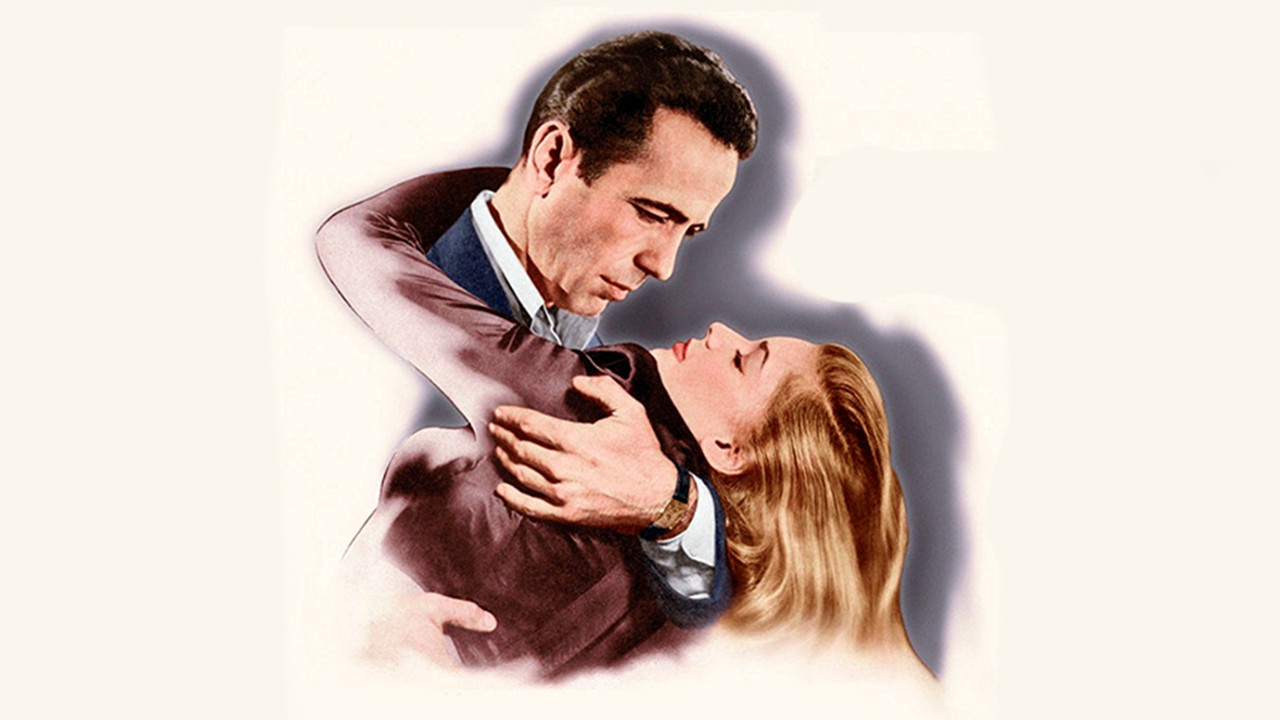
To Have and Have Not occupies an unusual position in the Hawks catalogue and in the wider noir-adjacent cinema of the mid-1940s. It bears only a structural resemblance to Hemingway's source novel; what Hawks and screenwriters Jules Furthman and William Faulkner built in its place is closer in spirit to Casablanca than to anything Hemingway wrote, yet more sexually candid and less ceremonially patriotic than that film. What gives it weight within the noir framework is the texture of its moral atmosphere: occupied Martinique rendered as a world where authority is corrupt by definition, where cooperation with power is indistinguishable from collaboration, and where the only honest currency is personal loyalty. Bogart's Morgan is recognisably noir territory – a man who has contracted his world down to the manageable and is punished for that contraction. Bacall's Browning is not a femme fatale; she is something rarer and, in genre terms, more subversive: a woman whose clarity of purpose exceeds the protagonist's. The film does not resolve its tensions so much as absorb them into the forward motion of Hawks's direction.
– Classic Noir
Bacall leans against the doorframe of Morgan's room, the light source behind and slightly above her, throwing her face into a half-shadow that is less ominous than composed. Sidney Hickox keeps the frame tight, giving Bogart's Morgan the smaller portion of the two-shot, which is a quiet visual argument about who holds the advantage. The room behind them is dim without being expressionistic; the shadow work here is social rather than psychological, marking a space where two people negotiate at close range. The camera does not move. It does not need to.
The scene functions as an inversion of the classic noir power arrangement. The man with experience and damage is visibly at a disadvantage before a woman who has apparently accumulated neither, yet reads the situation with complete accuracy. What the scene reveals is not seduction so much as assessment – a quality of attention Browning brings to Morgan that no one else in the film bothers with. It is the film's thesis delivered in a doorway: being seen clearly is both an intrusion and a form of rescue.
Sidney Hickox, who shot several of Bogart's Warner Bros. pictures in this period, brings to To Have and Have Not a visual grammar rooted in controlled studio work rather than location realism. The Martinique of the film is entirely constructed, and Hickox makes no effort to disguise its studio origins, instead using that artificiality to establish a world that operates by its own enclosed rules. His lighting on Bacall in her early scenes is worth particular attention: he uses a slightly raised key light that models the face without flattening it, producing a look that registers as confidence rather than glamour. The shadow work in the hotel interiors follows the wartime noir convention of venetian-blind patterning to suggest surveillance and constraint, but Hickox applies it with restraint, reserving the harder shadow geometries for scenes involving Coyo and the Vichy apparatus. The overall visual register is mid-range – not the deep chiaroscuro of a Siodmak picture, but deliberate and consistent, matching the film's moral temperature.
Warner Bros. catalogue titles from this era appear on Max with reasonable regularity; confirm current availability before seeking elsewhere.
TCMSubscriptionTCM's broadcast and streaming schedule is the most reliable home for this film in a properly presented version; check the monthly schedule for air dates.
Archive.orgFreePublic domain copies circulate on Archive.org, though print quality varies and no version there should be considered authoritative.