Films People Pull a Fast One Night Beat Reading Room On TV Shop
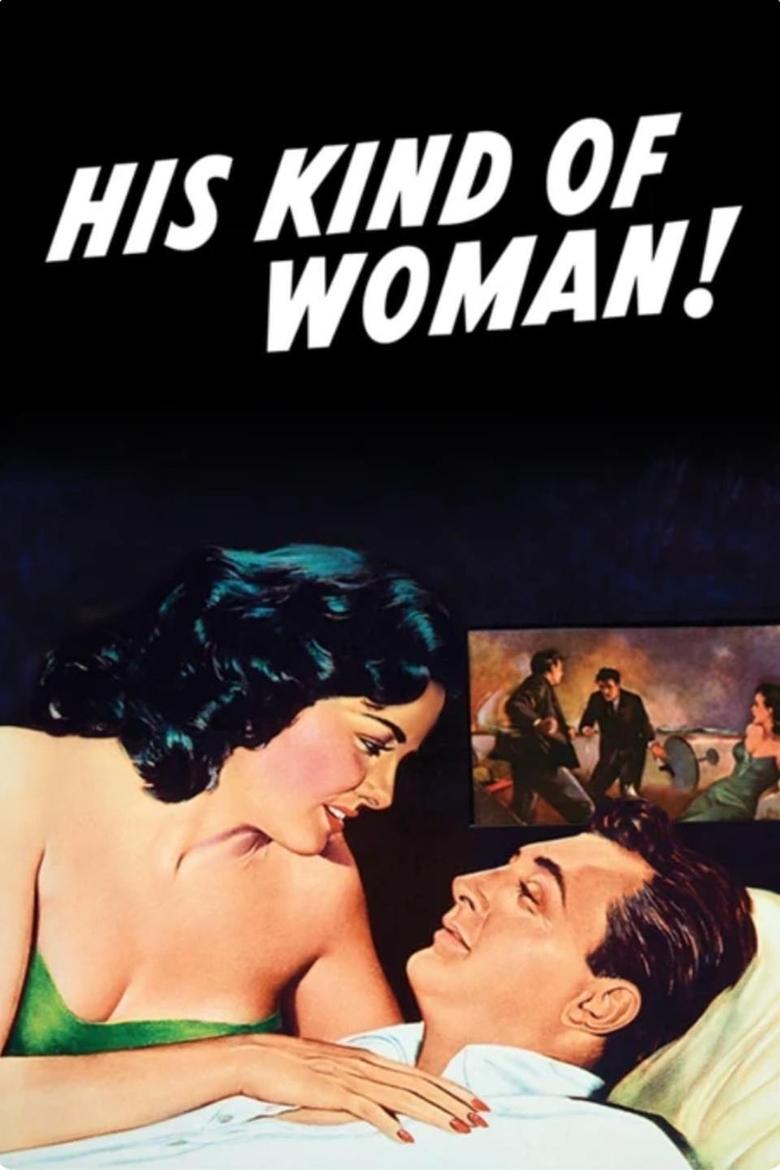
His Kind of Woman 1951
1951 RKO Radio Pictures
★★★☆☆ Notable
Film Noir · 120 minutes · Black & White

His Kind of Woman

Directed by John Farrow
Year 1951
Runtime 120 min
Studio RKO Radio Pictures
TMDB 6.8 / 10
"A man without choices arrives at a resort where everyone has something to hide."

Dan Milner (Robert Mitchum) is a small-time gambler who has been losing steadily and living on borrowed time. When an anonymous offer arrives – good money for a simple trip to a Mexican resort and no questions asked – Milner takes it. At Morro's Lodge in Baja California, he finds a collection of idle rich, a crooked operator named Nick Ferraro (Raymond Burr), and Lenore Brent (Jane Russell), a nightclub singer angling for a wealthy future with the vain, self-dramatizing actor Mark Cardigan (Vincent Price).

What Milner does not yet understand is that he has been brought south as a body double – a stand-in whose face and fingerprints will be transferred to deported crime boss Nick Ferraro so that Ferraro can re-enter the United States under a new identity. Federal agent Bill Lusk (Tim Holt) is closing in from one direction while Ferraro's enforcers tighten the perimeter from another. Milner's growing attachment to Lenore complicates his calculation of odds, and Cardigan, for all his theatrical posturing, proves unexpectedly willing to act when the situation demands it.

His Kind of Woman occupies an unusual position in the noir cycle: a film in which the mood of dread is genuine but the tone keeps slipping toward self-parody, most conspicuously through Price's performance as a man who believes he is the hero of his own adventure story. The film's resort setting removes the urban texture that defines most classic noir, replacing city shadows with tropical isolation – a geography that renders its protagonist no less trapped.
Classic Noir

His Kind of Woman is a film at war with itself, and that internal tension is precisely what makes it interesting. Producer Howard Hughes repeatedly intervened during production and post-production, ordering reshoots and expansions that inflated the running time and amplified Vincent Price's comedic subplot at the expense of narrative tension. The result is a hybrid: a genuine noir procedural interrupted by passages of broad self-aware comedy that anticipate the genre's later exhaustion. What survives intact is Robert Mitchum's performance, which remains the film's structural spine. Mitchum plays passivity as a form of intelligence – a man who absorbs information and waits, whose stillness under pressure reads as fatalism rather than weakness. Harry J. Wild's cinematography converts the Mexican location into something airless and claustrophobic despite the open water. Raymond Burr's Ferraro is efficiently menacing, and the film's central conceit – identity theft rendered literal and surgical – carries a postwar anxiety about selfhood and interchangeability that the screenplay never quite articulates but the scenario implies throughout.

– Classic Noir
3 ★★★☆☆ Notable
Credits

The Crew

DirectorJohn Farrow
ScreenplayFrank Fenton
CinematographyHarry J. Wild
MusicLeigh Harline
EditingEda Warren
Art DirectionAlbert S. D'Agostino
ProducerRobert Sparks
Performances

The Cast

Close Reading

The Signature Scene

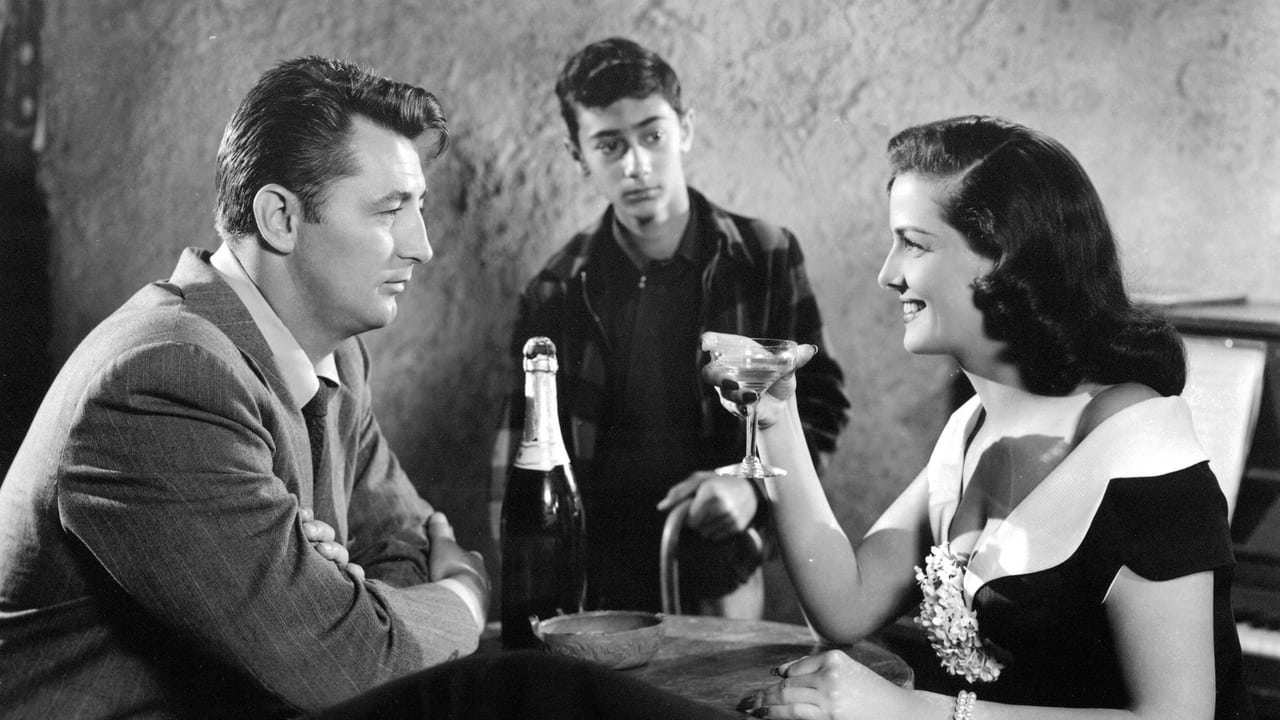
His Kind of Woman – scene
Below Decks on the Boat Milner Bound in the Dark

Harry J. Wild lights the below-decks sequence in near-total shadow, with a single hard source catching Mitchum's face at a low angle that carves deep hollows beneath his eyes and jaw. The frame is deliberately cramped – low ceilings, narrow passages, surfaces that press in from every edge. The camera holds on Mitchum with minimal movement, as if it too has run out of room. When Ferraro's men enter the frame, they arrive at the edges, partially obscured, their presence registered as weight and threat before they are seen clearly.

The scene establishes what the film has been arguing since its opening: that Milner's situation is not merely dangerous but inescapable by conventional means. He has been reduced to a body, a physical object with a face and a set of prints that someone else requires. The stillness Wild enforces in the frame mirrors Mitchum's performance – a man conserving himself, refusing to spend energy on panic, calculating from inside the dark.

Visual Language

The Cinematography

🎞️
Harry J. Wild – Director of Photography

Harry J. Wild had been working in Hollywood since the silent era, and by 1951 his command of high-contrast monochrome photography was precise and economical. On His Kind of Woman, Wild faces an unusual problem: most noir draws its visual logic from urban architecture – streets, stairwells, venetian blinds – and the Mexican resort setting offers none of that. His solution is to make the interiors do the work that the exteriors refuse. Studio-built rooms are lit to feel smaller than their dimensions, with hard single sources that refuse to fill the frame and leave large portions of each shot in functional darkness. Lens choices favor moderate focal lengths that compress background and foreground together, reducing depth and reinforcing the sense of entrapment. When Wild does shoot the exterior landscape – water, sky, open beach – he renders it flat and uninviting, a boundary rather than a release. The cinematography serves the film's moral logic: the world beyond the resort is not an option.

In the Catalogue

Themes & Motifs

Availability

Where to Watch

Also in the Directory

See Also