
Films People Pull a Fast One Night Beat Reading Room On TV Shop
Twist of Fate 1954
1954 Marksman Productions Ltd.
★★★☆☆ Notable
Film Noir · 105 minutes · Black & White

Twist of Fate

Directed by David Miller
Year 1954
Runtime 105 min
Studio Marksman Productions Ltd.
TMDB 5.2 / 10
"A man chases what he cannot keep, and loses what he never deserved."

In postwar Singapore, Bahar (P. Ramlee) is a young man of modest means whose romantic attachment to Maimun (Mariam Baharom) places him at the center of a web of competing desires and social pressures. Maimun is caught between genuine feeling and the expectations of a community that measures worth in material terms. The film establishes its world quickly and without sentimentality: a Malay urban milieu where tradition and modernity pull against each other, and where the wrong choice made once tends to compound.

Sidek (Omar Rojik) enters as a figure whose interests run counter to Bahar's, and the triangular tension between the three principals tightens around questions of loyalty, money, and honor. Allegiances that seemed fixed begin to shift as circumstances narrow the available options. The film does not distribute blame cleanly – each character operates under pressures the others only partly understand, and the drama turns on misreading as much as on deliberate betrayal.

Twist of Fate belongs to the cycle of morally weighted melodramas that Malay Film Productions produced in the early 1950s under the Shaw Brothers banner, films that absorbed the structural logic of American noir and filtered it through a distinctly Singaporean social reality. The film's title functions less as a narrative promise than as a philosophical position: fate here is not an external force but the accumulated consequence of decisions taken under pressure.
Classic Noir

Twist of Fate (1952) occupies a precise and underexamined position in the history of global noir. Directed by B. S. Rajhans – a veteran of the Bombay industry who became a foundational figure at Malay Film Productions – the film demonstrates how noir's structural grammar traveled beyond Hollywood and took root in contexts with their own traditions of fatalism, social hierarchy, and romantic tragedy. P. Ramlee, still early in a career that would define Malay cinema for a generation, brings a quality of restrained suffering to Bahar that is distinctly not derivative of American models; it draws instead on the emotional conventions of Malay storytelling while accepting noir's moral architecture. What the film reveals about its era is the tension within postwar Singapore between aspiration and constraint, between a modernizing urban environment and the codes that govern conduct within it. The love triangle is a formal convenience; the film's actual subject is the cost of wanting what one is not positioned to have.

– Classic Noir
3 ★★★☆☆ Notable
Credits

The Crew

DirectorDavid Miller
ScreenplayDavid Miller
CinematographyEdward Scaife
MusicMalcolm Arnold
EditingAlan Osbiston
Art DirectionGeoffrey Drake
CostumesVictor Striebel
ProducerMaxwell Setton
Performances

The Cast

Close Reading

The Signature Scene

Twist of Fate – scene
The Riverside Confrontation Shadow Falling on Still Water

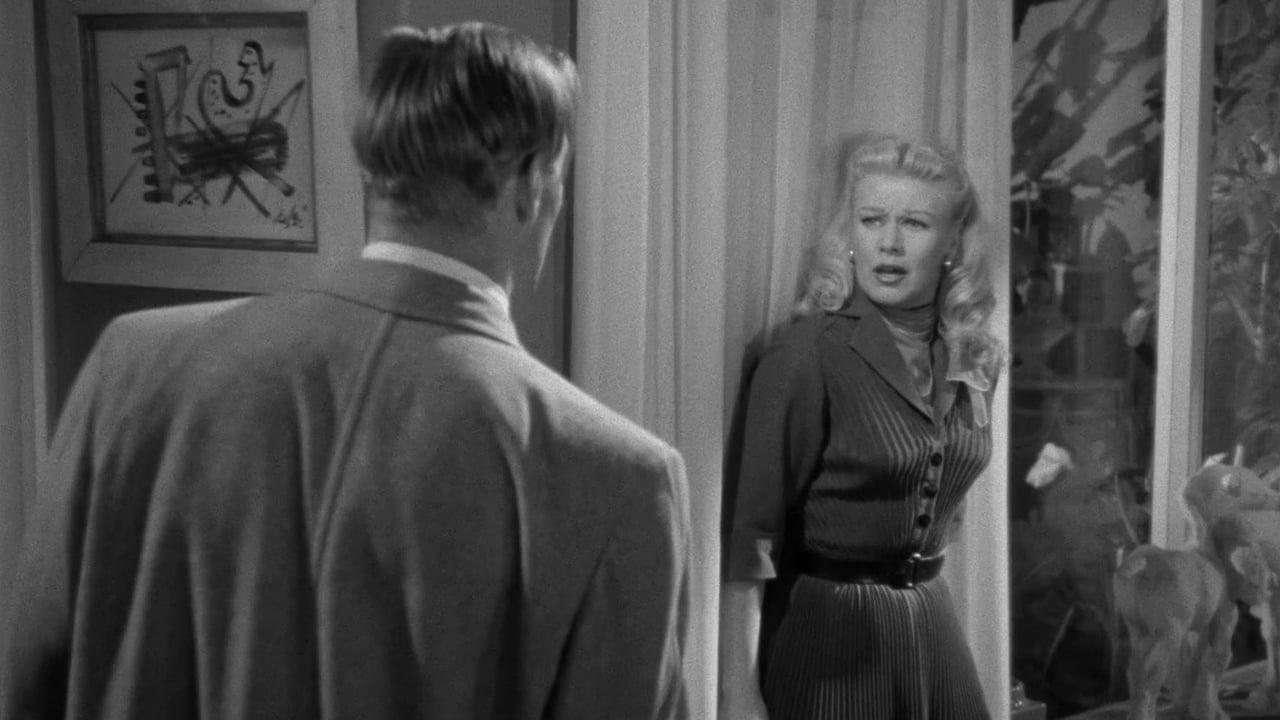
The camera holds on a low angle as Bahar stands at the edge of a river embankment, the frame bisected horizontally between dark water below and a pale, overcast sky above. Light falls from a single practical source off-frame left, casting one half of his face into deep shadow while the other catches just enough illumination to register expression. The composition is static – no rack focus, no camera movement – which forces the viewer's attention onto the incremental shifts in Ramlee's posture as the confrontation develops. The water's surface reflects broken light in the background, an unstable plane against which human stillness reads as its own form of tension.

The scene crystallizes the film's central argument about agency. Bahar does not act; he absorbs. His position at the water's edge is visually overdetermined – the drop behind him, the advancing figure before him – and the film makes no effort to disguise the symbolic freight. What the staging reveals is that Bahar has, by this point, exhausted the narrative's supply of viable choices. The confrontation does not resolve the situation; it simply makes visible what the preceding sequences have been building: that the twist of fate the title promises has already occurred, somewhere earlier, in a decision that looked minor at the time.

Visual Language

The Cinematography

🎞️
Edward Scaife – Director of Photography

The cinematographer on Twist of Fate is not documented in surviving production records, a gap that is unfortunately common in the Malay Film Productions catalogue from this period. Working within the studio infrastructure at Jalan Ampas in Singapore, the production relied on the controlled lighting conditions of purpose-built soundstages, which allowed for the kind of contrast-heavy setups that define the film's visual register. Shadow work is deployed with discipline: pools of darkness are used not decoratively but to occlude information from the viewer, withholding facial legibility at moments when character intention is most ambiguous. The studio setting also permitted precise control over background depth, and several scenes exploit shallow pools of light that isolate figures from their surroundings in a manner consistent with American B-noir practice of the same period. What distinguishes the film's visual approach is the integration of these borrowed techniques with the physical rhythms of Malay performance – the camera tends to hold longer than Hollywood convention would require, allowing silence and stillness to carry moral weight.

In the Catalogue

Themes & Motifs

Availability

Where to Watch

Also in the Directory

See Also