Films People Pull a Fast One Night Beat Reading Room On TV Shop
Armored Car Robbery 1950
1950 RKO Radio Pictures
★★★☆☆ Notable
Film Noir · 67 minutes · Black & White

Armored Car Robbery

Directed by Richard Fleischer
Year 1950
Runtime 67 min
Studio RKO Radio Pictures
TMDB 6.5 / 10
"A heist planned in daylight falls apart in the dark."

In Los Angeles, a seasoned police lieutenant named Jim Cordell is closing in on a small-time criminal named Dave Purvis, a cold-blooded opportunist who has assembled a crew for a daring armored car robbery at Wrigley Field during a night baseball game. The crew includes Benny McBride, an aging wheelman with a young wife he cannot control, and Al Mapes, whose loyalty is conditional from the start. The plan is intricate, timed to the movements of the crowd, and Purvis executes it with a ruthlessness that leaves no room for sentiment.

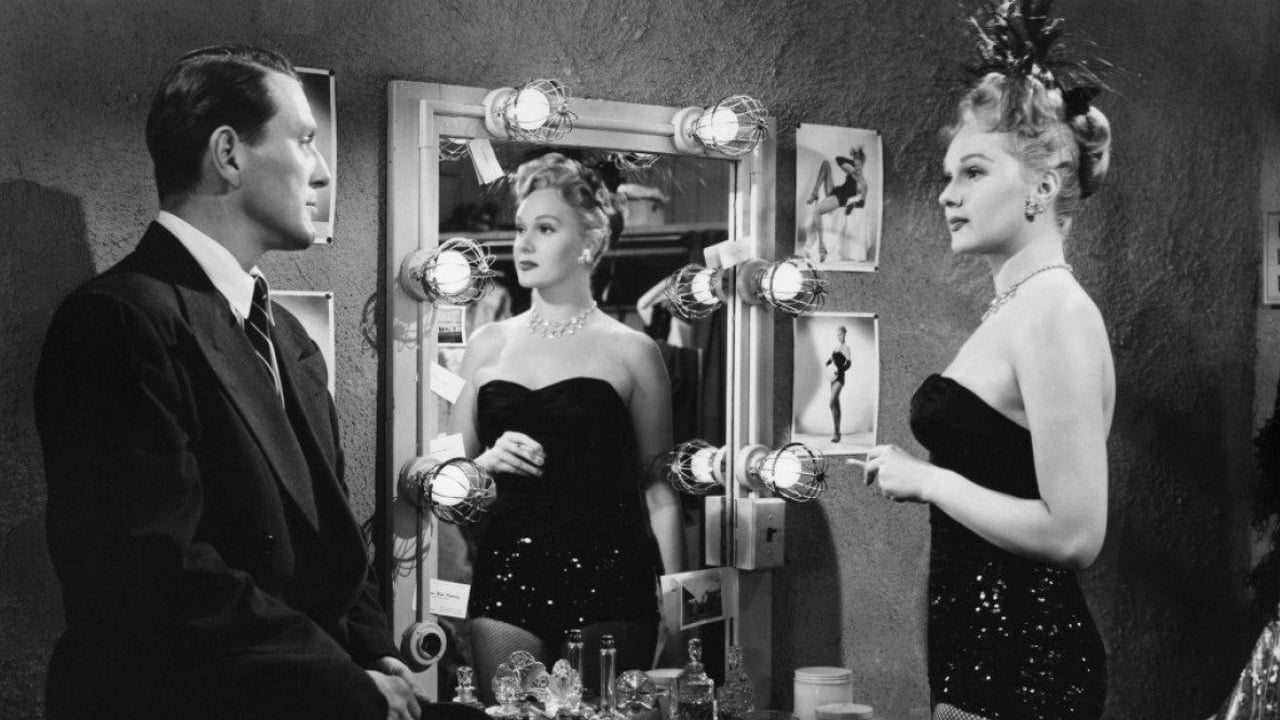
The robbery goes wrong almost immediately. Cordell's partner is killed in the ambush, and the stolen money becomes a source of lethal friction within the gang. Yvonne LeDoux – Benny's wife and a showgirl with ambitions that long predate her marriage – has her own designs on the take and on Purvis, whose capacity for violence she either underestimates or chooses to ignore. As the police tighten their net and the gang fractures, Yvonne's calculated maneuvering accelerates the collapse of what little trust holds the crew together.

Armored Car Robbery belongs to the procedural strain of postwar noir, balancing its interest in criminal mechanics with an equally detailed attention to police method. The film's compressed runtime enforces a disciplined pacing that mirrors the genre's moral logic: plans constructed with care unravel not through bad luck but through the instability of the people who make them. What the film examines, finally, is how greed and misplaced confidence hollow out every alliance until nothing is left to protect anyone.
Classic Noir

Armored Car Robbery is a tight, economical noir from RKO that demonstrates what a capable director and a disciplined script can accomplish within a B-picture budget and a sixty-seven-minute frame. Richard Fleischer, working here just before he moved into larger productions, brings the same spatial precision he would later deploy in The Narrow Margin. William Talman's Purvis is not a romantic villain but a functional one – competent, affectless, and finally indifferent to the human wreckage he leaves. Charles McGraw, with his fractured gravel voice and flat affect, anchors the procedural half of the film without softening it into heroism. Adele Jergens plays Yvonne as a woman whose intelligence exceeds her options, which is a recognizable noir condition. The film's interest in professional method – both criminal and police – places it among the more sober entries in the heist-and-pursuit cycle that characterized American crime cinema in the late 1940s and early 1950s, a cycle shaped in part by postwar familiarity with logistics and planning as modes of thought.

– Classic Noir
3 ★★★☆☆ Notable
Credits

The Crew

DirectorRichard Fleischer
ScreenplayGerald Drayson Adams
CinematographyGuy Roe
EditingDesmond Marquette
Art DirectionAlbert S. D'Agostino
ProducerHerman Schlom
Performances

The Cast

Close Reading

The Signature Scene

Armored Car Robbery – scene
The Airfield Pursuit Headlights Closing the Distance

The climactic chase unfolds across the open tarmac of a Los Angeles airfield at night, a location that strips the frame of architectural cover and reduces the action to vectors of light and speed. Guy Roe's camera holds on wide shots that emphasize the flatness of the terrain, so that the pursuing police car and the fleeing suspect become geometric problems rather than dramatic ones. Headlights cut horizontal lines across the dark asphalt, and the absence of shadow – there is nothing to hide behind here – works as a visual argument the rest of the film has been building toward.

The choice of an airfield is not incidental. It is a space defined by transit and departure, and the film uses it to close off the possibility of escape with particular finality. Purvis, who has operated throughout the film with a planner's confidence in contingency, finds himself in a landscape that offers no contingency at all. The scene makes explicit what the film has implied: that the kind of man Purvis is requires cover, and when cover is removed, what remains is simply a man running out of ground.

Visual Language

The Cinematography

🎞️
Guy Roe – Director of Photography

Guy Roe's cinematography for Armored Car Robbery works within the low-key tradition of late-1940s RKO production while adapting it to a film that spends more time in exterior and semi-documentary locations than in the studio. Roe uses available architectural geometry – the stadium concourses, the street intersections, the flat expanse of the airfield – to build compositions that restrict movement rather than open it. Interior scenes favour tight pools of practical-source light that isolate faces and suppress background detail, a technique that keeps the film's small cast from feeling small. The heist sequence itself is shot with an attention to spatial relationships that mirrors the planning logic of the criminal operation: the camera knows where everyone is, which creates a controlled tension when positions begin to shift. Roe does not reach for expressionist distortion; the moral weight is carried by compression and clarity rather than shadow play, which suits a film whose argument is about exposure rather than concealment.

In the Catalogue

Themes & Motifs

Availability

Where to Watch

Also in the Directory

See Also