Films People Pull a Fast One Night Beat Reading Room On TV Shop
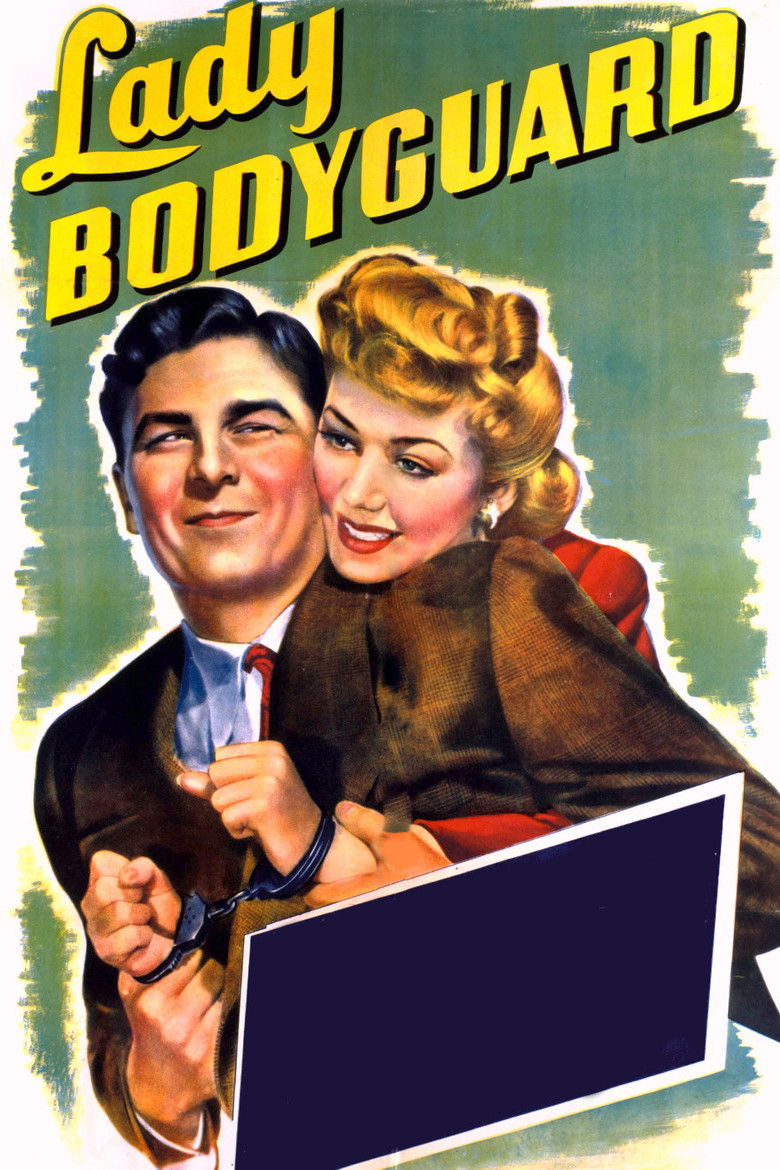
Bodyguard 1943
1943 Paramount Pictures
★★★☆☆ Notable
Film Noir · 69 minutes · Black & White

Bodyguard

Directed by William Clemens
Year 1943
Runtime 69 min
Studio Paramount Pictures
TMDB 6.0 / 10
"When the man hired to protect you is the one they want dead, trust becomes a liability."

In wartime Los Angeles, A. C. Baker is a sharp, self-sufficient woman who finds herself entangled in a murder case when a body turns up and suspicion falls on those closest to her. Terry Moore, an affable but resourceful man drawn into her orbit, takes on an informal role as her protector – a function that carries more risk than either of them anticipates. The supporting cast populates the margins with the familiar faces of the era: a blustering civic figure in Avery Jamieson, a smooth operator named George MacAlister, and the wary, weathered Mother Hodges, who has seen enough of the world's underside to keep her counsel.

As the investigation tightens, allegiances shift and the comfortable distinctions between ally and adversary begin to dissolve. Harry Gargan, a street-level operator with divided loyalties, represents the kind of threat that cannot be reasoned with, only outmaneuvered. The film uses its compact running time to compress moral complexity into quick exchanges and charged silences, suggesting that protection – whether of a person, a secret, or a reputation – is rarely a clean proposition. MacAlister's motives in particular remain difficult to fix, and the film is content to let that ambiguity accumulate rather than resolve it prematurely.

Bodyguard operates within the mid-tier wartime thriller tradition that Paramount produced with efficient regularity: modest in scale, brisk in pace, and more interested in atmosphere and character friction than in elaborate plot mechanics. It belongs to that category of noir-adjacent programmers where genre conventions are present but worn lightly, and where the tension between public duty and private survival – a preoccupation of the early 1940s – surfaces as a persistent undercurrent.
Classic Noir

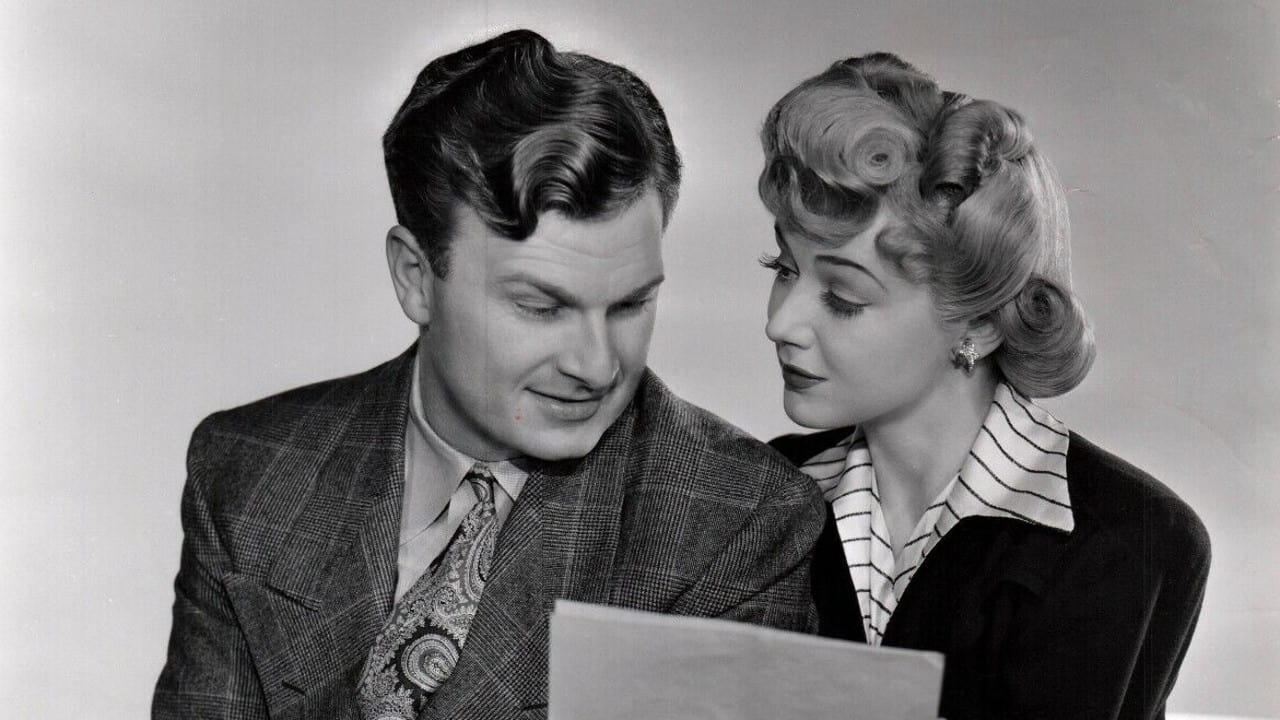
Bodyguard occupies a specific and instructive position in the Paramount output of 1943: it is neither a prestige production nor a throwaway serial filler, but a competent mid-budget programmer that reveals how thoroughly noir attitudes had permeated studio filmmaking before the genre had acquired a name. William Clemens, a reliable journeyman director, keeps the film moving without drawing attention to its seams. Anne Shirley, better known for sentimental roles, is given enough edge here to suggest what her career might have explored under different conditions. Eddie Albert, pre-stardom, brings an unforced naturalism that contrasts productively with the more theatrical supporting players. What the film documents, perhaps inadvertently, is the wartime displacement of anxiety onto the domestic criminal landscape – the sense that danger is no longer exclusively overseas but embedded in familiar streets and professional relationships. At 69 minutes, it does not overstay its welcome, and its economy is, in retrospect, one of its more honest qualities.

– Classic Noir
3 ★★★☆☆ Notable
Credits

The Crew

DirectorWilliam Clemens
ScreenplayArt Arthur
CinematographyDaniel L. Fapp
ProducerSol C. Siegel
Performances

The Cast

Close Reading

The Signature Scene

Bodyguard – scene
The Stairwell Confrontation Shadow Cuts the Landing

The camera holds at the base of a narrow interior stairwell, the frame bisected by a hard diagonal shadow cast from a single overhead source. As a figure descends, the light catches only fragments – a shoulder, a hand on the railing, the lower half of a face – so that identity itself seems conditional. Daniel L. Fapp's lighting refuses to flatten the space; instead, depth is established through layered darkness, with the background swallowed entirely and the mid-ground rendered in graduated grey.

The scene encodes the film's central argument without dialogue: that proximity to danger does not clarify it but compounds its ambiguity. The descending figure could be threat or rescue, and the framing withholds resolution long enough to make the viewer feel the specific discomfort of not knowing which it is. In a film preoccupied with the limits of protection, this moment of visual suspension is its most concentrated statement.

Visual Language

The Cinematography

🎞️
Daniel L. Fapp – Director of Photography

Daniel L. Fapp, who would go on to distinguished work across multiple genres in the following decades, brings a controlled economy to Bodyguard that suits the material precisely. Working within the constraints of a B-picture budget and a studio backlot, Fapp relies on tight lens choices that compress interior spaces and amplify the sense of enclosure. Shadow work is functional rather than expressionistic – there are no baroque set-pieces – but the placement of practicals and the use of single hard sources in confined settings creates a consistent moral atmosphere in which characters appear partially obscured even in conversation. Location shooting, where it appears, is used to establish social texture rather than geographic spectacle. The cinematography's most consistent argument is that the postwar American city, even in its wartime iteration, is a place where the illuminated and the obscured occupy the same frame, and where the distance between them is less than it appears.

In the Catalogue

Themes & Motifs

Availability

Where to Watch

Also in the Directory

See Also