Films People Pull a Fast One Night Beat Reading Room On TV Shop
Nocturne 1946
1946 RKO Radio Pictures
★★★☆☆ Notable
Film Noir · 87 minutes · Black & White

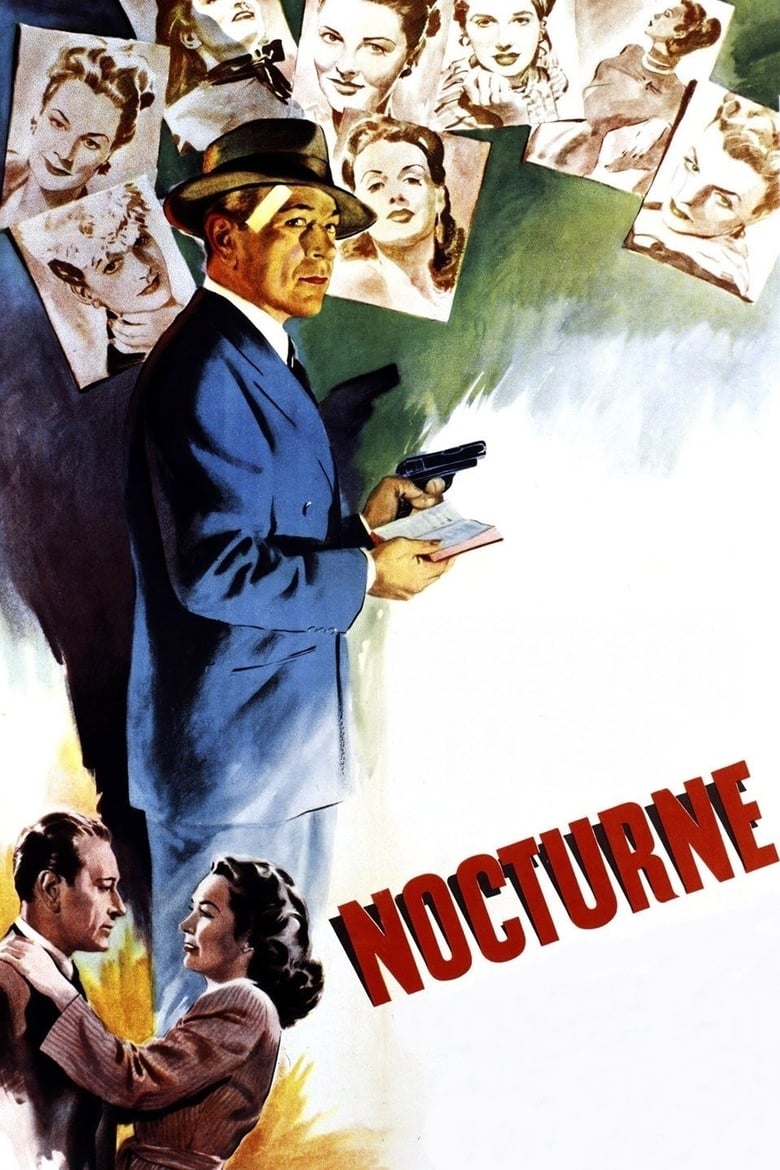
Nocturne

Directed by Edwin L. Marin
Year 1946
Runtime 87 min
Studio RKO Radio Pictures
TMDB 5.9 / 10
"A dead composer, six women who knew him, and a detective who won't let the case close."

In postwar Los Angeles, a successful songwriter named Keith Vincent is found dead in his locked study, a gun in his hand and a newly composed nocturne on the piano. The police rule it suicide, but Joe Warne, a tenacious homicide detective with the Los Angeles Police Department, refuses to accept that verdict. Warne is a stubborn, solitary man – tolerated by his superiors rather than admired – and the case fastens itself to him in a way that is partly professional instinct and partly something less rational. The only lead is a name in Vincent's address book: Frances Ransom, one of several women in the dead man's orbit.

As Warne works through the list of women connected to Vincent, the investigation grows more entangled. Frances Ransom proves elusive and guarded, her loyalties uncertain and her relationship to Vincent deliberately obscured. Her younger sister Carol moves in the opposite direction, openly drawn to Warne in ways that complicate his objectivity. Meanwhile, Vincent's social circle yields a supporting cast of aspiring singers and connected men with reasons to redirect suspicion. The question of whether Vincent was murdered, and if so by whom among this shifting company, refuses to resolve itself along obvious lines, and Warne finds that his certainty about the crime is easier to sustain than his certainty about the people involved.

Nocturne positions itself within a strand of noir that distrusts official conclusions and foregrounds the detective as an isolated, almost obsessive figure rather than an institutional authority. The film is less concerned with the mechanics of crime than with the social world that surrounds a particular kind of predatory man, and the women left to navigate the aftermath of his existence. Edwin L. Marin keeps the pacing deliberate, allowing ambiguity to accumulate rather than dissipate, and the result is a mid-tier studio noir that rewards attention to character over plot resolution.
Classic Noir

Nocturne occupies a precise but undervalued position in RKO's noir output of the mid-1940s. Edwin L. Marin is not a director whose name travels far in genre discussions, but here he demonstrates a reliable control of tone and a willingness to let the film's central tension – whether Warne's obsession constitutes justice or displacement – remain genuinely unresolved for much of the runtime. George Raft's characteristic stillness, often read as limited range, serves the character's stubbornness in ways a more expressive actor might not. The film's most considered quality is its treatment of the women surrounding the dead man: they are not simply suspects arranged for elimination but figures with distinct social and economic pressures, each managing a world structured around a man whose charm was instrumental rather than genuine. Lynn Bari carries the film's moral weight with economy. Made in 1946, Nocturne registers the postwar recalibration of gender and suspicion that runs through the decade's noir cycle, and it does so without announcing itself.

– Classic Noir
3 ★★★☆☆ Notable
Credits

The Crew

DirectorEdwin L. Marin
ScreenplayRowland Brown
CinematographyHarry J. Wild
MusicLeigh Harline
EditingElmo Williams
Art DirectionAlbert S. D'Agostino
CostumesRenié
ProducerJoan Harrison
Performances

The Cast

Close Reading

The Signature Scene

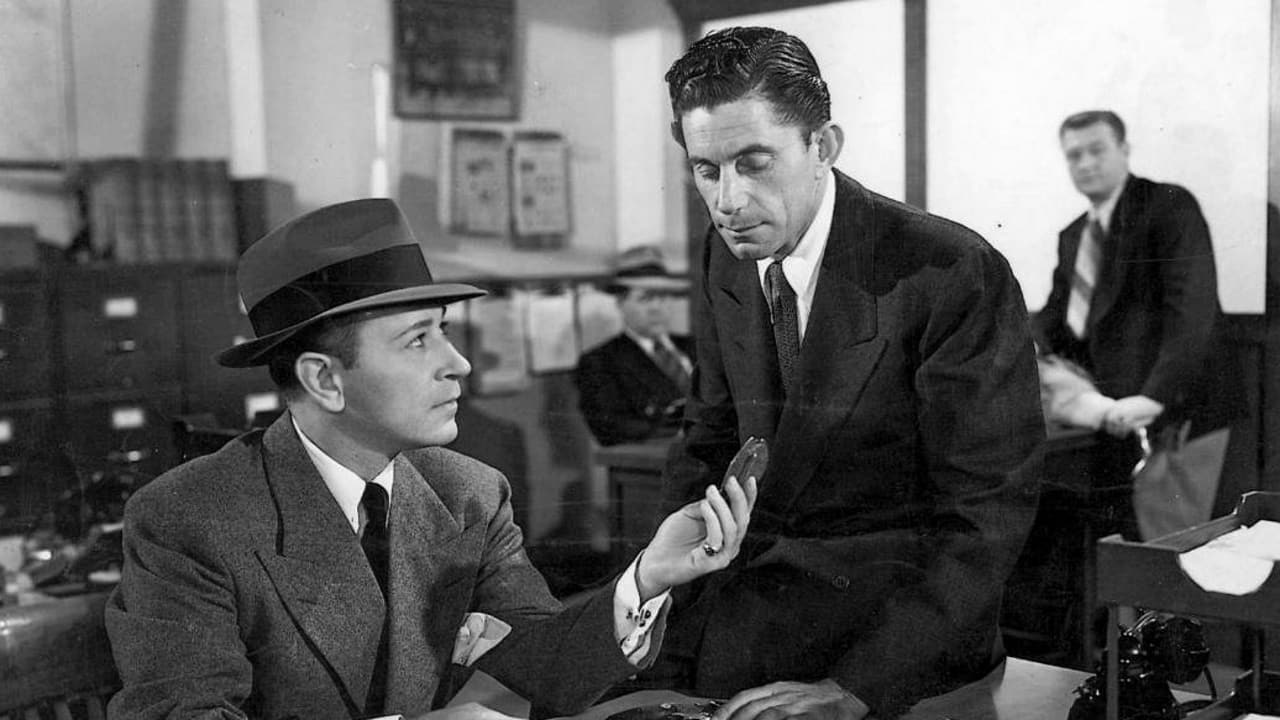
Nocturne – scene
The Piano Room The Nocturne Plays Itself

Warne stands at the piano in Vincent's study, the composition the dead man left behind still on the rack. Harry J. Wild lights the space from a single lateral source, throwing the piano's edge into sharp relief while the rest of the room recedes into layered shadow. The camera holds at a middle distance, refusing to glamorize the instrument or sentimentalize the moment – the frame is organized around absence, the bench empty, the keys untouched. When Warne finally has the nocturne played, Wild lets the sound occupy what the image withholds: the dead man's presence is acoustic rather than visual, a structural choice that keeps Vincent threatening without making him sympathetic.

The scene establishes the film's governing argument: that the investigation is not simply procedural but existential for Warne, a man trying to impose meaning on a death that official reasoning has already closed. The nocturne functions as evidence but also as provocation, the kind of loose thread that a certain kind of detective cannot leave alone. It reveals that Warne's persistence is not institutional duty but a personal refusal to accept surfaces at face value – a quality that will bring him close to the truth and simultaneously close to error.

Visual Language

The Cinematography

🎞️
Harry J. Wild – Director of Photography

Harry J. Wild, whose work at RKO across the 1940s includes several films of considerably higher profile than Nocturne, brings a disciplined restraint to the photography here. Working primarily on studio interiors, Wild avoids the expressionist excess that noir can invite and instead builds unease through compression: tight two-shots that eliminate escape routes, corridor framings where background detail darkens without resolving, and a consistent preference for motivated practical sources – lamps, windows, the ambient light of a club interior – over undisguised studio illumination. The shadow work is functional rather than decorative, meaning shadows track moral position rather than simply atmospheric effect. When a character becomes less trustworthy, the light on their face is less reliable; when Warne's certainty wavers, Wild opens the frame slightly rather than closing it, creating space that reads as vulnerability. Lens choices remain in the standard range for the period, keeping the visual language legible and the distortions psychological rather than optical.

In the Catalogue

Themes & Motifs

Availability

Where to Watch

Also in the Directory

See Also