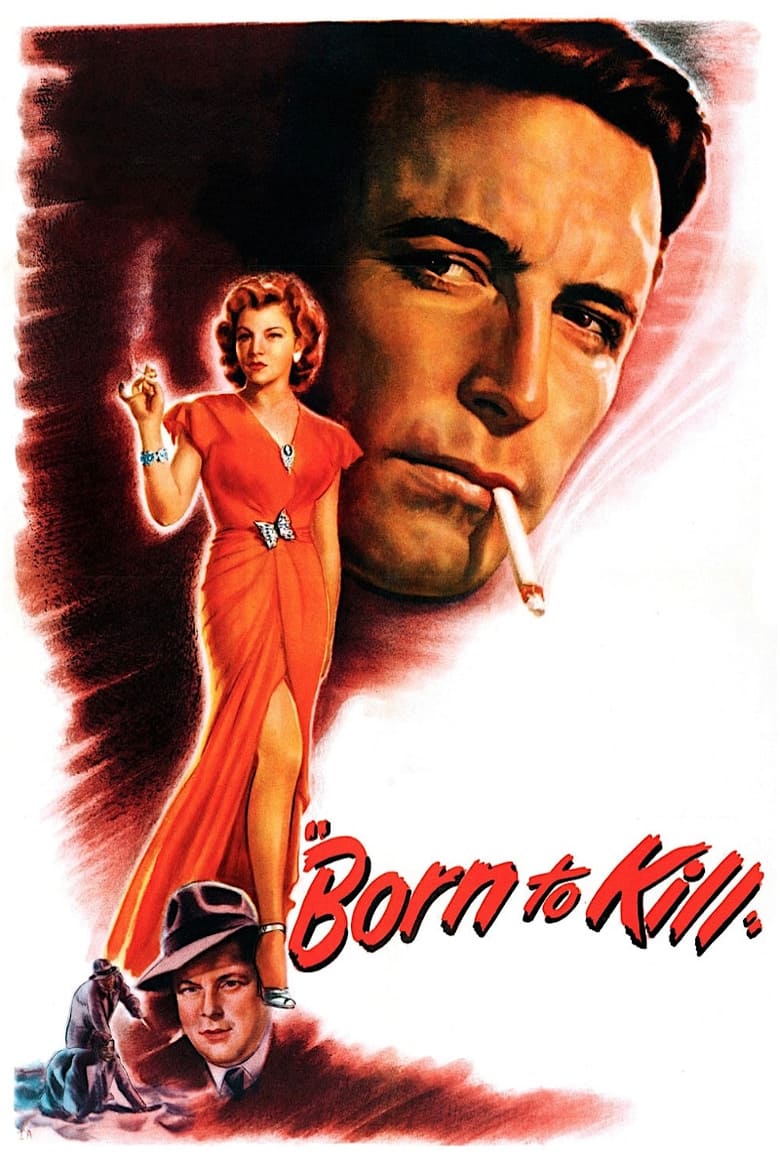
In Reno for a quick divorce, Helen Brent (Claire Trevor) stumbles onto the aftermath of a double murder committed by Sam Wild (Lawrence Tierney), a volatile drifter who kills with the casual efficiency of someone swatting a fly. Helen knows what she saw. She boards the overnight train to San Francisco and says nothing. By the time she arrives, Sam has followed her – and her wealthy foster sister Georgia Staples (Audrey Long) is already half in love with him.
Helen, herself engaged to the decent and dull Fred Grover (Phillip Terry), is drawn to Sam with a lucidity that shames her. She understands exactly what he is and finds that understanding insufficient to keep her at a distance. Into this arrangement steps Matthew Arnett (Walter Slezak), a private investigator hired by the grieving landlady Mrs. Kraft (Esther Howard) to track the Reno killer – a man who circles the principals with the unhurried patience of someone who already knows how the arithmetic resolves. Marty (Elisha Cook Jr.), Sam's loyal and perpetually anxious associate, watches the whole structure tilt toward collapse.
Born to Kill positions itself at the harder edge of RKO noir: no romantic redemption, no last-minute conscience. The film is less interested in crime as plot mechanism than in complicity as character study – specifically, in the kind of self-awareness that coexists without difficulty alongside moral abdication. Trevor's Helen is not deceived; she is choosing, step by step, which facts she can afford to act on. That sustained moral arithmetic is what separates the film from the run of its contemporaries.
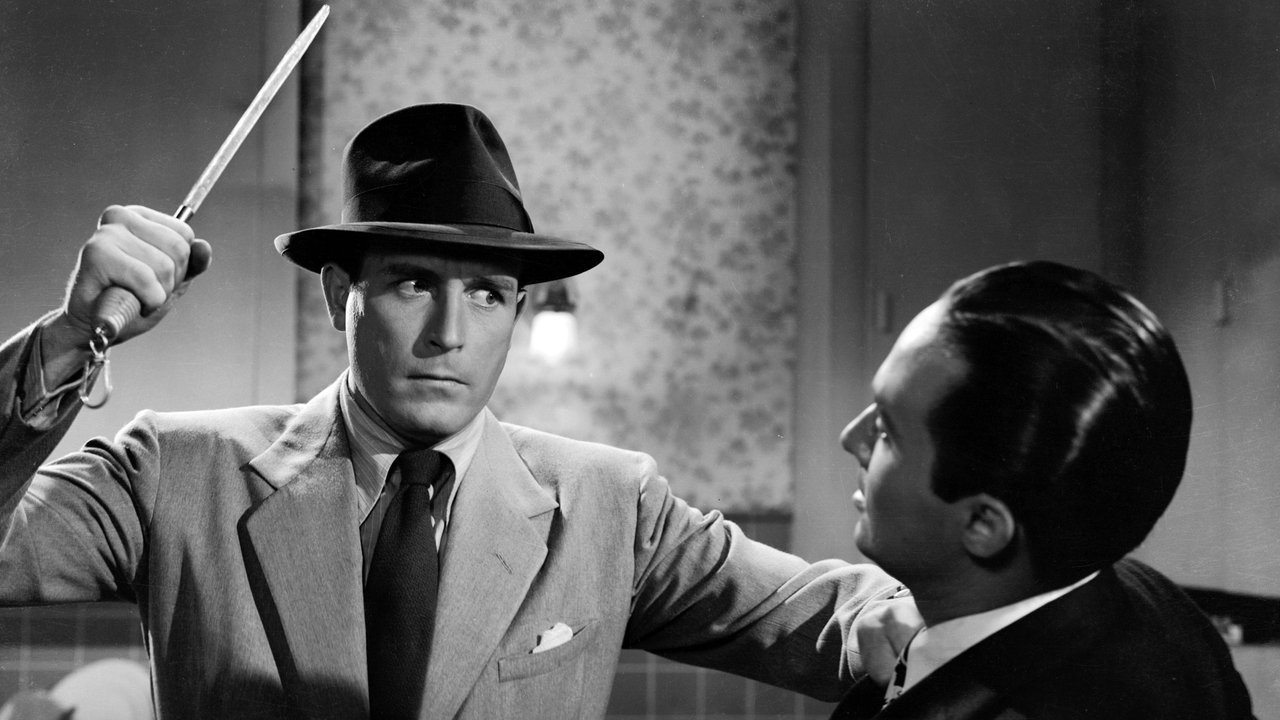
Born to Kill arrived in 1947 at the midpoint of noir's classical period and distinguished itself not through visual extravagance but through the sheer coldness of its character logic. Robert Wise, still establishing his directorial identity after cutting his teeth in the editing room on Citizen Kane and The Magnificent Ambersons, keeps the film moving with an economy that refuses sentiment. Lawrence Tierney's Sam Wild is not a charming sociopath in the Cagney tradition – he is blunt, sexually threatening, and entirely without the self-deprecating wit that makes screen violence palatable. What gives the film its lasting unease, however, is Claire Trevor's performance: a woman of intelligence and appetite who comprehends the danger precisely and advances toward it anyway. Walter Slezak's Arnett functions as a kind of corrupt conscience, naming what the other characters will not. The film belongs to a strand of noir concerned less with punishment than with the conditions under which ordinary people learn to accommodate the knowledge of evil – a preoccupation that made it uncomfortable in 1947 and keeps it relevant today.
– Classic Noir
The camera holds at the foot of the staircase as Helen descends toward Sam, who waits below in the entrance hall. Robert De Grasse lights the shot so that the banister rails cast a series of vertical shadows across Trevor's dress, a loose grid that travels with her as she moves. Sam is in comparative darkness, his face visible but unreadable. The composition assigns Helen the higher ground physically while the light geometry works against any sense of safety or control – she is moving downward, into shadow, into him.
The scene concentrates the film's central argument in a few seconds of blocked movement. Helen is not being coerced; she is descending of her own volition, with full knowledge of what waits. The shadow bars on her figure are not subtle – Wise and De Grasse are making a diagram of entrapment that the character herself could read, if she chose to stop. That she does not stop is precisely the point. The staircase is the film's moral architecture made visible.
Robert De Grasse's cinematography on Born to Kill operates at the controlled end of the noir visual spectrum – less expressionist turbulence than a sustained, deliberate use of interior shadow to define social and psychological space. De Grasse favors medium-close setups that keep faces partially obscured, withholding the legibility that would invite sympathy. His lighting in the Staples mansion sequences distinguishes between the brightly lit public rooms, where appearances are maintained, and the corridors and landings where the actual negotiations of power occur in half-light. The contrast is architectural rather than melodramatic. His work on the Reno opening is notably starker: harder sources, less fill, the kind of flatness that makes violence feel routine rather than operatic. Throughout, De Grasse ensures that the camera placement reinforces the film's moral indifference – there are no saving angles, no compositions that subtly exonerate or elevate the principals. The visual language confirms what the screenplay implies: observation here is not the same as judgment.
The most reliably curated source for RKO noir of this period; the transfer available here preserves De Grasse's contrast ratios with reasonable fidelity.
TCMBroadcast / SubscriptionTCM screens Born to Kill periodically as part of its noir programming blocks; check the schedule for upcoming broadcasts or access via the TCM app with a cable subscription.
TubiFreeA free ad-supported option for viewers without a Criterion or TCM subscription; transfer quality varies and should be verified before relying on it for close viewing.