Films People Pull a Fast One Night Beat Reading Room On TV Shop
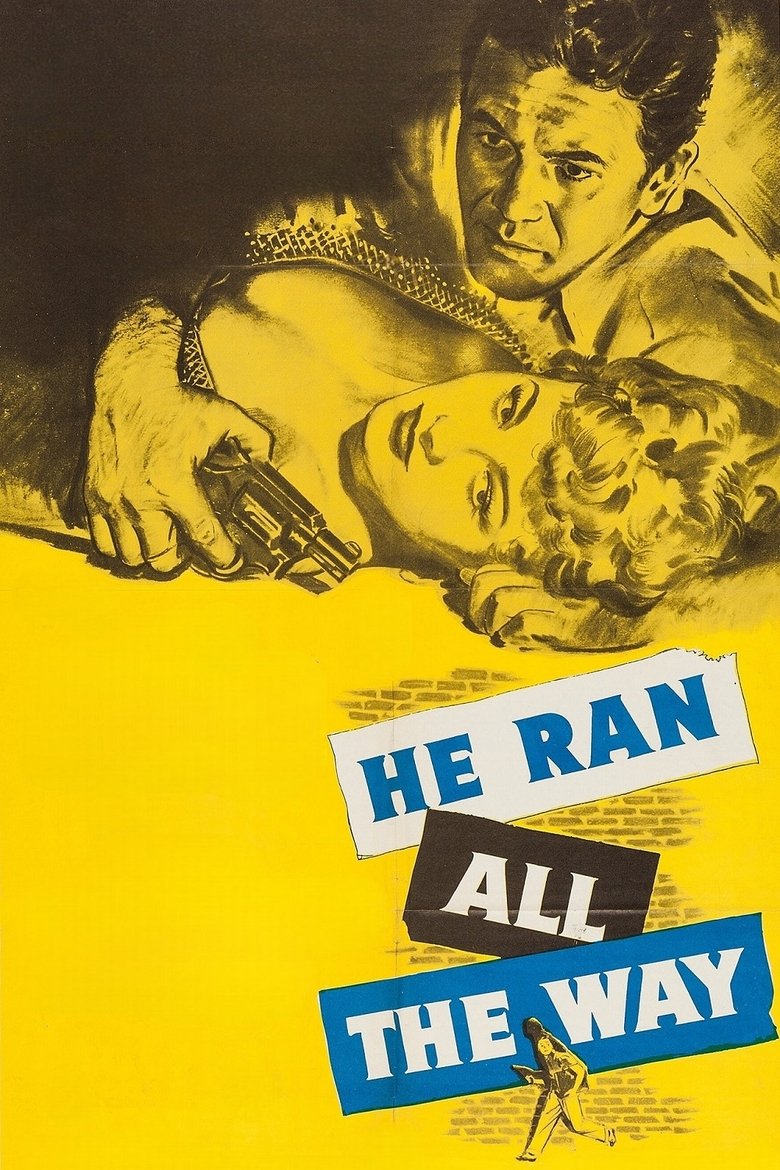
He Ran All the Way 1951
1951 Roberts Pictures Inc.
★★★☆☆ Notable
Film Noir · 77 minutes · Black & White

He Ran All the Way

Directed by John Berry
Year 1951
Runtime 77 min
Studio Roberts Pictures Inc.
TMDB 7.2 / 10
"A man with nowhere left to run takes a family hostage and waits for the walls to close in."

Nick Robey is a small-time criminal in a city that has never offered him much. After a botched payroll robbery leaves his partner dead and a watchman shot, Nick flees into the summer crowds and surfaces at a public swimming pool, where he encounters Peggy Dobbs, a young woman from a working-class family with no particular reason to distrust a stranger. When the police net tightens, Nick forces his way into the Dobbs apartment and holds the family – Peggy, her father Fred, her mother, and her younger brother Tommy – at gunpoint, using them as a shield while he waits for a chance to escape the city.

The siege that follows is less a thriller than a study in dependency and corrosion. Nick is volatile and frightened, capable of violence but also of something that passes for need; Peggy begins to accommodate him in ways that disturb her and confuse the family around her. Fred Dobbs drinks and calculates the odds. Mrs. Dobbs holds herself rigid with fear. Tommy watches everything. Allegiances inside the apartment shift by the hour, and the question of whether Peggy is yielding out of survival instinct or something more complicated becomes the film's central unresolved pressure.

He Ran All the Way belongs to a strand of late noir concerned less with elaborate plot machinery than with confined psychological spaces. The film strips the genre down to a single location and a handful of people, using the apartment as both trap and terrarium. John Garfield's Nick is a figure the film refuses to redeem or simply condemn, and it is that refusal – sustained under real commercial and political pressure – that gives the picture its durability.
Classic Noir

He Ran All the Way arrived in 1951 under circumstances that shadowed its release and have colored its reception ever since. John Garfield was under HUAC scrutiny; director John Berry would soon be blacklisted; the film would prove to be Garfield's last. That biographical weight is real, but it should not substitute for critical attention to what the film actually does. Working from a Dalton Trumbo adaptation (uncredited) of Sam Ross's novel, Berry and Garfield construct a portrait of a man whose criminality is inseparable from his deprivation – not as liberal apology but as structural observation. The hostage premise, now a genre staple, here feels genuinely airless and morally unresolved. Garfield resists any performance choice that would make Nick legible as either monster or victim; the result is a character whose danger comes precisely from his incoherence. Shelley Winters, often underestimated in this period, plays Peggy with a specificity that keeps the film's emotional logic credible. As a late entry in the classical noir cycle, the film reads as a quiet reckoning with what the postwar American city had produced.

– Classic Noir
3 ★★★☆☆ Notable
Credits

The Crew

DirectorJohn Berry
ScreenplayDalton Trumbo
CinematographyJames Wong Howe
MusicFranz Waxman
ProducerBob Roberts
Performances

The Cast

Close Reading

The Signature Scene

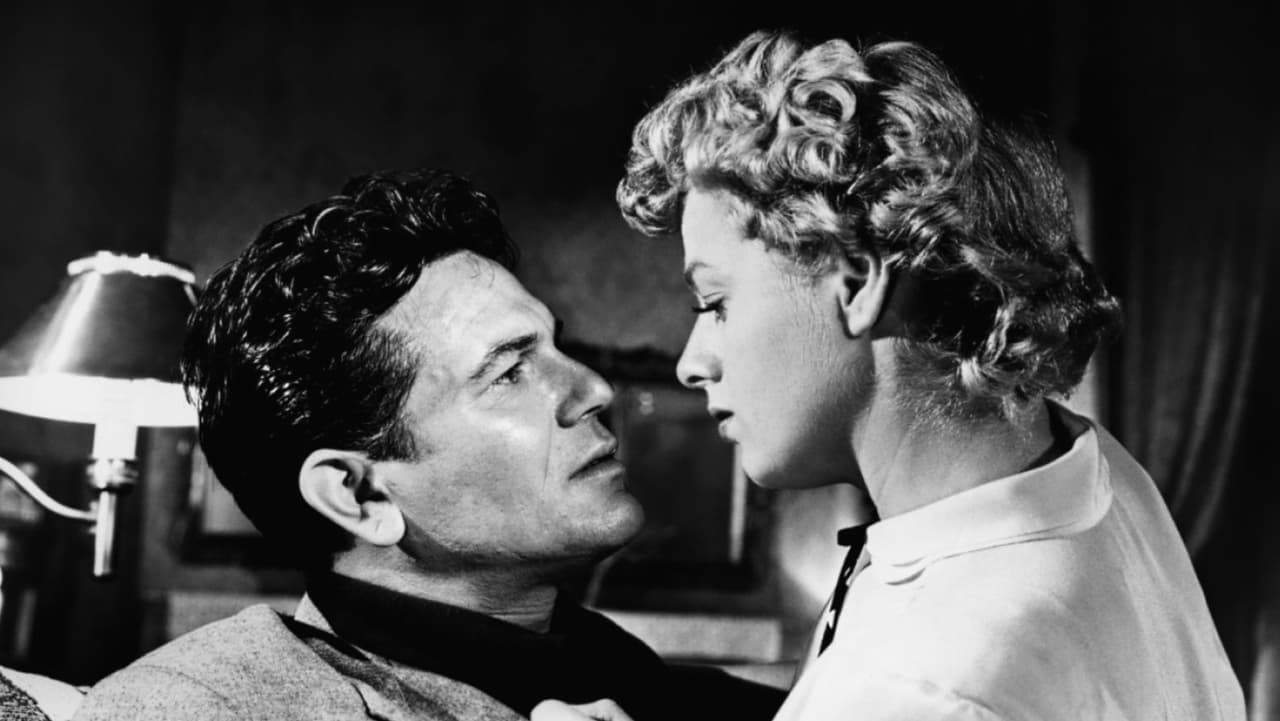
He Ran All the Way – scene
The Apartment Bathroom Nick at the Mirror

James Wong Howe positions the camera at a slight low angle inside the cramped bathroom, the mirror doubling Nick's face so that two versions of him occupy the frame simultaneously. The practical light above the basin is harsh and directional, cutting deep shadows beneath the eyes and jaw while leaving the forehead in relative brightness – a split that is almost diagrammatic. The composition is tight enough that the walls feel present as pressure rather than backdrop, and Howe resists any camera movement that might release that pressure.

The scene works as a moment of involuntary self-confrontation. Nick has been running on adrenaline and threat; in the bathroom, briefly alone, he has to look at himself, and what the doubled image suggests is not self-knowledge but its absence – a man who cannot reconcile the two faces in the glass. It is the film's clearest visual statement of its central argument: that Nick's violence is not purposeful but reflexive, the product of a self that was never coherently assembled in the first place.

Visual Language

The Cinematography

🎞️
James Wong Howe – Director of Photography

James Wong Howe's work on He Ran All the Way is a model of constraint turned into expression. Shooting largely on studio-constructed interiors that simulate the oppressive scale of a real working-class apartment, Howe uses a relatively short lens to make walls crowd the frame without resorting to distortion. His lighting favors single-source setups – a window, an overhead fixture – that leave large portions of the frame in shadow not as atmosphere but as moral condition: the Dobbs family's world has no comfortable illumination. Howe is precise about where light falls on Garfield's face, often splitting it between visibility and shadow in ways that track Nick's oscillation between menace and vulnerability. The film's brief exterior sequences, including the swimming pool opening, use natural summer light with an almost documentary flatness that makes the subsequent confinement feel chosen by fate rather than imposed by circumstance. Throughout, Howe's camera refuses to editorialize; it observes the apartment and its inhabitants with a steadiness that is itself a form of judgment.

In the Catalogue

Themes & Motifs

Availability

Where to Watch

Also in the Directory

See Also