Films People Pull a Fast One Night Beat Reading Room On TV Shop
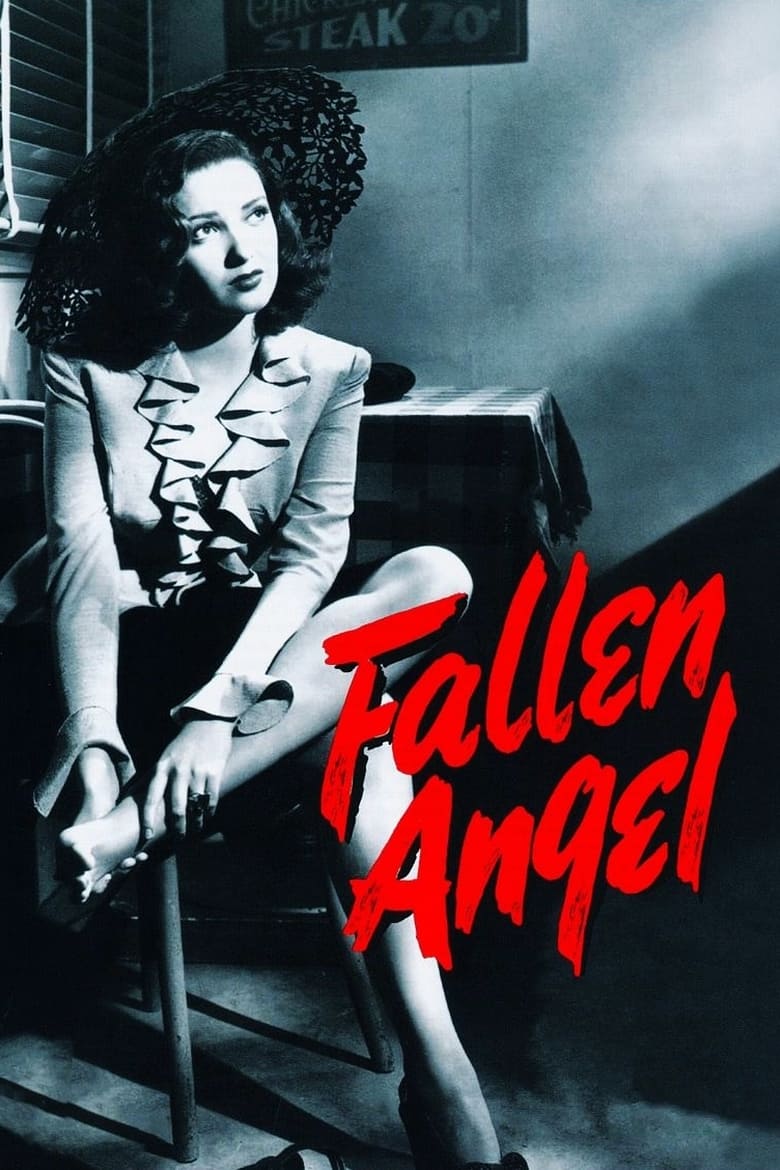
Fallen Angel 1945
1945 20th Century Fox
★★★☆☆ Notable
Film Noir · 98 minutes · Black & White

Fallen Angel

Directed by Otto Preminger
Year 1945
Runtime 98 min
Studio 20th Century Fox
TMDB 6.6 / 10
"A man courts a woman for her money while wanting another – and the one he wants turns up dead."

Eric Stanton arrives in the coastal California town of Walton with no money and no prospects, drawn into a roadside diner by Stella, a waitress whose frank sensuality commands every man in the room. Stanton is no different. To stay close to her, he talks his way into lodgings with Pop, the diner's aging proprietor, and quickly sizes up the local landscape: a faded spiritualist named Professor Madley running séances for the credulous, and two respectable sisters, June and Clara Mills, whose inheritance represents the fastest route to financing a life with Stella.

Stanton courts June with calculated charm, marries her, and plans to dissolve the union once he has secured enough money to offer Stella something permanent. But Stella is also being watched by Mark Judd, a former New York detective with an obsessive fixation on her, and by Dave Atkins, an ex-boyfriend who has not accepted his dismissal. When Stella is found murdered the morning after Stanton's wedding, suspicion falls on Stanton, whose motives and movements that night are difficult to explain. June, who has already sensed the shape of her husband's deception, must decide whether to protect or abandon the man she married.

Fallen Angel belongs to that strand of postwar noir in which the femme fatale is less a villain than a victim of the same appetites that destroy the men around her. Preminger frames the investigation not as a procedural puzzle but as a moral reckoning, pressing each character to account for what desire has cost them. The film's refusal to settle into comfortable alignment with any single perspective – neither the schemer, the wronged wife, nor the obsessive lawman – gives it an unsettled quality that outlasts its plot.
Classic Noir

Fallen Angel arrived in 1945 as an awkward studio compromise: 20th Century Fox, anxious about Linda Darnell's impact on test audiences, cut significant footage devoted to Alice Faye's June and rebalanced the film around Dana Andrews, fresh from Laura. The result is a picture slightly at war with itself, and yet that internal friction produces something genuinely interesting. Preminger, working again with cinematographer Joseph LaShelle, carries forward the cool, observational distance he had established in Laura – characters watched rather than sentimentalized, desire treated as a force that distorts judgment without ennobling it. Stella is the film's gravitational center despite being its most thinly written role, which says something about Darnell's physical authority on screen. Andrews, meanwhile, plays a con man whose self-knowledge arrives too late and too incompletely to save him. The film does not quite cohere into a single argument, but it honestly records the postwar male's tendency to treat women as instruments of social advancement while remaining helpless before the ones who refuse that role.

– Classic Noir
3 ★★★☆☆ Notable
Credits

The Crew

DirectorOtto Preminger
ScreenplayHarry Kleiner
CinematographyJoseph LaShelle
MusicDavid Raksin
EditingHarry Reynolds
Art DirectionLeland Fuller
CostumesBonnie Cashin
ProducerOtto Preminger
Performances

The Cast

Close Reading

The Signature Scene

Fallen Angel – scene
The Diner, First Night Stella Holds the Room

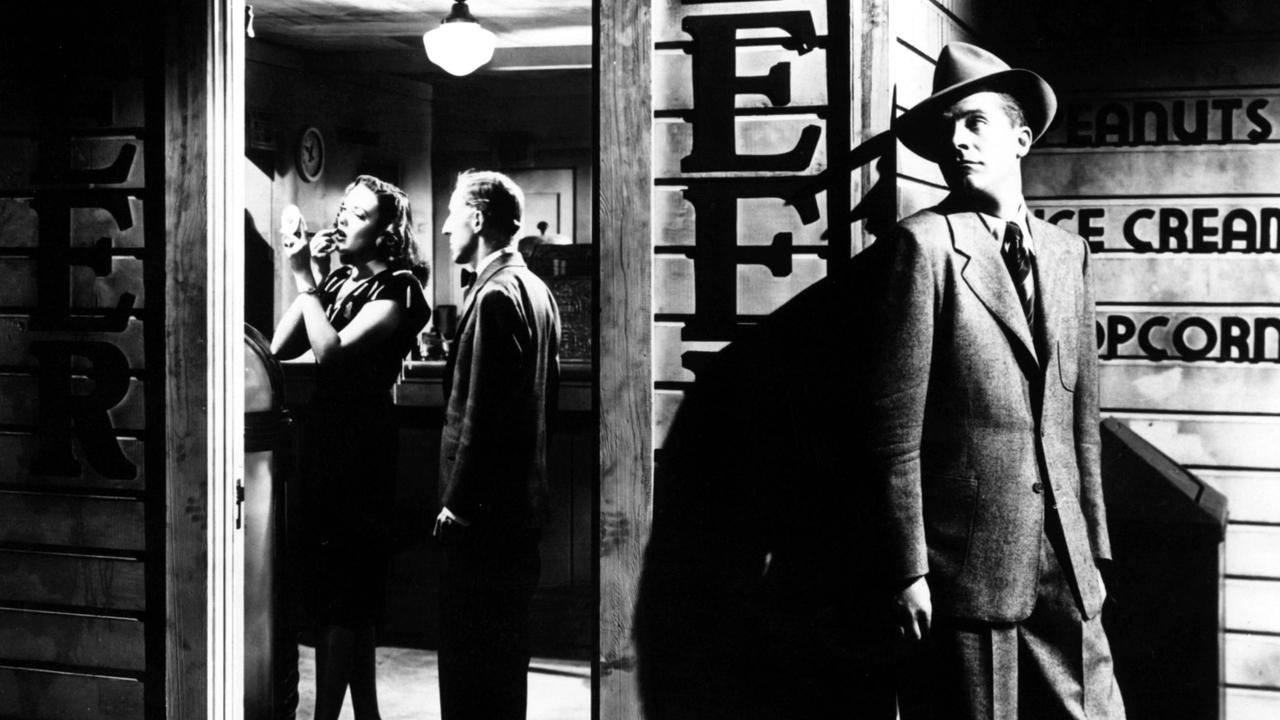
LaShelle places the camera at table height as Stanton enters Pop's diner for the first time, so that Stella, moving behind the counter, appears to occupy a slightly elevated plane. The light is practical in origin – the harsh fluorescence of a working diner – but LaShelle modulates it so that Stella is consistently caught in a warmer pocket while the men around her are rendered in flatter, more unforgiving illumination. When Stanton's gaze locks on her, Preminger cuts to a medium close-up that holds just long enough to register the specific quality of his attention: not romantic, but acquisitive.

The scene establishes the film's central argument before a word of plot has been spoken. Stella is not performing seduction; she is simply present, and the men in the frame construct their own projections around that presence. Stanton's fixation is already shown to be a problem of his own making, his desire shaped by what he needs her to represent rather than who she is. Preminger's refusal to shoot Darnell as an object of pure spectacle – the camera watches her as it watches everyone else, with the same measured remove – quietly complicates the noir logic the film appears to be following.

Visual Language

The Cinematography

🎞️
Joseph LaShelle – Director of Photography

Joseph LaShelle, who had won the Academy Award for Laura the previous year, brings to Fallen Angel a similar economy of means: deep focus that keeps moral context visible in the background, shadow work that registers psychological pressure without announcing itself, and a preference for medium shots that deny the audience easy intimacy with any character. Shooting largely on studio sets dressed to suggest a worn coastal community, LaShelle uses practical light sources – diner counters, desk lamps, street-level windows – as anchors for the frame, then shapes the fill light to isolate or implicate figures within a scene. His lens choices favor a slightly compressed perspective that flattens the space between characters, enforcing a sense of inescapable proximity. The film's moral logic – that no one in this town is free of self-interest – is supported by cinematography that refuses to glamorize or excuse: the shadows fall on everyone with equal indifference.

In the Catalogue

Themes & Motifs

Availability

Where to Watch

Also in the Directory

See Also