Films People Pull a Fast One Night Beat Reading Room On TV Shop
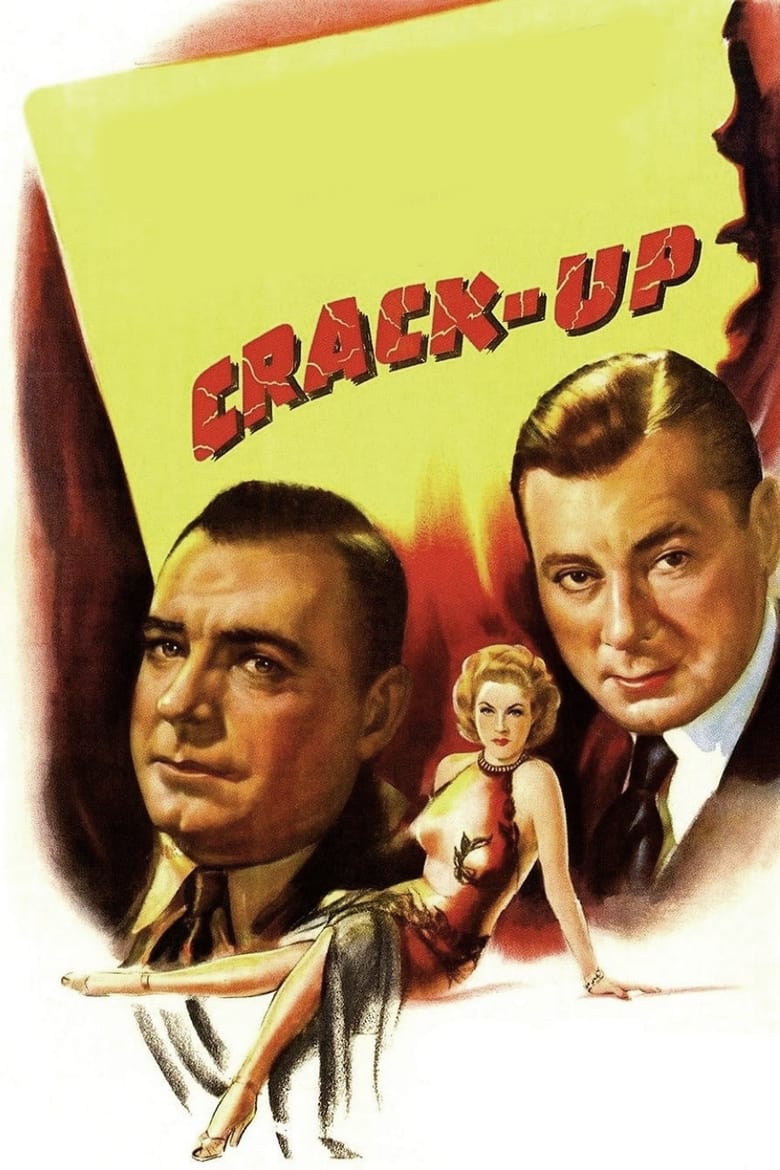
Crack-Up 1946
1946 RKO Radio Pictures
★★★☆☆ Notable
Film Noir · 65 minutes · Black & White

Crack-Up

Directed by Irving Reis
Year 1946
Runtime 65 min
Studio RKO Radio Pictures
TMDB 5.7 / 10
"Loyalty is the first thing a spy learns to counterfeit."

Ace Martin (Brian Donlevy) is a brash, self-serving aviator who finds himself drawn into an international espionage operation when he crosses paths with the sinister Colonel Gimpy (Peter Lorre), a foreign agent operating on American soil. Ruth Franklin (Helen Wood) enters the picture as a young woman whose connections to the conspiracy are not immediately clear, while the respectable industrialist John R. Flemyng (Ralph Morgan) appears to hold influence over events from a position of apparent legitimacy.

As the network of allegiances shifts, Martin discovers that patriotism and self-interest are difficult to disentangle. Colonel Gimpy proves a subtle and patient adversary – his menace is less theatrical than calculating – and the film gradually reveals that several figures operating in the margins of respectability are complicit in something far more dangerous than simple graft. Joe Randall (Thomas Beck) and the shadowy Operative #30 (Earle Foxe) complicate the loyalties further, leaving Martin uncertain whom, if anyone, he can trust.

Crack-Up belongs to the cycle of pre-war espionage thrillers that 20th Century Fox produced in the mid-1930s, films less concerned with the mechanics of crime than with the atmosphere of institutional betrayal. It occupies the threshold between the gangster picture and what would solidify as noir proper – morally compromised protagonists, duplicitous authority figures, and a pervasive sense that the systems meant to protect ordinary citizens are themselves under quiet subversion.
Classic Noir

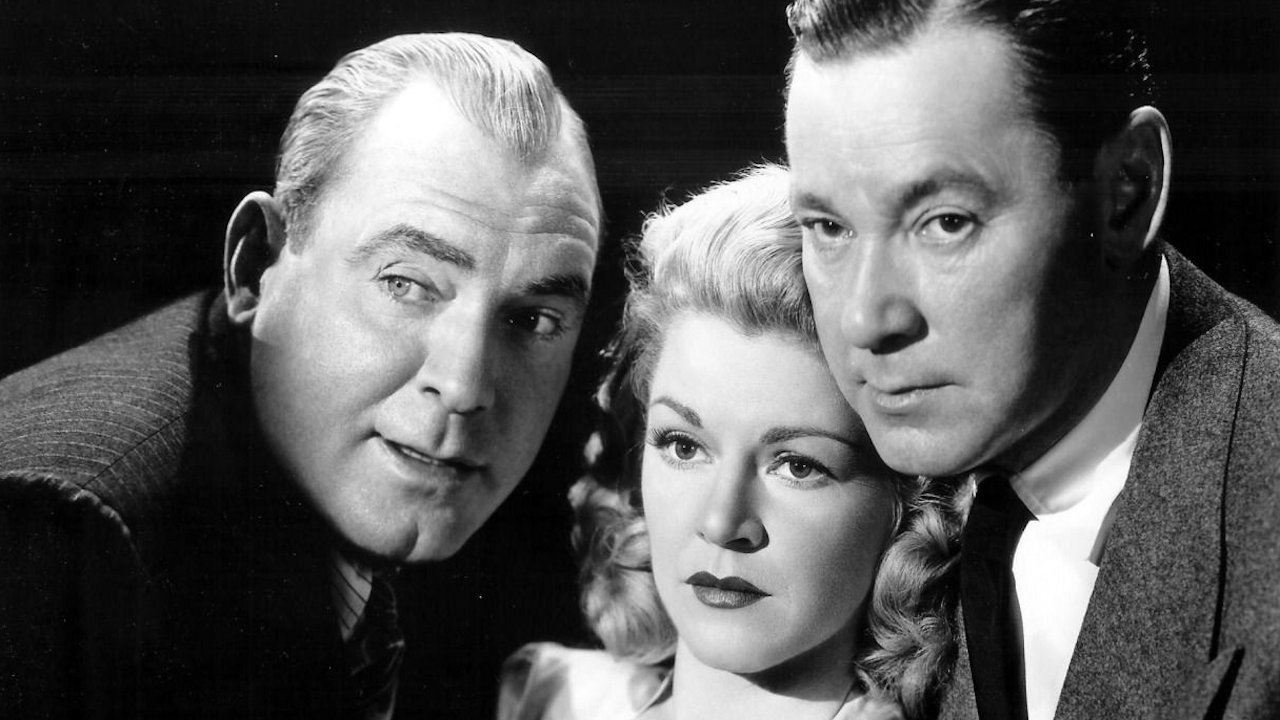
Crack-Up is a minor but instructive artifact of the period just before American noir found its visual and narrative grammar. Malcolm St. Clair directs with the economy of a programmer, but the casting of Peter Lorre – still trading on his European art-house reputation from M and The Man Who Knew Too Much – gives the film a gravity its script does not entirely earn. Lorre's Colonel Gimpy is restrained where a lesser production would demand histrionics, and that restraint is the film's most honest achievement. Brian Donlevy's Ace Martin prefigures the morally elastic protagonists who would populate the noir cycle proper: neither heroic nor fully corrupt, he operates on opportunism and makes his calculations visible. The film also reflects the particular anxiety of 1936 America, where foreign infiltration and the fragility of democratic institutions were genuine preoccupations rather than genre conventions. At 65 minutes, it does not overstay its brief, and that compression is a discipline that many larger productions of the era failed to exercise.

– Classic Noir
3 ★★★☆☆ Notable
Credits

The Crew

DirectorIrving Reis
ScreenplayBen Bengal
CinematographyRobert De Grasse
MusicLeigh Harline
Art DirectionAlbert S. D'Agostino
CostumesRenié
ProducerJack J. Gross
Performances

The Cast

Close Reading

The Signature Scene

Crack-Up – scene
The Interrogation Corridor Gimpy Waits in Shadow

Barney McGill frames Lorre in a narrow corridor, the light source off-screen right, so that the left half of his face dissolves into the wall behind him. The camera holds at a slight remove – close enough to read the stillness in his expression, far enough to register his isolation within the architectural space. There is no camera movement; the composition does the work, pressing the figure against geometry until he seems less a person than a feature of the building itself.

The scene encapsulates the film's central argument about the nature of threat: what is dangerous is not what announces itself but what persists quietly in peripheral spaces. Gimpy's power is not physical but atmospheric – he is the figure you failed to notice until it was too late to leave the room. The stillness of the shot makes patience itself feel predatory.

Visual Language

The Cinematography

🎞️
Robert De Grasse – Director of Photography

Barney McGill brings a controlled, studio-bound expressionism to Crack-Up that reflects the visual conventions of the Fox lot in the mid-1930s rather than any programmatic noir aesthetic – that codification was still years away. His lighting setups favor hard sources with minimal fill, producing shadow pools that isolate characters against undifferentiated backgrounds and flatten spatial depth in ways that register as psychologically oppressive rather than simply economical. Interior scenes rely on high-contrast key lighting that draws the eye to faces while allowing the surrounding environment to recede into ambiguity. There are no location sequences of consequence; the film's geography is entirely constructed, which suits its theme of surfaces concealing other surfaces. McGill does not employ the extreme Dutch angles or disorienting wide-angle distortion that would become genre signatures, but his compositions consistently position figures at slight asymmetric removes from the frame's center, a quiet formal gesture that keeps visual comfort just out of reach.

In the Catalogue

Themes & Motifs

Availability

Where to Watch

Also in the Directory

See Also