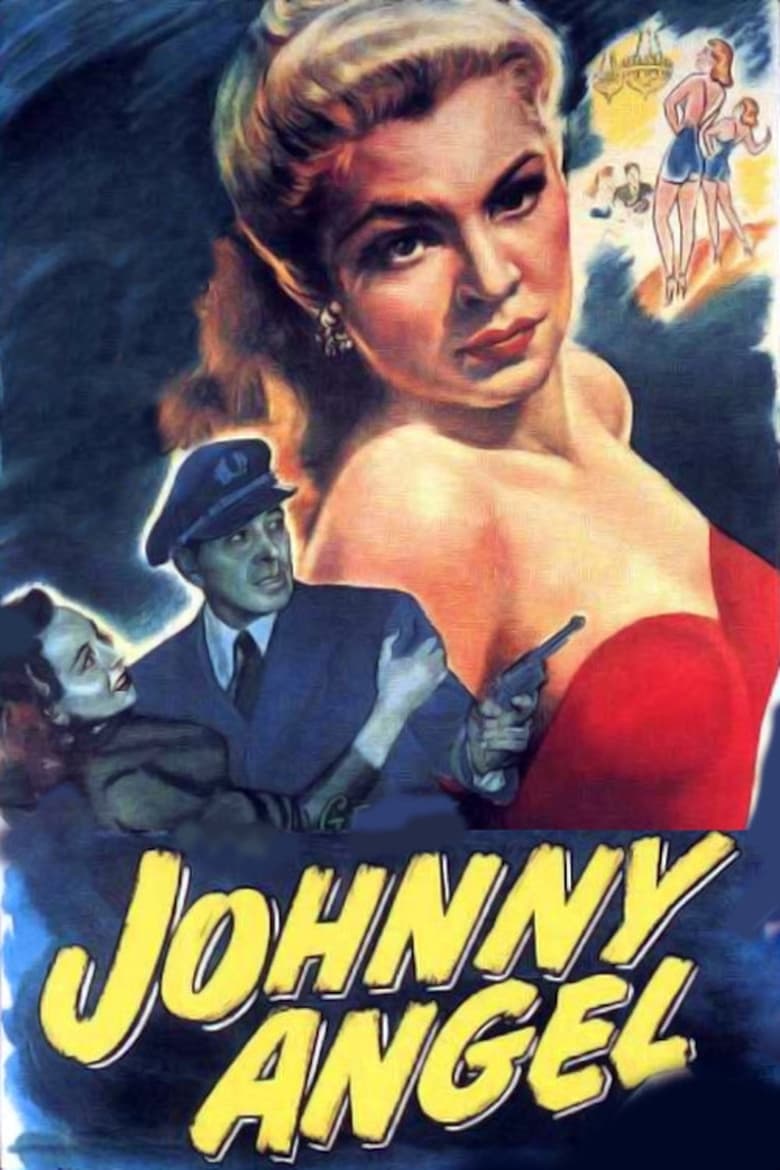
Merchant seaman Johnny Angel (George Raft) arrives in New Orleans to find his father's ship drifting crewless and silent in the Gulf of Mexico. Captain Angel (J. Farrell MacDonald) and every man aboard are dead, the cargo of French gold vanished. Johnny, methodical and contained, begins working back through the port's margins to find out who gave the order and where the gold went.
His investigation draws him toward two women who occupy opposite poles of the city's moral geography. Lilah Gustafson (Claire Trevor), married to the shipping magnate Gusty (Marvin Miller) who may be entangled in the conspiracy, plays her position with practiced calculation. Paulette Girard (Signe Hasso), a French refugee who survived the original voyage by hiding in the ship's hold, carries the only direct knowledge of what happened but has no one she can safely trust. Between them, Johnny must read loyalty against self-interest, and distinguish grief from performance.
Johnny Angel works within the wartime noir cycle that RKO was producing steadily by 1945 – stories in which the ocean trade routes, displaced Europeans, and accumulated gold serve as shorthand for a world still at war with its own corruption. The film belongs to the procedural strand of the genre: less concerned with psychological unraveling than with the patient, dangerous work of following one fact to the next through a city that would prefer the truth stay submerged.
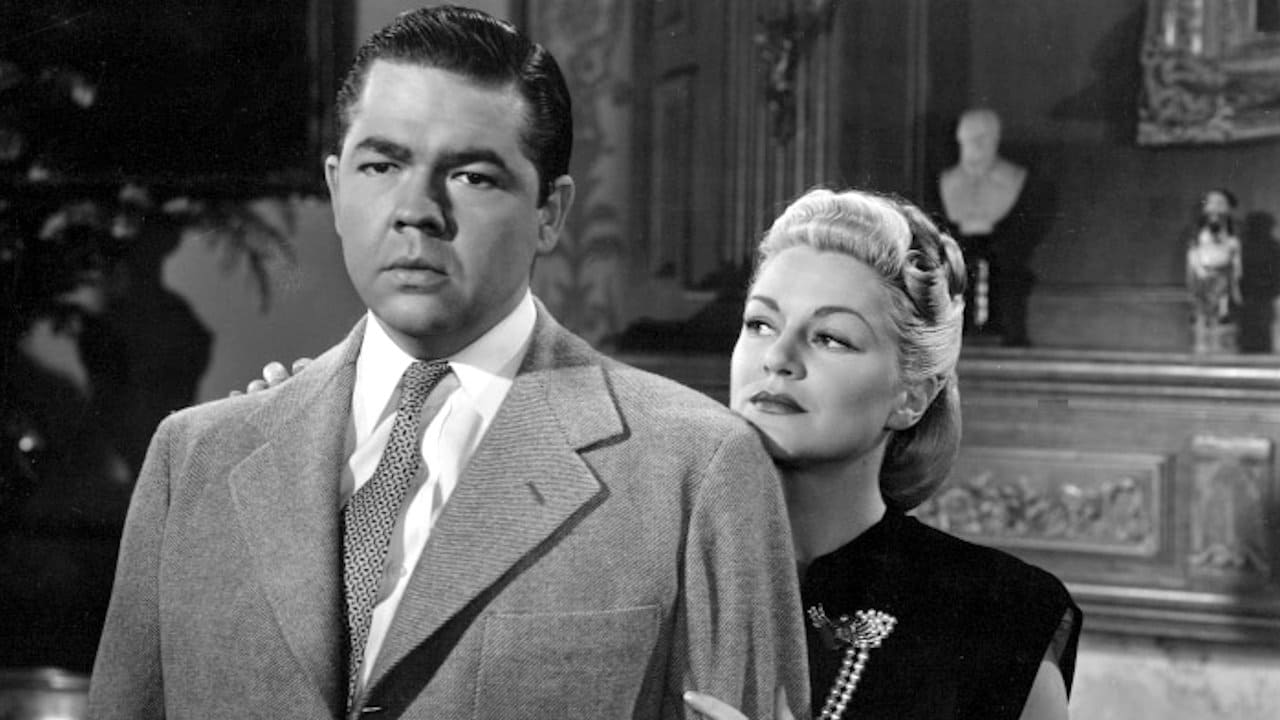
Johnny Angel sits comfortably in the second rank of 1940s noir – a film that knows exactly what it is and executes its intentions without waste. Edwin L. Marin keeps the pace disciplined, and George Raft, often underestimated as a performer, is well-suited here: his opacity reads not as limitation but as the controlled affect of a man who cannot afford to show his hand. Claire Trevor, working in territory she understood better than almost anyone, gives Lilah more interior life than the script strictly requires, shading calculation with something closer to resignation. The wartime context – displaced gold, a French survivor, dead men on an unmanned ship – gives the film a geopolitical texture that purely domestic noirs of the period lack. What it does not fully achieve is moral ambiguity at the centre; Johnny himself remains largely untested. Still, as a document of the genre at mid-decade, Johnny Angel is precise, professionally made, and more alert to the mechanics of institutional corruption than its B-picture reputation suggests.
– Classic Noir
Harry J. Wild frames the abandoned vessel in high contrast, the sea flat and grey-white behind it. When Johnny boards and moves through the empty lower decks, the camera holds in medium shot rather than cutting to close-ups, allowing the absence of crew to accumulate as spatial fact rather than shock. Light enters from overhead ports in hard shafts, catching dust and rope but no human movement. The composition is unusually spare for a studio production of this period – negative space does the narrative work.
The scene establishes the film's governing logic: Johnny does not panic, does not dramatize his discovery. He reads the ship the way a professional reads a crime scene, and the camera respects that discipline. It also tells us something about what the film values – not sensation but consequence. The empty vessel is the first in a series of voids the investigation must fill, and the restraint with which Wild and Marin present it sets an expectation of procedural seriousness that the rest of the film, more or less, honours.
Harry J. Wild, who shot RKO noir with consistent authority throughout the 1940s, brings a dockside economy to Johnny Angel that suits both the budget and the subject. Working almost entirely on studio sets dressed to suggest the New Orleans waterfront, Wild opts for low-key lighting with practical sources – lamp fixtures, overhead bulbs in cabin interiors – rather than the expressionist extremes that more celebrated noirs of the period employed. Shadow work is lateral rather than overhead, carving faces from the side and leaving peripheral space dark without calling attention to the technique. Lens choices stay conservative, favouring mid-range focal lengths that keep the action legible and the geography coherent; this is not a film interested in distortion. The visual restraint mirrors the film's moral argument: corruption in Johnny Angel is systemic and ordinary, not operatic, and Wild's choices refuse to glamorise it. The result is a cinematographic register closer to the crime procedural than the psychological thriller, and it serves the material honestly.
Tubi has carried several RKO titles from this period and is the most accessible free option for this film, though print quality can vary.
Archive.orgFreePublic domain prints of Johnny Angel have circulated on Archive.org; the transfer is serviceable for study purposes though not restored.
Amazon Prime VideoRental / PurchaseA digital rental through Amazon typically offers a cleaner encode than public domain sources and is worth the marginal cost for a considered viewing.