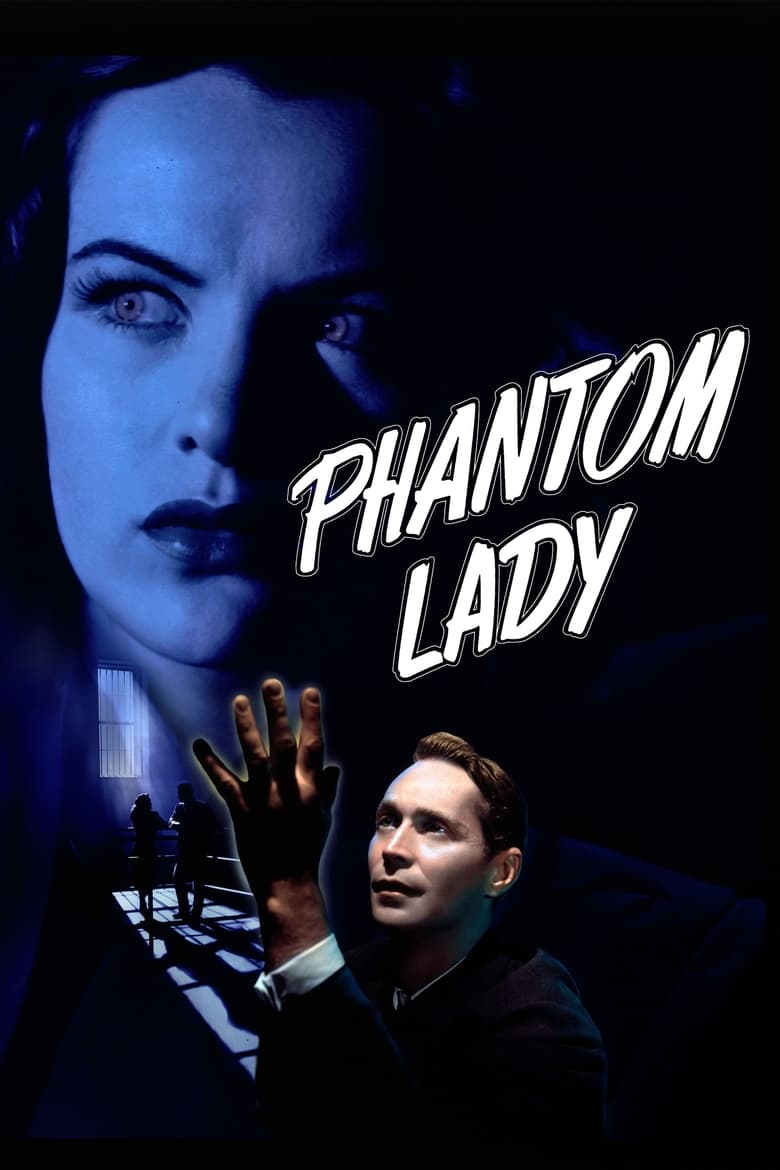
Scott Henderson, a New York engineer with a failing marriage, spends an evening with a stranger he meets at a bar – a woman in a distinctive hat whose name he never learns. When he returns home, he finds his wife strangled and himself the only suspect. The woman, his sole alibi, has vanished, and every witness from that night denies having seen her.
With Henderson convicted and awaiting execution, his loyal secretary Carol 'Kansas' Richman takes it upon herself to retrace his steps and locate the phantom lady. Her investigation draws her into the orbit of the sleazy drummer Cliff Milburn and back toward Henderson's closest friend, the charming and accomplished Jack Marlow – a man whose helpfulness begins to carry a faintly troubling weight.
Phantom Lady works the wrong-man premise with a deliberate, procedural patience, allowing the mechanics of false accusation and willful erasure to accumulate pressure before the film turns toward its concealed center of violence. It belongs to that strain of wartime noir in which domestic stability proves to be the most convincing disguise.
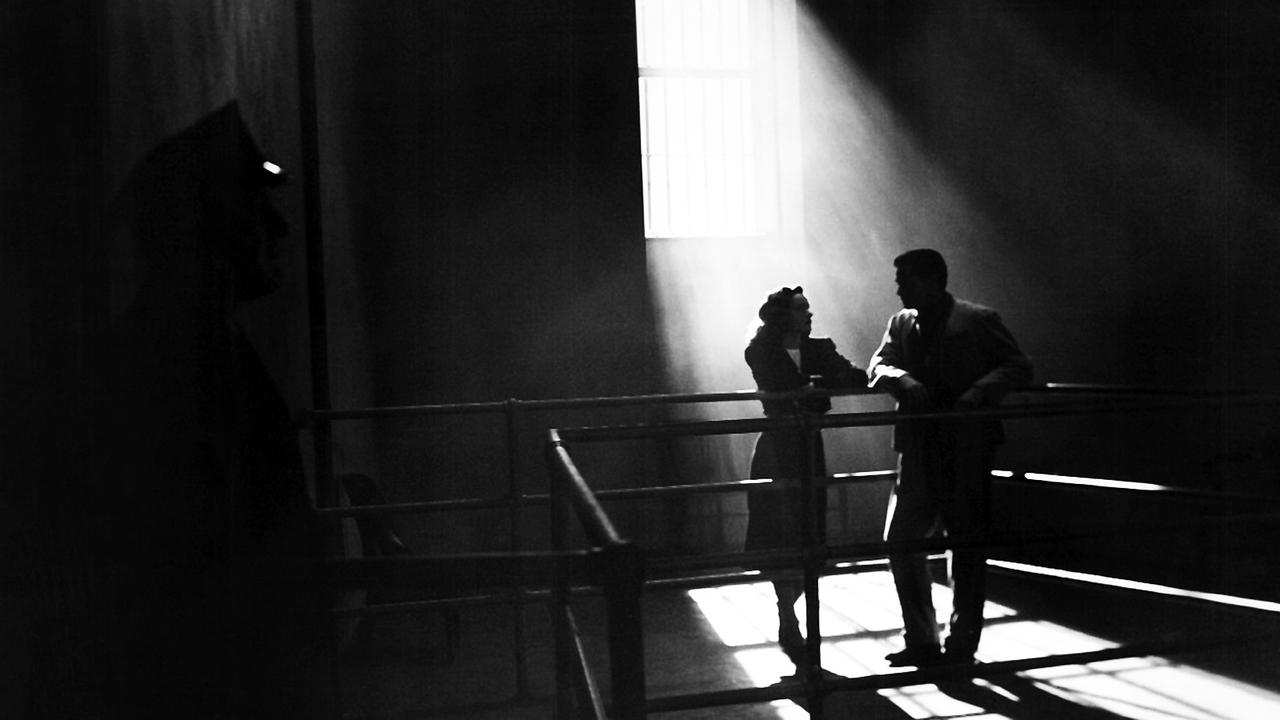
Phantom Lady arrived early enough in the noir cycle to feel like a film still working out what the genre could do. Robert Siodmak, freshly arrived from Europe and already fluent in expressionist shadow work, uses Cornell Woolrich's source novel as a vehicle for a sustained study in institutional indifference – witnesses who choose not to remember, a justice system that moves toward execution with bureaucratic calm. What distinguishes the film is its displacement of the investigative function onto a woman. Carol 'Kansas' Richman is not a detective; she is a secretary acting on devotion, and Ella Raines plays that devotion without sentimentality, giving the role a wired, purposeful quality that anticipates the more knowing female protagonists of later noir. Franchot Tone's performance as Marlow – restrained until it cannot be – is the film's structural argument: that competence and sophistication are not incompatible with psychopathy. The film's lasting contribution is its insistence that the danger in postwar domestic life was not always visible from the street.
– Classic Noir
Elwood Bredell's camera closes in on Cliff Milburn at the drum kit as Kansas watches from below, and the editing tightens around the percussion until the frame seems to contract with each strike. Low-angle shots place Cliff in dominance over the space, his face slick with sweat and lit from a source that throws hard shadows upward, erasing the softness from his features. The club's interior – all cigarette haze and shallow depth – presses the scene into claustrophobia.
The sequence functions as a displaced seduction, with the drumming as both proposition and threat; Cliff is offering access to what Kansas needs, but the camera makes clear the cost. It is one of the film's most candid moments about the vulnerability of a woman operating without institutional cover, alone in a space where the men set the tempo and the exits are not well lit.
Elwood Bredell, who brought the same low-key precision to Christmas Holiday the same year, shoots Phantom Lady as a series of compressed, shadow-weighted interiors that use Universal's studio sets to generate a feeling of permanent nocturnal enclosure. His lighting setups favor hard, directional sources at acute angles, carving faces into light and shadow with a severity that has less to do with decoration than with moral argument – the characters who lie exist most fully in darkness, and Carol's gradual illumination as she nears the truth is rendered through a subtle brightening of her close-ups. The jazz club sequence deploys low angles and tight framing to amplify threat without movement. Street scenes feel built rather than found, their wet pavement and isolated lamp pools a studio construction of the city as a space fundamentally hostile to the innocent. Bredell never wastes a shadow.
Criterion Channel periodically programs Siodmak retrospectives and Universal noir packages; check current availability for the best-quality transfer.
TubiFreeTubi carries a number of Universal titles from this era at no cost, though transfer quality varies by source print.
Archive.orgFreeAs a public domain title, Phantom Lady is available on Archive.org, though the quality of individual uploads differs significantly.