Films People Pull a Fast One Night Beat Reading Room On TV Shop
Escape in the Fog 1945
1945 Columbia Pictures
★★★☆☆ Notable
Film Noir · 63 minutes · Black & White

Escape in the Fog

Directed by Budd Boetticher
Year 1945
Runtime 63 min
Studio Columbia Pictures
TMDB 5.4 / 10
"A woman dreams of a murder that has not yet happened – and the fog that follows her will not lift."

Eileen Carr, a nurse recovering at a San Francisco hotel after a breakdown, wakes from a recurring nightmare in which she witnesses a man being thrown from a bridge. The dream is vivid enough to feel like memory, and Eileen cannot shake it. When she encounters Barry Malcolm – the man from her dream, very much alive – she recognizes him with a certainty that unsettles them both. Barry is an American intelligence operative carrying sensitive documents, and his mission has already made him a target.

The enemy agents assigned to intercept Barry – led by the cold, methodical Schiller and his enforcer Hausmer – move quickly once they identify him. Eileen's premonitory connection to Barry pulls her into their orbit before she fully understands the danger. Paul Devon, a senior figure whose loyalties take time to read, operates in the background, and the wartime intelligence context means that allegiances are rarely what they appear on the surface.

Escape in the Fog uses the wartime spy framework as a container for the genre's more durable preoccupations: the unreliability of perception, the fragility of identity under stress, and the way ordinary people are drawn into violence they did not choose. The fog of the title is as much psychological as meteorological, and the film's interest in precognition places it at the stranger, more atmospheric edge of the wartime noir cycle.
Classic Noir

Escape in the Fog is a compact, efficient example of wartime noir produced at Columbia during the period when the studio was releasing programmers that frequently exceeded their budgets in ambition. Budd Boetticher, still early in a career that would eventually produce some of the most rigorous Westerns in American cinema, handles the material with more discipline than the story strictly requires. Nina Foch brings a genuine unease to Eileen that lifts the precognition device above mere plot mechanics; her performance keeps the film's psychological premise credible when the spy-thriller elements turn routine. The San Francisco setting is used economically, with the fog functioning as both practical cover for the narrative and as a visual correlative for Eileen's unstable grip on reality. At 63 minutes the film has no room for waste, and Boetticher does not introduce any. What it reveals about its era is the ease with which the wartime thriller absorbed expressionist technique – the nightmare logic, the doubled identity, the waking dream – without pausing to justify it.

– Classic Noir
3 ★★★☆☆ Notable
Credits

The Crew

DirectorBudd Boetticher
ScreenplayAubrey Wisberg
CinematographyGeorge Meehan
EditingJerome Thoms
ProducerWallace MacDonald
Performances

The Cast

Close Reading

The Signature Scene

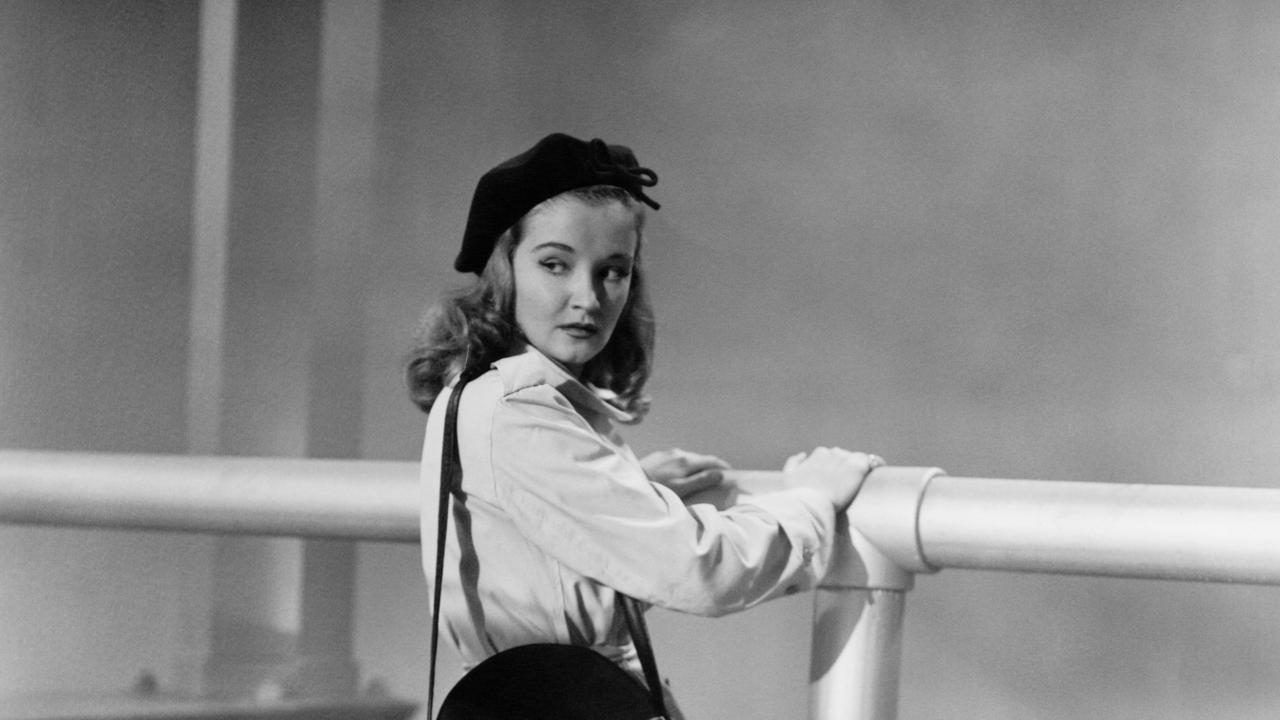
Escape in the Fog – scene
The Bridge in the Dream The Fog Swallows the Figure

The nightmare sequence opens on a high-angle shot of the bridge shrouded in dense fog, the geometry of its railings reduced to bare verticals dissolving at the edges of the frame. George Meehan keeps the light source ambiguous – a diffuse glow that casts no hard shadows and gives every surface the texture of wet gauze. The camera moves toward the struggling figures with a slow deliberateness that reads as dread rather than urgency, and the fog functions as a practical matte, collapsing depth until foreground and distance occupy the same plane.

What the scene establishes is not simply danger but the unreliability of the witness. Eileen watches from a position that is never clearly located in the geography of the bridge, and that spatial ambiguity is the scene's real argument: she is seeing something she cannot yet place in time, and the film asks whether foreknowledge constitutes a form of complicity. The dream will return, and its return will measure how far reality has moved toward confirming it.

Visual Language

The Cinematography

🎞️
George Meehan – Director of Photography

George Meehan shoots Escape in the Fog as a film that distrusts clear sight. Working on Columbia studio sets augmented by San Francisco location material, Meehan uses fog – both the practical atmospheric kind and manufactured studio diffusion – to soften the edges of compositions that might otherwise read as straightforward. Shadow work is restrained by the standards of the cycle's more expressionist entries, which is itself a choice: the threat here comes from obscured surfaces rather than dramatic chiaroscuro, from the way a face half-turned in lamplight withholds rather than reveals. Interiors are lit with pools of localized light that isolate characters against undifferentiated dark backgrounds, reinforcing the film's theme of perceptual isolation. The bridge sequences, whether dream or reality, use depth of field selectively – sharpening the immediate figure while allowing background architecture to dissolve – which keeps the viewer in the same epistemological position as Eileen: seeing clearly only what is nearest, and uncertain about everything beyond it.

In the Catalogue

Themes & Motifs

Availability

Where to Watch

Also in the Directory

See Also