Films People Pull a Fast One Night Beat Reading Room On TV Shop
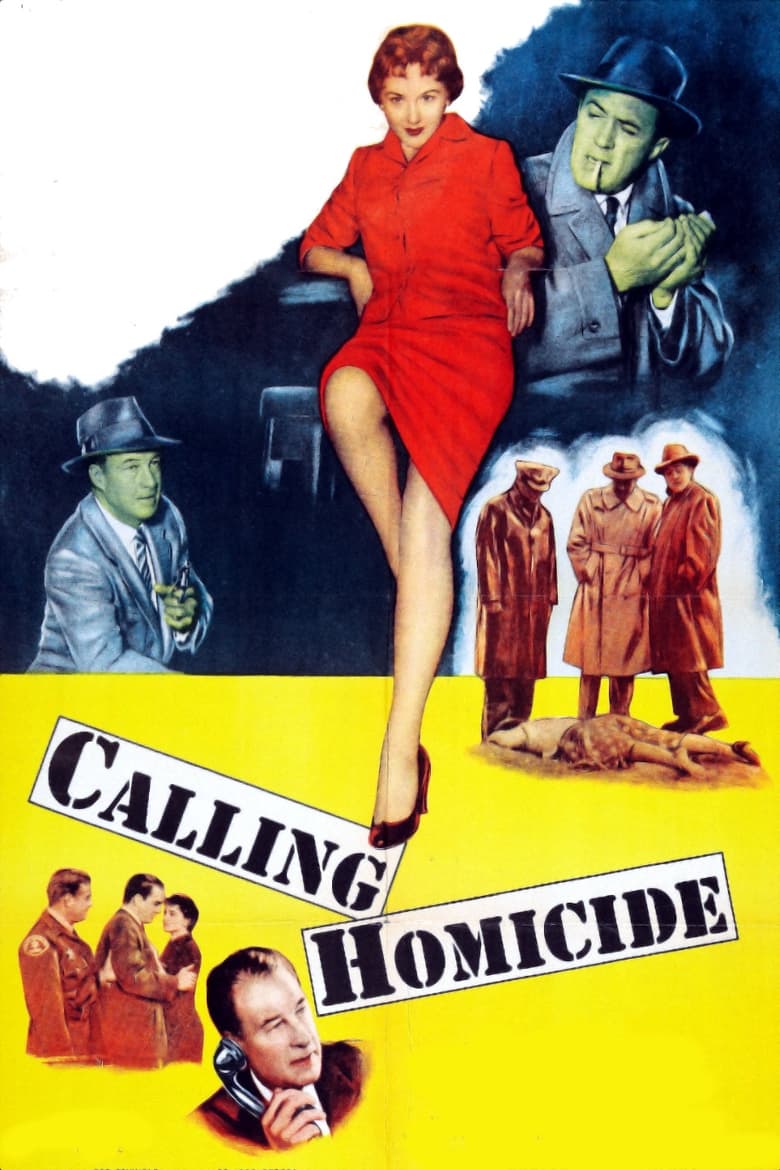
Calling Homicide 1956
1956 Allied Artists Pictures
★★★☆☆ Notable
Film Noir · 60 minutes · Black & White

Calling Homicide

Directed by Edward Bernds
Year 1956
Runtime 60 min
Studio Allied Artists Pictures
TMDB 6.2 / 10
"A reporter chases a story through precincts and back rooms until the story starts chasing him."

When a young woman is found dead in a seedy Los Angeles rooming house, veteran crime reporter Andy Doyle smells something more than a routine homicide. Working alongside Detective Sergeant Mike Duncan of the LAPD, Doyle begins pulling at threads that lead from the victim's circle of acquaintances toward a web of petty ambition and concealed motive. The dead woman had connections to several men with reasons to stay invisible, and neither the police nor the press are getting straight answers.

The investigation draws Doyle into contact with Donna Graham, a woman close enough to the case to be either a witness or a liability, and with Jim Haddix, a slippery figure whose evasions suggest guilty knowledge rather than innocence. As the circle of suspects widens to include nightclub operator Tony Fuller and the calculating Allen Gilmore, allegiances shift and testimony proves unreliable. Duncan and Doyle find themselves working parallel tracks, each withholding just enough to complicate the other's progress.

Calling Homicide belongs to the procedural wing of the postwar noir cycle, where the lone wolf detective gives ground to institutional methods without entirely surrendering the genre's fatalistic undertow. The film is less interested in psychological depth than in the mechanics of how crimes get obscured and how the press and the police negotiate their uneasy partnership in bringing them to light.
Classic Noir

Calling Homicide is a lean, unpretentious example of the B-picture procedural that Allied Artists was producing with assembly-line efficiency in the mid-1950s. Directed by Edward Bernds, a craftsman whose instincts ran toward economy over atmosphere, the film holds its sixty-minute runtime to a single clean purpose: the methodical reconstruction of a murder through institutional legwork rather than inspired intuition. Bill Elliott, whose career had migrated from Westerns to crime pictures by this point, brings a weathered credibility to Andy Doyle that the script does not fully earn on its own terms. More interesting, in retrospect, is Jeanne Cooper's Darlene Adams, a performance that gives the film its one moment of genuine unease. The picture participates in a broader cultural negotiation of the era – the tension between press freedom and police authority, between public accountability and the expedient burial of inconvenient facts. It will not reorder anyone's understanding of noir, but it documents, honestly and without pretension, what the genre looked like when stripped to its working minimum.

– Classic Noir
3 ★★★☆☆ Notable
Credits

The Crew

DirectorEdward Bernds
ScreenplayEdward Bernds
CinematographyHarry Neumann
MusicMarlin Skiles
EditingWilliam Austin
ProducerBen Schwalb
Performances

The Cast

Close Reading

The Signature Scene

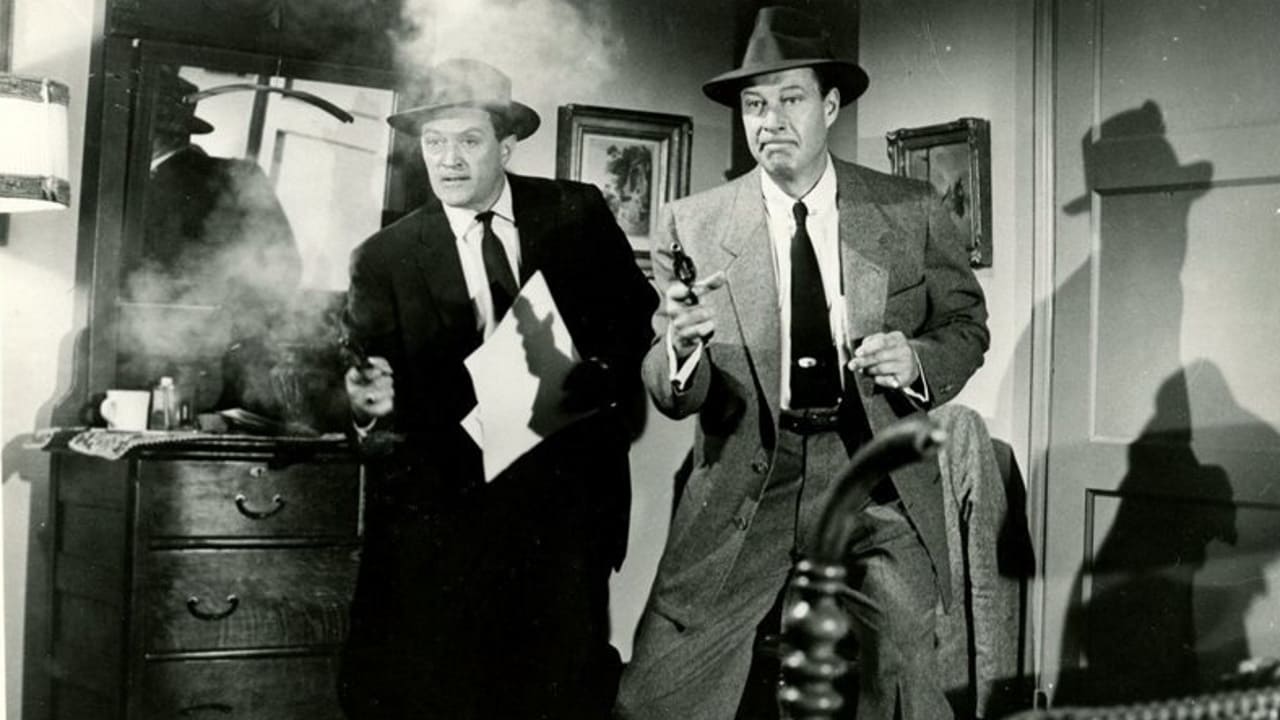
Calling Homicide – scene
The Rooming House Interrogation Light Through a Transom

Harry Neumann positions his camera at the far end of a narrow corridor, compressing the space so that Doyle and the reluctant witness appear caught in a funnel rather than a room. A single practical bulb overhead throws a cone of harsh light downward onto the witness's hands while the face retreats into soft shadow – a compositional choice that makes evasion visible as a physical condition rather than a psychological one. The walls close in through the lens rather than through set construction.

The scene argues, quietly, that guilt in this world is less a matter of action than of withholding – of what people choose not to say in rooms that are too small and too bright to permit comfortable silence. Doyle's questions are routine; the framing is not, and the gap between the two is where the film briefly locates something genuine about the relationship between knowledge and complicity.

Visual Language

The Cinematography

🎞️
Harry Neumann – Director of Photography

Harry Neumann, a DP whose work runs through dozens of Allied Artists and Monogram productions across three decades, shoots Calling Homicide with the disciplined pragmatism the budget demands and occasionally transcends. Working primarily on studio interiors with limited natural light augmentation, Neumann favors hard key sources placed high and at steep angles, producing shadows that fall across floors and walls rather than faces – a technique that implicates the environment rather than the individual. Corridor and doorway framings recur throughout, each one using architectural geometry to imply constriction without requiring elaborate set construction. Where the film moves outdoors for brief location work, Neumann shifts to flatter, faster exposures that register the indifferent daylight of the city as its own kind of moral neutrality. The visual logic supports the procedural argument: in this version of noir, darkness is institutional rather than existential, a condition of rooms and offices rather than of souls.

In the Catalogue

Themes & Motifs

Availability

Where to Watch

Also in the Directory

See Also