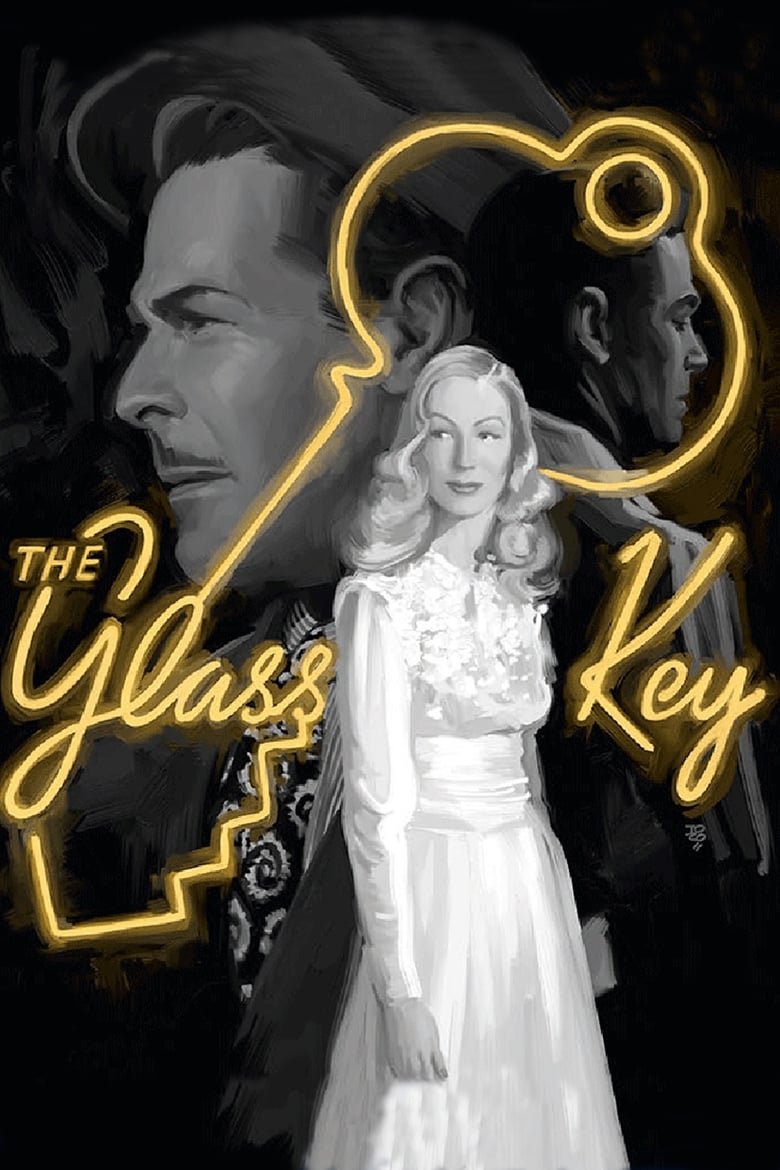
In an unnamed American city, Paul Madvig (Brian Donlevy) is a ward boss with political ambitions and a weakness for the senator's daughter, Janet Henry (Veronica Lake). Madvig throws his criminal organization's weight behind Senator Henry's reelection campaign, hoping to earn the family's respectability in return. Standing close to Madvig, as he always has, is Ed Beaumont (Alan Ladd), the cool, watchful political operative who sees the arrangement clearly and trusts it not at all.
When the senator's dissolute son Taylor (Richard Denning) turns up dead, suspicion fans outward in several directions at once. Nick Varna (Joseph Calleia), a rival racketeer with his own designs on the city, moves to exploit the murder for leverage. Madvig, whose affection for Janet clouds his judgment, finds himself framed for the killing. Beaumont, working to exonerate his boss, is taken by Varna's enforcer Jeff (William Bendix) and subjected to a prolonged, methodical beating – a sequence that lingers on the mechanics of violence without sensationalizing them.
Adapted from Dashiell Hammett's 1931 novel, the film situates its story at the intersection of organized crime and legitimate politics, treating them as variations on the same transaction. Ladd's performance keeps Beaumont's motives genuinely opaque: loyalty, self-interest, and something harder to name operate simultaneously, never resolving into sentiment. The film belongs to the cycle of Paramount noirs that used wartime America's anxiety about power and corruption as their atmospheric foundation.
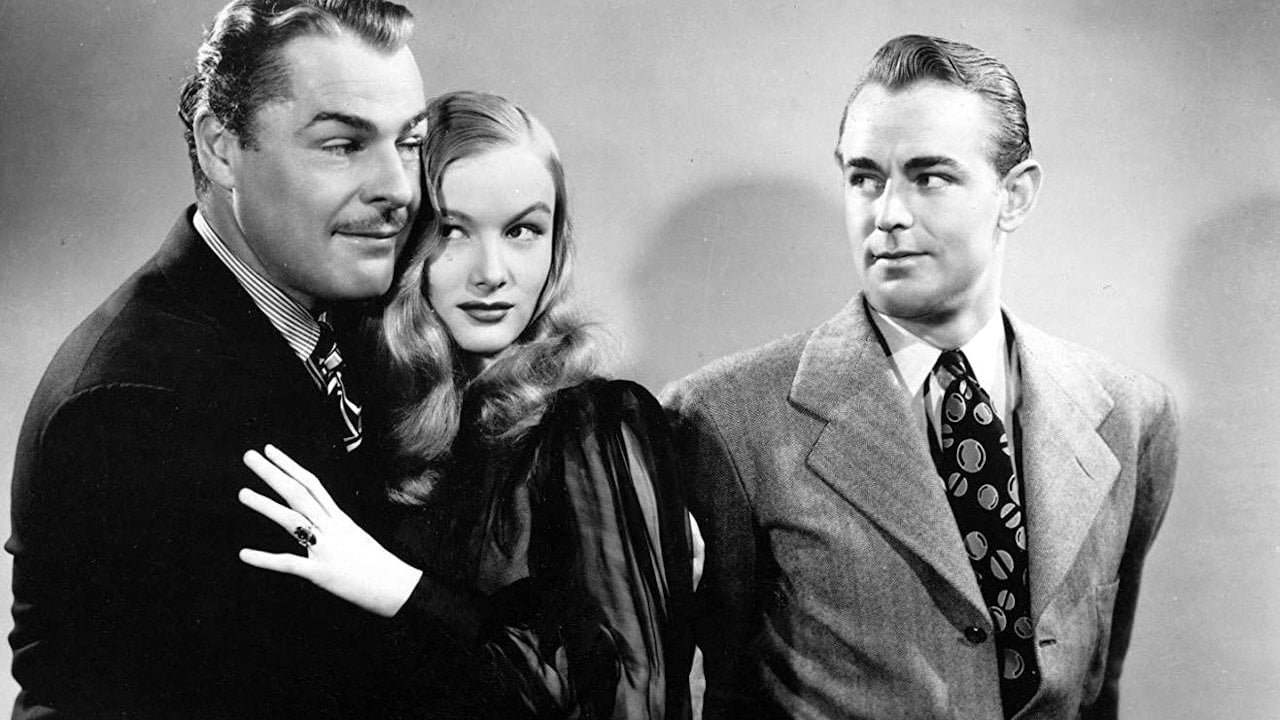
The Glass Key (1942) is the second and more accomplished screen adaptation of Hammett's novel, and it consolidates the Ladd-Lake pairing that Paramount had road-tested earlier that year in This Gun for Hire. What distinguishes the film is its seriousness about political machinery: Madvig is not a cartoon villain but a man whose genuine affections make him vulnerable in a world that punishes sentiment. Heisler's direction is functional rather than expressive, which works in the film's favor – the story does not require visual flourish, only discipline. The Bendix scenes, in which Jeff beats Beaumont across two separate episodes with a kind of professional thoroughness, remain the film's most cited passages, and rightly so: they strip away the glamour typically attached to screen violence and present it as labor. Ladd's performance, built on stillness and withheld reaction, anticipates the detached protagonists that would define the genre's mature phase. The film stops short of the moral complexity Hammett's prose sustains, but as a studio production working within considerable constraints, it holds its shape.
– Classic Noir
Sparkuhl lights the room in shallow pools, leaving the walls and corners in near-total darkness so the geography of confinement becomes abstract. The camera stays at a middle distance, refusing close-ups that would turn the violence into spectacle. Bendix's Jeff moves through the frame with a methodical calm that the composition reinforces: he is never rushed, never excited, and the static framing gives his deliberateness a quality close to ritual.
The scene argues, through sustained duration rather than shock, that brutality in this world is institutional rather than personal. Jeff bears Beaumont no particular malice; this is work, performed by someone good at it. That distinction – between cruelty as passion and cruelty as function – is the film's darkest insight, and it positions the violence not as an aberration within the political world Madvig and Varna inhabit but as its clearest expression.
Theodor Sparkuhl, a German-born cinematographer with roots in the Weimar studio system, shoots The Glass Key with a preference for controlled artificial light and deep shadow margins that owes something to the expressionist tradition without ever declaring it. Working entirely on Paramount's Melrose Avenue stages, Sparkuhl constructs interiors that feel plausible as real rooms while subtly distorting their proportions – ceilings press down, doorways recede into darkness, and the light sources are rarely visible. He tends toward a slightly longer lens than was conventional for the period, which flattens faces and compresses the space between characters in two-shots, lending confrontations a quiet claustrophobia. Shadow falls on characters in a way that tracks moral position: Madvig is frequently lit in full, open light, marking his transparency and vulnerability, while Beaumont and Varna occupy more ambiguous tonal zones. The cinematography does not call attention to itself, which is precisely its virtue.
The most reliable source for a clean transfer with accurate aspect ratio; check current availability as titles rotate.
TubiFreeA free ad-supported option that has carried the film periodically, though transfer quality varies; confirm current listing before viewing.
Archive.orgFreePublic domain prints are available here, though the visual quality is inconsistent and should be treated as a last resort.