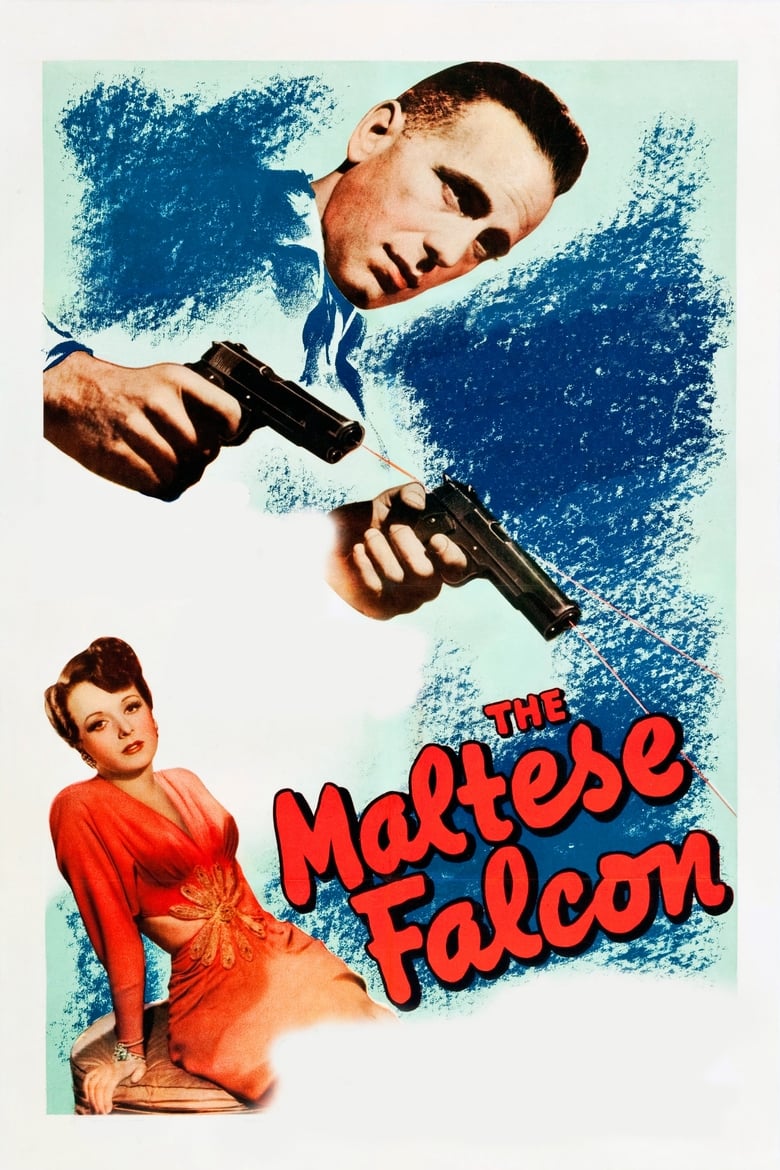
San Francisco private detective Samuel Spade takes on a client who calls herself Ruth Wonderly – a name she has invented for the occasion. She claims to be searching for her missing sister, but the case quickly turns lethal when Spade's partner, Miles Archer, is shot dead on the same night he follows her lead. A second murder follows before dawn, and Spade finds himself at the center of a police inquiry while simultaneously pursuing an investigation of his own.
The woman reveals herself as Brigid O'Shaughnessy, and the fiction of the missing sister dissolves into a contest over a black statuette of a falcon, a relic of incalculable value that several parties are desperate to possess. Joel Cairo, a fastidious and dangerous intermediary, arrives at Spade's office with a proposition and a pistol. Behind him looms Kasper Gutman, a corpulent and relentlessly cordial man who has spent years tracking the bird across continents. Loyalties shift with each scene, and Spade must determine who is using whom – and for what price.
The Maltese Falcon occupies a foundational position in American crime cinema, establishing the moral architecture that film noir would refine and interrogate for the following two decades. It presents a world in which every character operates from concealed motives, and in which the protagonist's survival depends on his capacity to resist the very deceptions he recognizes most clearly. The film's interest lies not in the falcon itself but in what the pursuit of it costs the people willing to lie, seduce, and kill for a thing that turns out to be worthless.
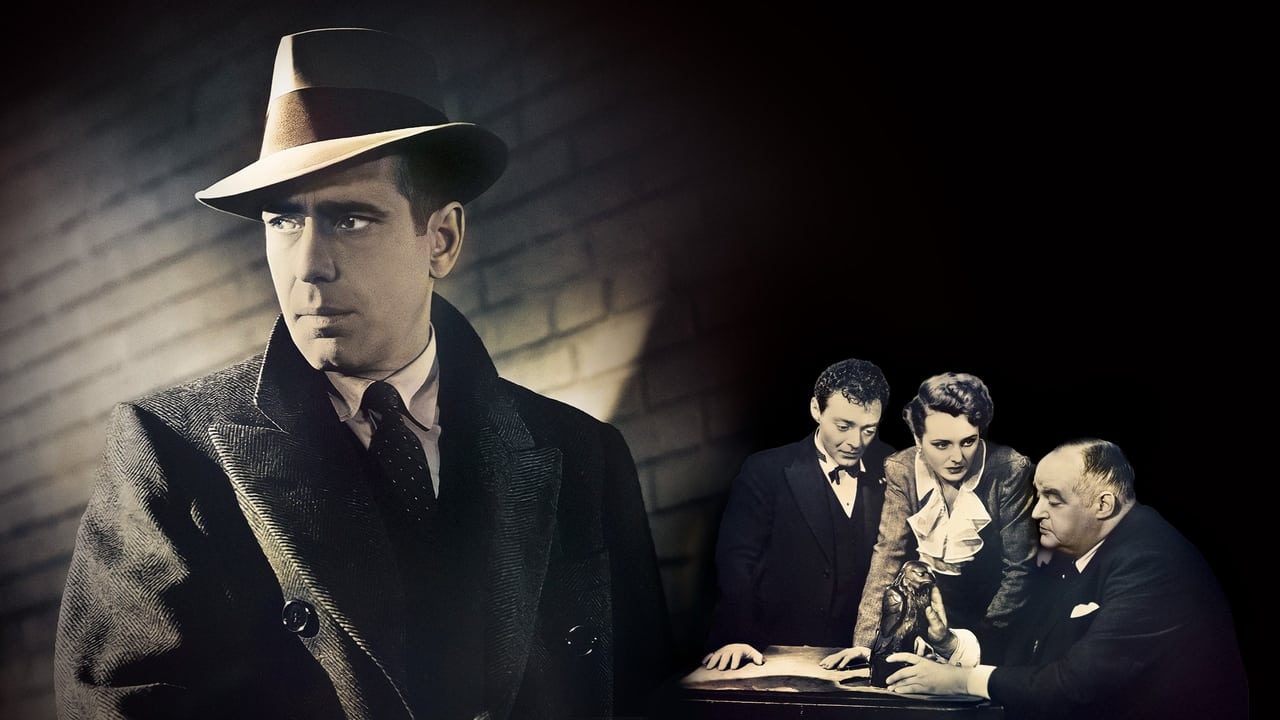
John Huston's directorial debut adapted Dashiell Hammett's 1930 novel with a fidelity that earlier screen versions had declined to attempt, and the result was a film that effectively defined the detective thriller as a vehicle for moral inquiry rather than plot mechanics. Humphrey Bogart's Spade is not heroic in any conventional sense – he is calculating, cold at intervals, and capable of genuine cruelty – yet the film insists on a distinction between his ethics and those of everyone around him. That distinction is what the final scene tests. Sydney Greenstreet, in his film debut at sixty-one, brings an intellectual weight to Gutman that makes him a credible antagonist rather than a theatrical villain. Arthur Edeson's cinematography keeps the film in close quarters, emphasizing the claustrophobia of negotiation and deception. What the film reveals about its era is the extent to which hard-boiled fiction had already diagnosed a civic disillusionment that wartime culture preferred to defer.
– Classic Noir
Gutman produces the black bird and sets it on a table. Edeson's camera holds at a medium distance as Gutman draws a penknife and scrapes at the enamel surface. The light is concentrated on the object itself, falling from a single source at an angle that carves deep shadows across the surrounding faces. As the lead beneath becomes apparent, the frame tightens almost imperceptibly – not a dramatic push but a slow contraction, as if the room itself is registering the collapse of the premise that has organized the entire film.
The scene is the pivot on which the film's argument turns. Everything that has been promised – the wealth, the resolution, the romantic possibility – is exposed as fabrication at the same moment. Spade's reaction, a controlled and unsurprised disgust, confirms what the film has been suggesting about his character throughout: he already suspected the bird might be nothing. His endurance was not hope but method. The worthlessness of the falcon does not disappoint him so much as it relieves him of a pretext he found tiresome.
Arthur Edeson, whose earlier work included All Quiet on the Western Front and Frankenstein, brought a disciplined economy to The Maltese Falcon that suited Huston's preference for shooting close to the novel's compressed, interior world. Working primarily on Warner Bros. studio sets, Edeson employed low-key lighting with a high contrast ratio, building shadows that function as moral weather rather than decoration. His lens choices favor modest focal lengths that keep faces in slight spatial tension with their surroundings, never quite comfortable in the frame. Rooms feel smaller than they are, corridors shorter. Shadow falls across faces at moments of concealment and lifts only rarely, and never completely. The camera moves infrequently; when it does, the movement signals a shift in power rather than in narrative momentum. The result is a visual language in which the architecture of deception is made spatial – characters occupy the same rooms but never the same frame of reference.
The film is part of the Warner Bros. library and streams on Max in a transfer that preserves Edeson's high-contrast black-and-white photography with reasonable fidelity.
TCMBroadcast / StreamingTCM airs the film regularly as part of its classic Hollywood programming and streams it on the TCM app for authenticated cable subscribers.
TubiFree / Ad-SupportedA free ad-supported stream is available on Tubi, though the encode quality is variable and best suited to casual viewing rather than critical study.