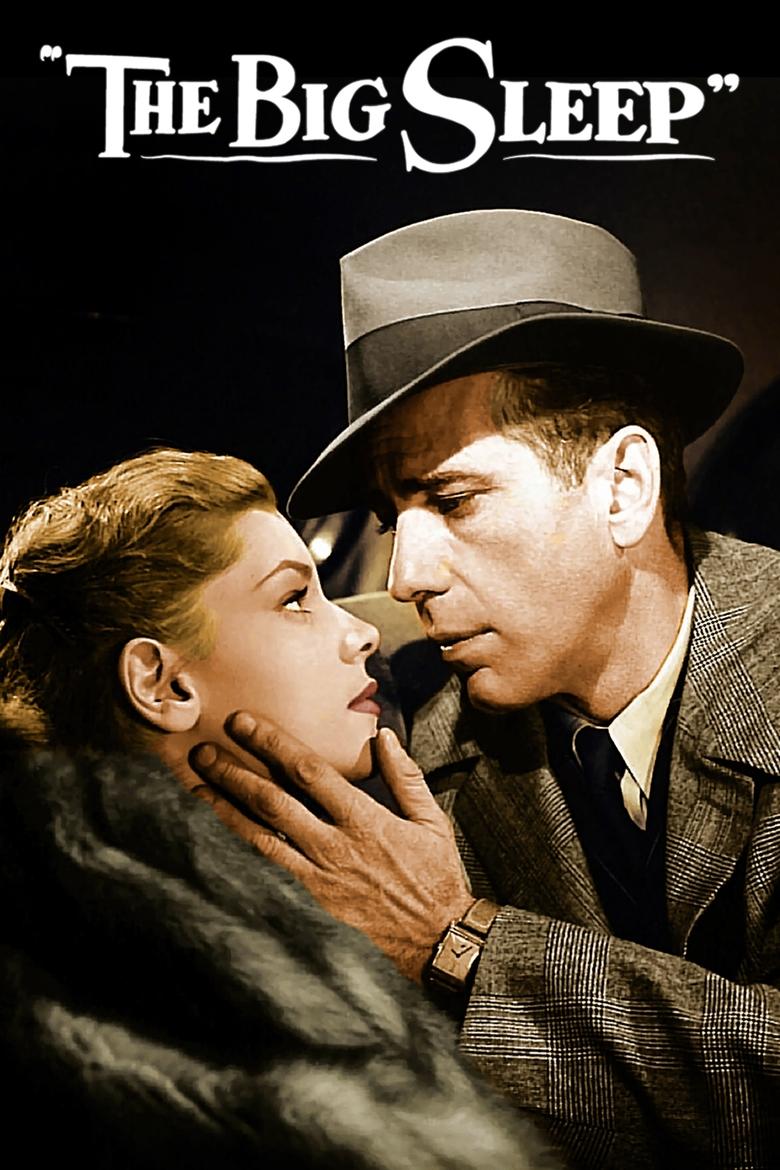
Philip Marlowe, a Los Angeles private investigator, is hired by the aging, wheelchair-bound General Sternwood to resolve a blackmail matter involving his younger daughter, Carmen. The job seems straightforward enough – a bookseller named Arthur Geiger is holding compromising material over Carmen's head – but Marlowe arrives at Geiger's Laurel Canyon house to find the man dead and Carmen present, drugged and photographed. The General's older daughter, Vivian Sternwood Rutledge, makes clear from their first meeting that she has her own calculations and intends to manage Marlowe as much as use him.
The blackmail case fractures almost immediately into a separate murder, then another, each corpse pulling Marlowe deeper into a web that connects the Sternwood household to Eddie Mars, a cool and well-connected gambling operator who may be sheltering his wife from an entirely different kind of trouble. Joe Brody, a small-time operator with opportunistic instincts, briefly takes possession of Geiger's photographs before violence removes him from the equation. Vivian's loyalties remain genuinely ambiguous throughout – her verbal sparring with Marlowe carries real charge, but the question of what she is protecting, and from whom, sits unresolved beneath every exchange.
The Big Sleep belongs to the cycle of mid-1940s noir that translated hard-boiled fiction for a wartime and postwar audience hungry for moral complexity and institutional cynicism. Raymond Chandler's source novel was famously labyrinthine, and Hawks makes no special effort to clarify it, treating narrative coherence as less important than atmosphere, character, and the particular pleasure of watching Bogart and Bacall occupy the same frame. The result is a film less concerned with solving its crimes than with documenting the experience of moving through a city where corruption is ambient and no one's motives are clean.
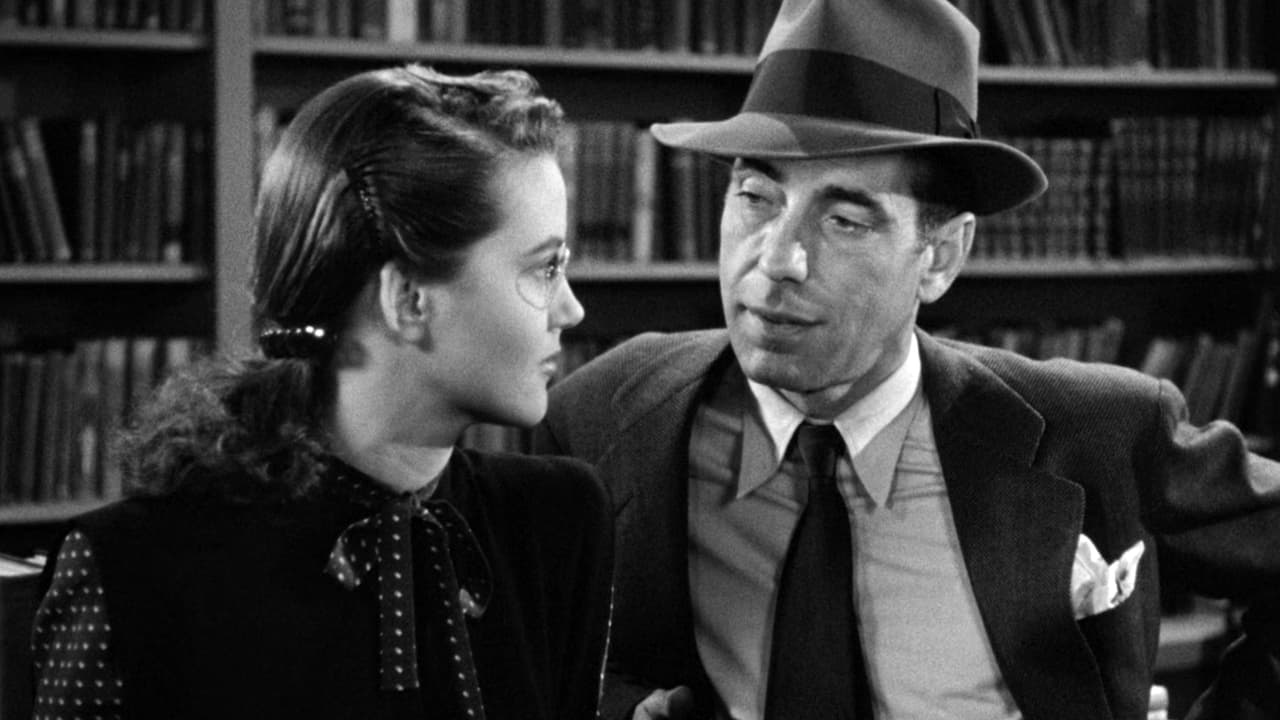
The Big Sleep is not a mystery that rewards close attention to its plot mechanics – Hawks and screenwriters William Faulkner, Leigh Brackett, and Jules Furthman appear largely indifferent to who killed whom and why – and this indifference turns out to be the film's most revealing quality. What Hawks understood, working within the constraints of the Production Code and the commercial imperatives of a studio renegotiating the terms of its most bankable pairing, is that Chandler's novel had never really been about detection. It was about the texture of a corrupted social order observed through the consciousness of a man paid to walk through it. Bogart's Marlowe is not heroic so much as durable: he absorbs information, takes beatings, trades wit with everyone from bookshop girls to police inspectors, and arrives at conclusions that protect the powerful while leaving the question of justice quietly unanswered. The film's lasting significance lies in how completely it normalizes that compromise, presenting it not as tragedy but as the ordinary condition of professional life in postwar Los Angeles.
– Classic Noir
Hawks and cinematographer Sidney Hickox frame Vivian's nightclub appearance in a shallow field, the background crowd softened to silhouette while Bacall occupies the foreground with deliberate ease. The lighting is high-key against prevailing noir convention – Hickox illuminates her face evenly, denying shadow the usual interpretive function – which produces an effect that is, paradoxically, more unsettling than darkness would be. Marlowe watches from a table, his face partially obscured, the geometry of the shot organizing power in her direction rather than his.
The scene reframes the film's central dynamic. Marlowe is nominally the investigator, the one who sees; here he is reduced to audience. Vivian performs knowingly, aware of being watched, using visibility as its own form of concealment. Hawks returns to this inversion repeatedly – the woman who appears most exposed is also the most controlled – and the nightclub sequence is where the argument becomes explicit without being stated.
Sidney Hickox shot The Big Sleep almost entirely on Warner Bros. soundstages, and the studio environment is used with discipline rather than limitation. Hickox works primarily with low-key setups in the Sternwood mansion and Geiger's bungalow, deploying venetian-blind shadows and motivated practical sources to suggest moral enclosure without overstating it. His lens choices favor slight compression, keeping interiors feeling inhabited rather than theatrical. In exterior sequences – the wet streets outside Geiger's, the forecourt of the Sternwood estate – he maintains a consistent tonal register that prevents the film from reading as two separate visual worlds. Where Hickox distinguishes himself is in the two-shot compositions built around Bogart and Bacall: he consistently finds angles that place both performers in focus while creating subtle asymmetries of power, the frame doing argumentative work that the dialogue leaves implicit. The overall visual language serves the film's moral logic precisely: everything is legible, and nothing is resolved.
Warner Bros. library title available in a restored presentation; the most convenient streaming option for most viewers.
TCMBroadcast/StreamingAirs regularly as part of TCM's classic programming and is available on the TCM app for authenticated cable subscribers.
Archive.orgFreeA public-domain-era print circulates here; image quality is variable and this version should be treated as a fallback rather than a preferred source.