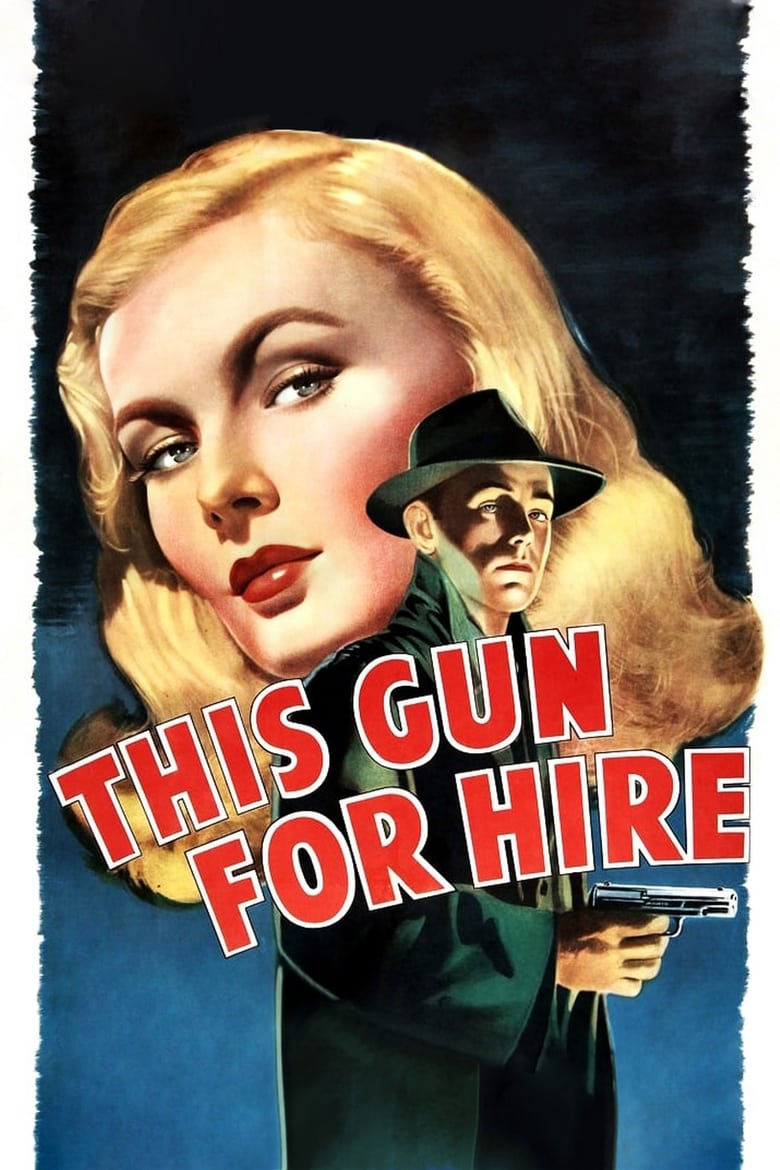
San Francisco, 1942. Philip Raven is a professional killer – cold, precise, and without apparent remorse. Hired by the oily middleman Willard Gates to retrieve stolen chemical-formula documents, Raven completes the job and is paid off with marked bills, setting him up for a police manhunt he never anticipated. On the same train south to Los Angeles, he encounters Ellen Graham, a nightclub entertainer traveling to investigate a wartime industrial espionage ring on behalf of a senator. Their fates become entangled before either understands the other's purpose.
Ellen is also the girlfriend of Detective Michael Crane, who is pursuing Raven for the double murder in the film's opening. Gates, working for the crippled munitions magnate Alvin Brewster, maneuvers to silence Raven before he can expose the syndicate's sale of poison-gas formulas to a foreign power – a detail that lifts the film out of straight crime territory and into the wartime propaganda landscape Paramount was cultivating. Raven, cornered and double-crossed, finds in Ellen something close to trust, though the film is careful not to sentimentalize it.
This Gun for Hire operates at the intersection of the hired-killer thriller and the nascent noir cycle, arriving the same year as This Above All and just ahead of Double Indemnity's definitive articulation of the form. Its sympathies are unstable in the way that defines the mode: Raven is a killer whose victimization the film insists we register, while the law that pursues him is embodied by a decent man with a legitimate claim. The tension between these positions, never resolved into easy morality, is where the film does its most durable work.
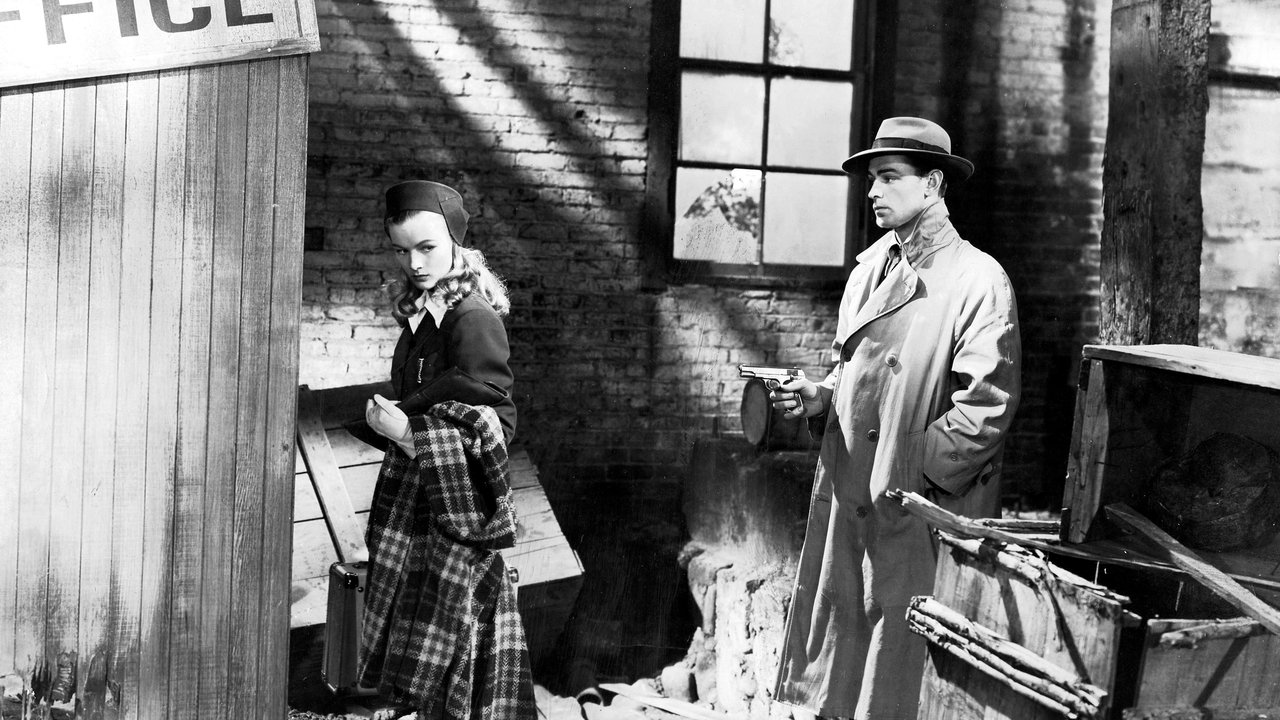
This Gun for Hire is a pivotal document in the formation of American noir, significant less for its formal sophistication than for what it introduced to the popular imagination: Alan Ladd's Raven, laconic and damaged, established the template of the protagonist whose violence the audience is asked to understand without being asked to endorse. The film's wartime context is not incidental – Paramount was shaping propaganda, but the espionage framework also gives the narrative permission to position corporate treachery as a greater evil than freelance murder, a moral inversion that the noir cycle would exploit repeatedly. Ladd and Veronica Lake, in their first pairing, generate an atmosphere of mutual watchfulness rather than conventional romance, which suits the material. Frank Tuttle directs with efficiency rather than distinction, and it is John F. Seitz's cinematography that supplies the film's visual authority. What endures is the portrait of Raven himself: a man whose cruelty the screenplay traces directly to institutional brutality, raising questions about systemic violence that the film's patriotic resolution cannot entirely suppress.
– Classic Noir
Seitz shoots the climactic factory sequence in a register of deep industrial shadow, the frame filled with pipes, catwalks, and plumes of steam that obscure sightlines and flatten spatial logic. Light arrives in harsh lateral shafts, catching Ladd's profile and leaving the surrounding environment as an indistinct mass. The geometry of the space is deliberately confusing – walls appear where passages should be, elevation shifts without warning – so that the audience shares Raven's disorientation rather than observing it from a safe remove.
The sequence crystallizes the film's argument about enclosure. Raven has been trapped from the opening frames – by his past, by the marked bills, by the apparatus of the state and the syndicate alike – and the factory makes that entrapment physical. There is no exit that does not carry a cost, and the staging communicates this with the blunt logic of architecture. What the scene finally reveals is not heroism but exhaustion: a man at the end of his resources, moving forward because there is no direction left.
John F. Seitz, who would go on to shoot Double Indemnity and Sunset Blvd. for Billy Wilder, brings to This Gun for Hire a rigorous approach to low-key lighting that predates his most celebrated work. Shooting on Paramount studio sets with controlled artificial light, Seitz constructs environments where shadow is architectural rather than decorative – doorways are blocked by darkness, ceilings press down, and peripheral space is withheld from the viewer. He uses hard single-source lighting to model Ladd's unusually symmetrical face as something mask-like, which serves the characterization: Raven is legible and opaque simultaneously. The train sequences make productive use of moving-light effects, streetlamps strobing across compartment windows to suggest transit and instability. Seitz avoids the expressionist angles that weaker noir cinematography reaches for, preferring instead a level, observational frame that makes the moral ugliness on screen feel documented rather than stylized.
Criterion Channel periodically programs Paramount noir titles in curated collections and represents the most reliable source for a clean, well-transferred print.
TCMSubscriptionTCM airs This Gun for Hire regularly as part of its classic crime and noir programming, often with contextual introductions; check the schedule or stream via Max with TCM add-on.
Archive.orgFreeA public-domain version is available on Archive.org at no cost, though transfer quality varies and the print may show significant wear.