Films People Pull a Fast One Night Beat Reading Room On TV Shop
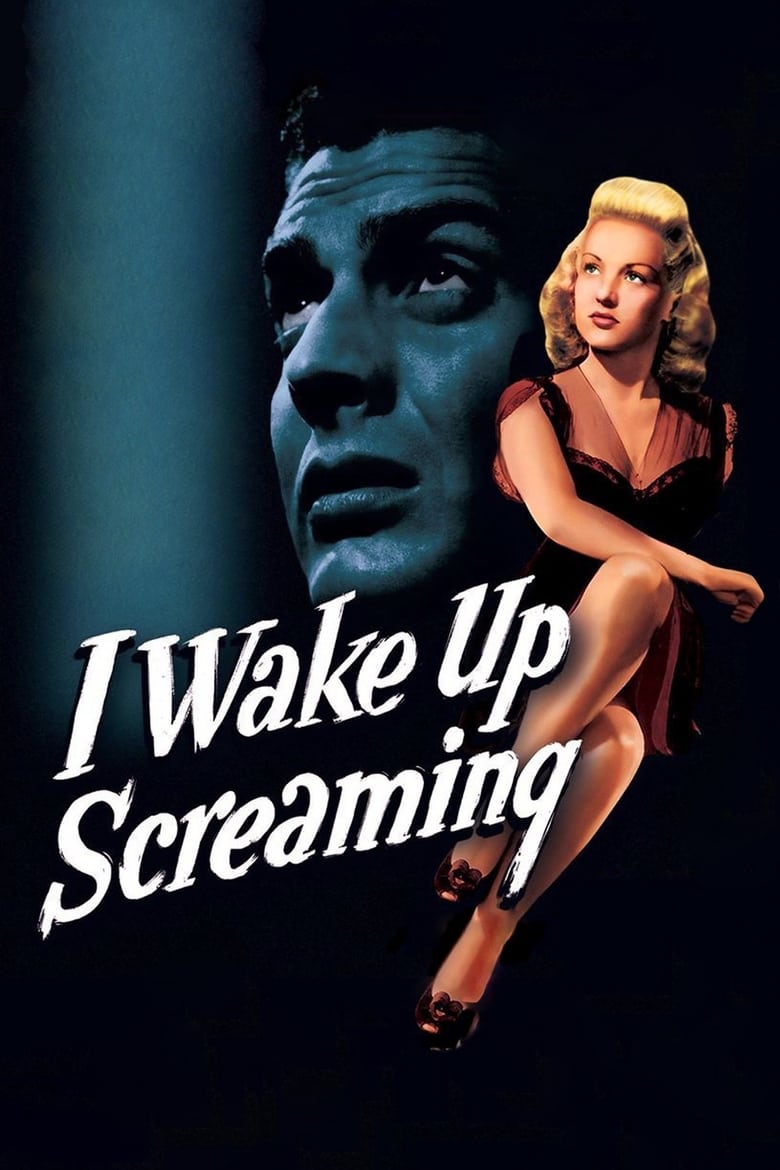
I Wake Up Screaming 1941
1941 20th Century Fox
★★★☆☆ Notable
Film Noir · 82 minutes · Black & White

I Wake Up Screaming

Directed by H. Bruce Humberstone
Year 1941
Runtime 82 min
Studio 20th Century Fox
TMDB 6.9 / 10
"A murdered girl, a convenient suspect, and a detective who wants something other than the truth."

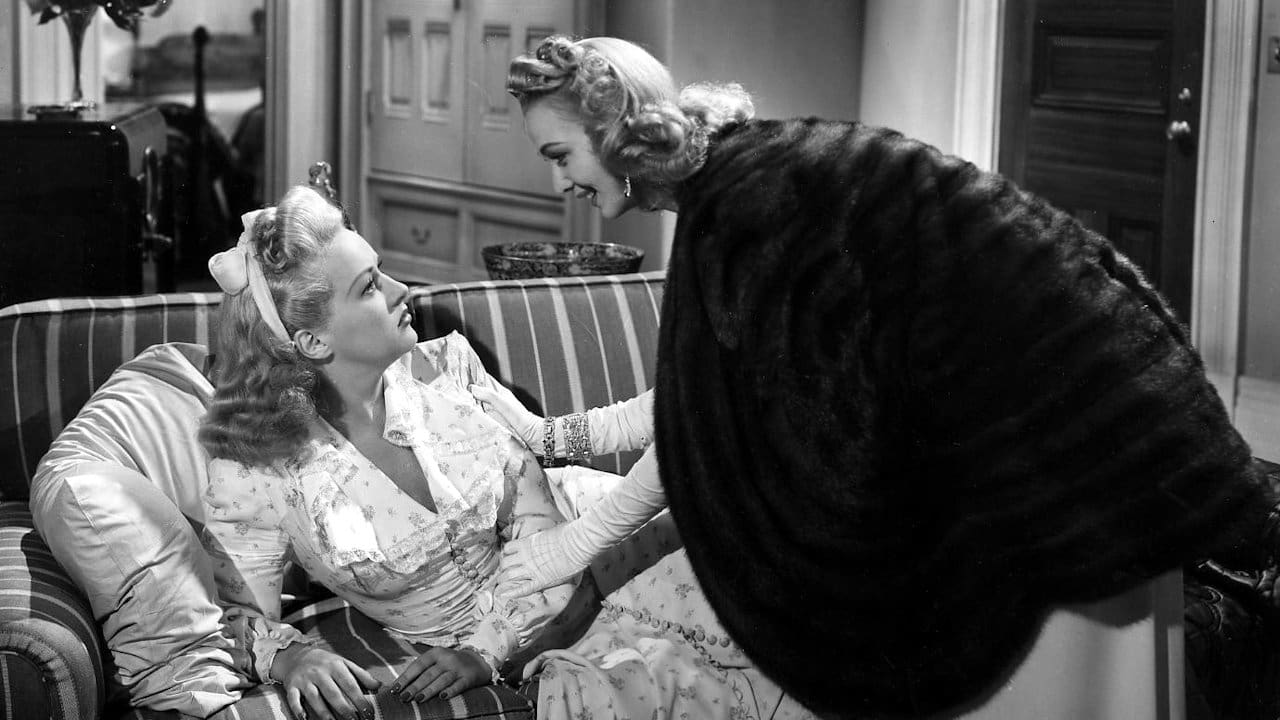
When Vicky Lynn, a young waitress turned Manhattan celebrity, is found murdered in her apartment, suspicion falls immediately on Frankie Christopher, the promoter who engineered her rise to fame. Homicide Inspector Ed Cornell pursues Frankie with a fixity that goes beyond professional duty, and Frankie, unable to account for his whereabouts on the night of the murder, finds himself trapped in a net of circumstantial evidence and hostile witnesses. Vicky's younger sister Jill, newly arrived in the city, becomes both an observer and a participant in the investigation.

As Frankie and Jill move cautiously toward one another, the circle of suspects widens to include Robin Ray, a faded actor, and Larry Evans, a gossip columnist – men who shared Vicky's orbit and carry their own reasons for concealment. Cornell's investigation, meanwhile, reveals itself to be something other than disinterested justice. His obsession with Vicky predates her death, and his determination to destroy Frankie appears to feed on personal grievance as much as on evidence. The line between detective and pursuer begins to collapse.

I Wake Up Screaming belongs to the earliest stratum of studio noir, arriving before the genre had fully named itself, and it carries the formal tensions of that transitional moment: a glossy Fox production that nonetheless permits real menace to accumulate in its margins, sustained by a villain who is, in the strictest sense, the law itself. The film's unease rests less in its murder plot than in what that plot exposes about authority, desire, and the machinery of accusation.
Classic Noir

Released in 1941 and based on Steve Fisher's pulp novel, I Wake Up Screaming arrives at the threshold of classical noir before the critical vocabulary existed to place it. What the film achieves, against the constraints of the Fox studio system and Betty Grable's established persona, is a sustained portrait of institutional menace. Laird Cregar's Cornell is among the period's most unsettling law-enforcement figures: physically imposing, procedurally correct, and entirely corrupt in his motivations. His obsession with the dead Vicky Lynn – rendered through a shrine in his apartment lit with a single bulb – anticipates the pathological fixations that would define noir's detective figures throughout the following decade. Victor Mature, often underestimated, holds the film's center with a stillness that reads, correctly, as the paralysis of a man who cannot prove his own innocence. The film does not pretend that the justice system functions as advertised, and in 1941 that argument carried specific weight. Humberstone directs without flourish, which is ultimately to the film's advantage: the dread is architectural rather than decorative.

– Classic Noir
3 ★★★☆☆ Notable
Credits

The Crew

DirectorH. Bruce Humberstone
ScreenplayDwight Taylor
CinematographyEdward Cronjager
MusicCyril J. Mockridge
EditingRobert L. Simpson
Art DirectionRichard Day
CostumesGwen Wakeling
ProducerMilton Sperling
Performances

The Cast

Close Reading

The Signature Scene

I Wake Up Screaming – scene
Cornell's Apartment The Shrine Behind the Door

The camera enters Cornell's private room cautiously, as though uncertain of its welcome. A single light source illuminates a photograph of Vicky Lynn mounted on the wall – the framing is tight, devotional, the surrounding darkness absolute. Cregar occupies the foreground in soft focus, his bulk turned partly away from the lens, so that he is present as pressure rather than as legible figure. Edward Cronjager keeps the shot still; there is no camera movement to aestheticize the disclosure. The light falls only where Cornell has directed it, which is the scene's quiet argument.

What the scene establishes is that the investigation into Vicky's murder has never been an investigation at all – it is a continuation of an obsession that preceded her death and will survive the resolution of the case. Cornell does not want justice; he wants proximity to grief and dominance over those he holds responsible for his loss. The shrine collapses the distance between detective and criminal, and the film, having shown us this room, cannot subsequently present authority as neutral. Every interrogation that follows is retrospectively contaminated.

Visual Language

The Cinematography

🎞️
Edward Cronjager – Director of Photography

Edward Cronjager's cinematography on I Wake Up Screaming operates within the house style of 20th Century Fox – controlled, studio-bound, resistant to the deeper shadow work that would characterize Warner Bros. or RKO productions of the same period – yet Cronjager finds his own strategies within those constraints. His lighting in interior scenes tends toward a single dominant source with negligible fill, creating a half-lit world where faces emerge from rather than exist within their environments. The apartment sequences in particular exploit vertical shadow lines cast by venetian blinds and architectural moldings, overlaying characters with a graphic geometry that reads as entrapment without demanding expressionist excess. Cornell's shrine sequence represents Cronjager at his most precise: a motivated source, minimal spill, maximum implication. On location-adjacent sets meant to suggest New York hotel lobbies and precinct rooms, the lens stays close to medium-focal-length work, keeping space legible while denying the characters any sense of openness or exit. The visual grammar consistently serves the film's moral logic: no one in this frame has room to move freely.

In the Catalogue

Themes & Motifs

Availability

Where to Watch

Also in the Directory

See Also