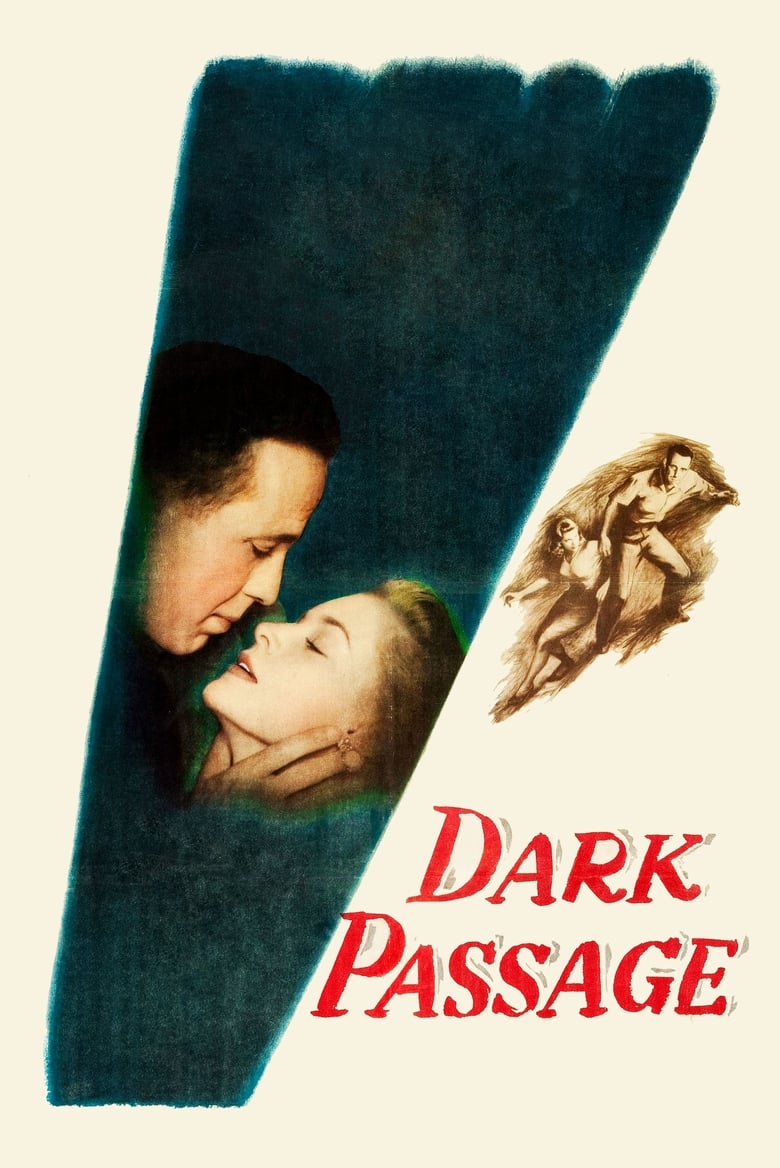
Vincent Parry (Humphrey Bogart) escapes from San Quentin, where he has been serving time for the murder of his wife – a crime he insists he did not commit. Concealed in a barrel rolling off a prison transport, he makes it to the surrounding hills, where a chance encounter with Irene Jansen (Lauren Bacall), a San Francisco artist who followed his trial and believes in his innocence, offers him an unlikely lifeline. She hides him in her apartment, supplies him with money and clothing, and asks nothing obvious in return – a gesture whose motives the film allows to remain partially opaque.
Parry, determined to prove his innocence rather than simply flee, arranges to have his face surgically altered by a back-alley plastic surgeon, spending the film's middle section bandaged and largely voiceless while the camera occupies his point of view. As the bandages come off, new dangers accumulate: a blackmailer named Baker (Clifton Young) who recognized Parry before the surgery, and the sharp-tongued Madge Rapf (Agnes Moorehead), a woman whose connection to the original crime runs deeper than the police have understood. The circle of people who know too much keeps narrowing, and Parry's options narrow with it.
Dark Passage belongs to the strand of postwar noir organized around the wrong-man premise, films in which the justice system is not corrupt so much as indifferent, and innocence confers no practical protection. The sustained first-person camera in its opening movement aligns it formally with a handful of experimental studio pictures of the same period, while its San Francisco locations – shot on the actual streets rather than back-lot approximations – give it a documentary texture that sits in productive tension with the melodramatic extremity of its plot.
Dark Passage is the third of four films Bogart and Bacall made together, and it is the least comfortable of them, which is precisely what makes it worth sustained attention. The first-person camera – maintaining Bogart's point of view for nearly the first third of the film – is not merely a stylistic novelty; it functions as a sustained argument about visibility and vulnerability. A man whose face is known to the law cannot afford to be seen, and the camera literalizes that condition. Delmer Daves is not a director who attracts the canonical attention given to Lang or Wilder, but his control of the San Francisco geography is precise, and he understands how to use the city's hills and fogs as moral weather. Agnes Moorehead's performance as Madge is among the more unsettling supporting turns in the Warner noir cycle – all contained malice and social performance. The film's resolution strains credibility, but its portrait of a man for whom exoneration and safety are not the same thing remains lucid and genuinely disturbing.
– Classic Noir
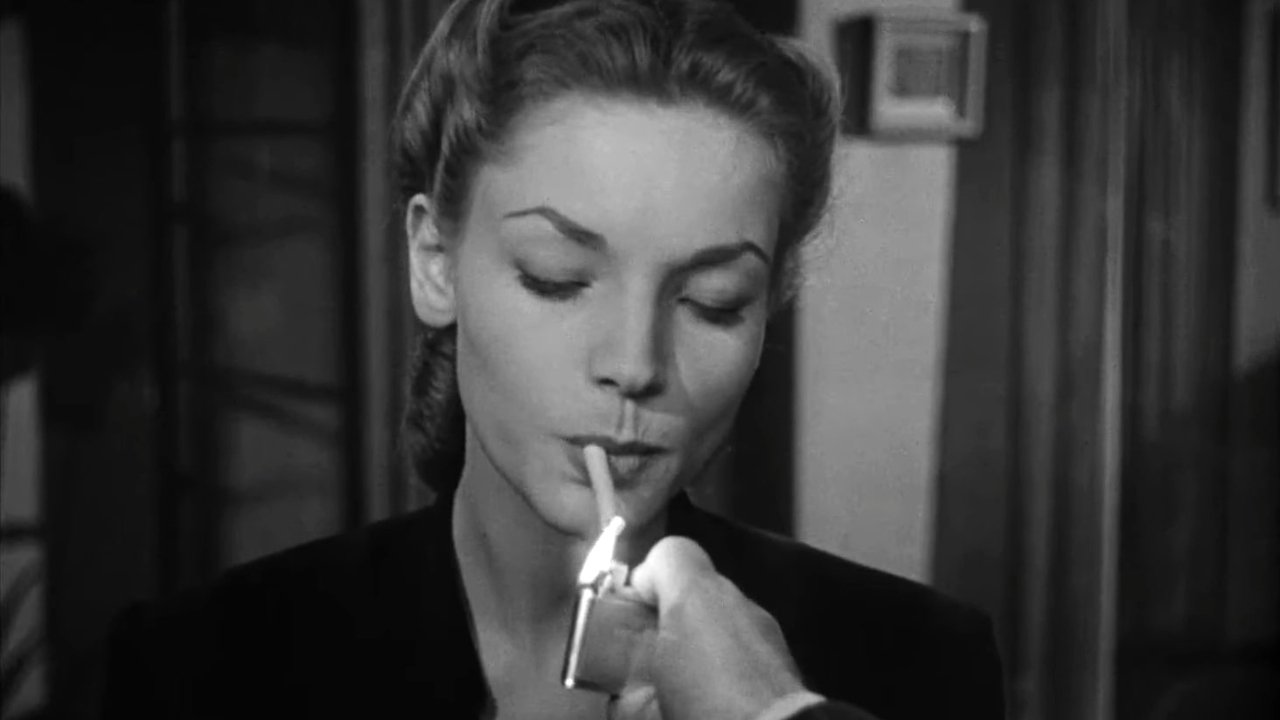
The scene unfolds in Irene's apartment bathroom, lit with clinical economy – a single overhead source that flattens shadow on the white gauze and throws Bogart's newly revealed features into an almost medical clarity. Sidney Hickox keeps the framing tight, resisting the temptation to dramatize the moment with expressionist angles. The camera holds at eye level, steady, as if the act of looking is itself an act of assessment. Irene stands just outside the frame's edge, present but not dominant, and the mirror behind Parry doubles the image without distorting it.
What the scene reveals is the film's central irony: the new face changes nothing essential. Parry is still a fugitive, still hunted, still dependent on a woman he barely knows. The surgery was meant to restore freedom of movement; instead it intensifies his awareness of how little freedom he actually possesses. The film uses the moment not as release but as reckoning – a man staring at a face that is and is not his own, understanding that identity, in this world, is determined by who is looking for you.
Sidney Hickox, who had already shot To Have and Have Not and The Big Sleep for Warner Bros., brings to Dark Passage a pragmatist's eye rather than an expressionist one – which suits the material. His location work on San Francisco's Telegraph Hill and the surrounding streets favors available architecture over manufactured shadow, letting the city's actual contours generate unease. In the studio sequences, his lighting is controlled and largely low-key without becoming baroque: shadow falls where character logic demands it rather than for pictorial effect alone. The sustained first-person POV in the film's opening section required a different discipline – the camera becomes a surrogate body, and Hickox calibrates its movements to register physical vulnerability rather than cinematic excitement. The choice of lens and focal length in these passages keeps peripheral space slightly compressed, which produces a mild but persistent claustrophobia consistent with Parry's situation. When the subjective camera finally gives way to conventional coverage, the shift itself carries meaning: Parry now has a face the film can look at, even if the world outside remains dangerous.
Warner Bros. library titles from this era frequently appear on Max, making it the most likely subscription home for a consistent, rights-cleared transfer.
TCMBroadcast / StreamingTCM schedules Dark Passage periodically and presents it without commercial interruption, often with contextual programming notes; check the TCM schedule or the TCM app for current availability.
TubiFreeTubi has carried the film in the past as part of its classic noir rotation; availability shifts, so verify before seeking it out here.