Films People Pull a Fast One Night Beat Reading Room On TV Shop
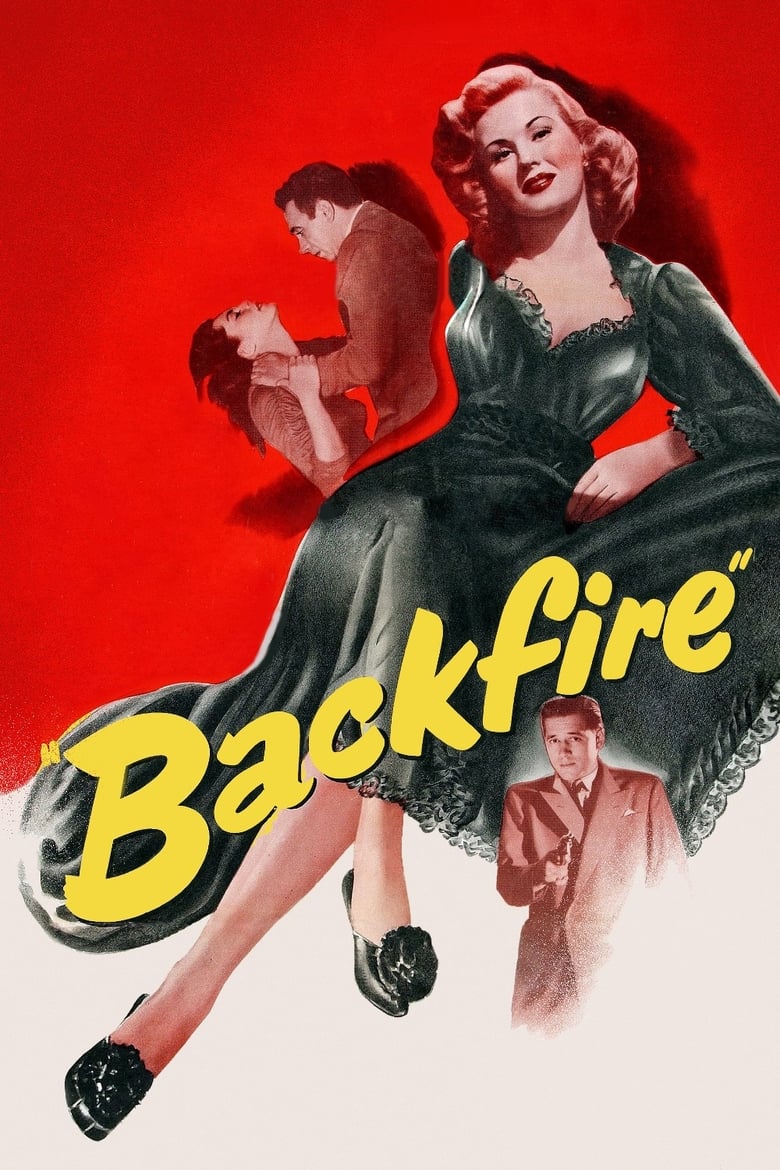
Backfire 1950
1950 Warner Bros. Pictures
★★★☆☆ Notable
Film Noir · 91 minutes · Black & White

Backfire

Directed by Vincent Sherman
Year 1950
Runtime 91 min
Studio Warner Bros. Pictures
TMDB 5.9 / 10
"A soldier comes home to find his best friend missing and the truth buried in someone else's nightmare."

Bob Corey, a World War II veteran recovering from wounds in a Veterans Administration hospital, clings to the promise of a better life once he is discharged – a ranch out west, shared with his wartime friend Steve Connolly. When Steve vanishes before the plan can be set in motion, Bob begins asking questions that no one in his circle seems willing to answer honestly. A woman named Lysa Radoff appears at Steve's side of the story, bringing with her a European past and an air of careful concealment, while the cheerful hospital nurse Julie Benson represents the more ordered, sunlit world Bob is trying to return to.

Bob's fellow veteran Ben Arno, volatile and evasive, becomes the central knot in the investigation. A dead man turns up connected to Steve's disappearance, and the trail leads through a web of wartime debts, criminal associations, and loyalties that did not survive the peace intact. Police captain Garcia keeps pressure on all parties, and the figure of Mrs. Blayne – wife of a man with a stake in Steve's silence – pulls the conspiracy toward a domestic register that complicates the standard criminal geography. Allegiances shift as Bob's nightmares and hallucinations, residue of his combat injuries, begin to blur the boundary between what he remembers and what he has been made to believe.

Backfire works the postwar displacement narrative at a domestic pitch, locating its danger not in the city's underworld but in the distorted memories and unresolved obligations that veterans carried home. The film is less interested in procedural revelation than in the psychological cost of loyalty, using its Los Angeles hospital settings and flashback structure to ask how well any man can know the friend he fought beside.
Classic Noir

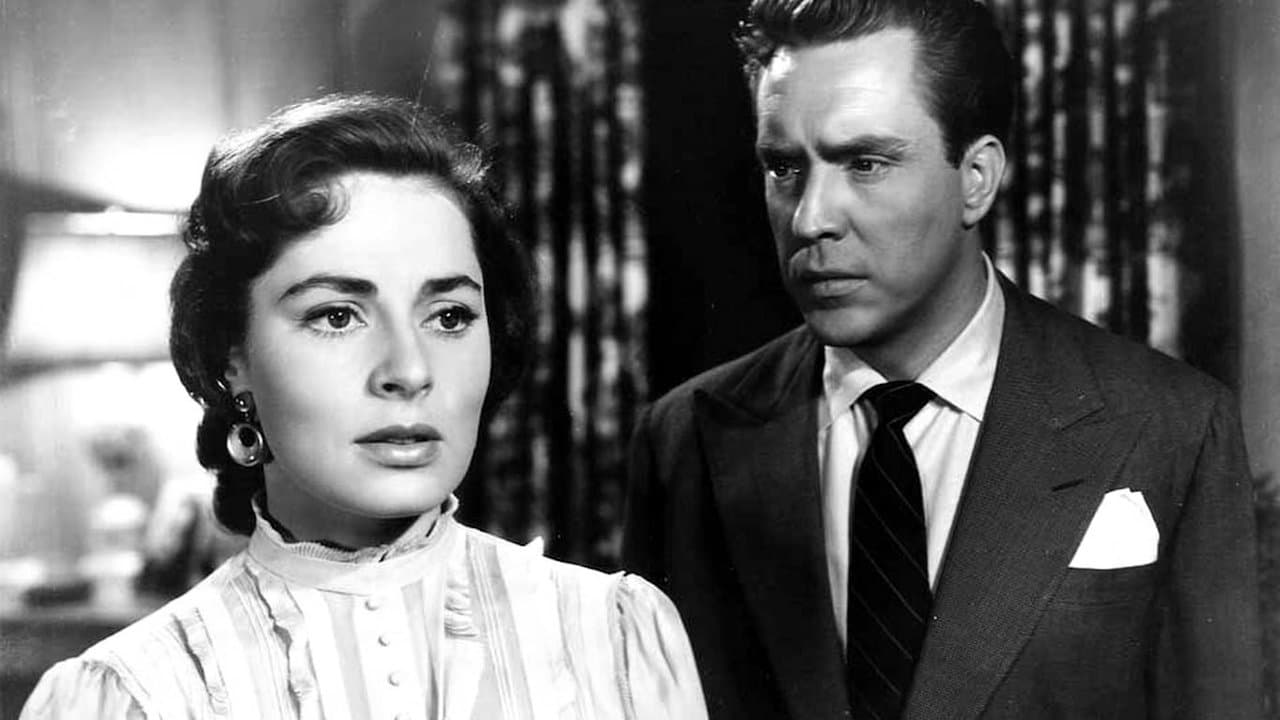
Backfire occupies a minor but instructive position in the Warner Bros. noir cycle of the late 1940s and early 1950s. Vincent Sherman directs with craft rather than distinction, keeping the mechanics of the flashback structure legible even as the plot accumulates complications. What gives the film more than routine interest is its postwar social texture: the Veterans Administration hospital setting is used not merely as backdrop but as a condition, the site where men negotiate the distance between who they were overseas and who they are permitted to become at home. Gordon MacRae, cast against his musical image, brings an earnest blankness to Bob Corey that serves the character's disorientation. Edmond O'Brien, more characteristically cast, supplies the film's anxious energy. The weaknesses are real – the romantic triangle never generates much heat, and the resolution moves faster than the moral weight warrants – but Backfire remains a useful document of how Hollywood processed veteran trauma when genre convention and studio pressure were the primary filters.

– Classic Noir
3 ★★★☆☆ Notable
Credits

The Crew

DirectorVincent Sherman
ScreenplayLawrence B. Marcus
CinematographyCarl E. Guthrie
MusicDaniele Amfitheatrof
EditingThomas Reilly
Art DirectionAnton Grot
CostumesLeah Rhodes
ProducerAnthony Veiller
Performances

The Cast

Close Reading

The Signature Scene

Backfire – scene
The Hospital Corridor, Night Shadows Across the Ward

Carl E. Guthrie positions the camera at the far end of a long institutional corridor, the overhead lighting reduced to a single practical source that throws the linoleum floor into a pale rectangle and leaves the walls in graduated darkness. As Bob moves toward the light, the geometry of shadow and architecture closes behind him, the perspective lines of the ceiling and floor converging in a way that reduces the frame's depth and makes retreat feel unavailable. The composition borrows from the expressionist playbook without announcing itself: there are no extreme angles, no disorienting tilts, only a precise control of where illumination stops.

The scene crystallizes the film's central argument about the returning soldier's situation. The hospital is a place of supposed recovery, but Guthrie's framing makes it read as a trap – the light at the end of the corridor is not exit but exposure. Bob moves toward clarity while the film's visual language insists that clarity, in this world, is not safety. The architecture of the institution, meant to heal, has the spatial grammar of a cell.

Visual Language

The Cinematography

🎞️
Carl E. Guthrie – Director of Photography

Carl E. Guthrie's cinematography for Backfire is studio noir at a functional rather than flamboyant register, which suits the material. Working on Warner Bros. soundstages, Guthrie uses the controlled environment to build lighting schemes that are architecturally deliberate without drawing attention to themselves. His lens choices tend toward moderate focal lengths that keep space legible while flattening it slightly, a choice consistent with the film's interest in characters who cannot fully read the environments they inhabit. Shadow work is most pronounced in the hospital interiors, where institutional geometry – long corridors, barred windows, evenly spaced overhead fixtures – provides a ready-made symbolic vocabulary that Guthrie exploits without excess. The flashback sequences use softer light diffusion to differentiate memory from present action, a fairly standard technique of the period that Guthrie executes with enough subtlety to avoid the obvious dissolve-and-gauze cliché. Exterior location shooting is limited, keeping the film's world largely sealed – an appropriate visual choice for a story about a man trapped inside someone else's version of events.

In the Catalogue

Themes & Motifs

Availability

Where to Watch

Also in the Directory

See Also