Films People Pull a Fast One Night Beat Reading Room On TV Shop
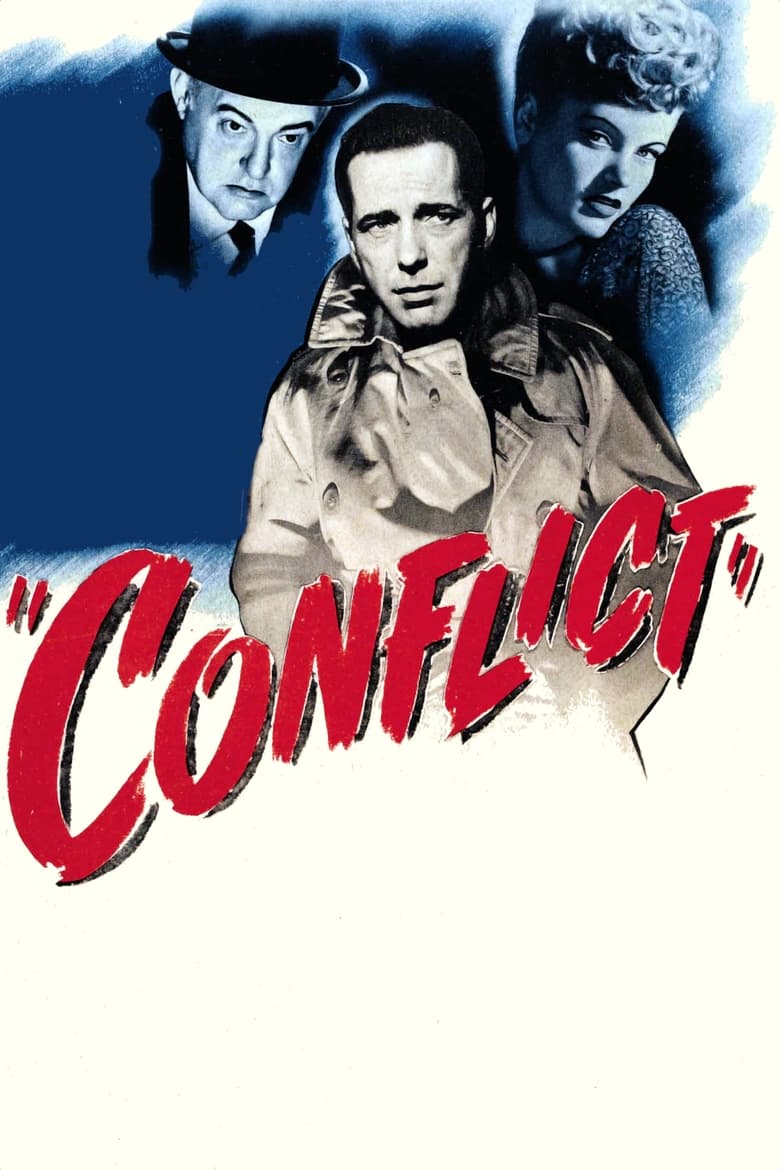
Conflict 1945
1945 Warner Bros. Pictures
★★★☆☆ Notable
Film Noir · 86 minutes · Black & White

Conflict

Directed by Curtis Bernhardt
Year 1945
Runtime 86 min
Studio Warner Bros. Pictures
TMDB 6.7 / 10
"A man engineers his wife's death and finds the grave will not stay quiet."

Richard Mason is a prosperous engineer in a comfortable marriage, yet his attention has fixed itself on Evelyn Turner, his wife Kathryn's younger sister. When a mountain road accident kills Kathryn and leaves Richard injured, the death appears accidental – because it is, as far as anyone knows. What Mason carries is the foreknowledge: he had already resolved to murder his wife before the crash took the decision from him. The distinction, he will learn, changes nothing about the guilt.

Mark Hamilton, a psychologist and close family friend played with deliberate patience by Sydney Greenstreet, observes Mason's behavior with a clinical eye that never quite closes. Mason pursues Evelyn, who is engaged to the decent Norman Holsworth, while anonymous tokens begin appearing – perfume, a flower – that suggest his dead wife is somehow still present. The harassment may be a frame-up, a conscience made material, or something stranger, and the film is careful to sustain the ambiguity long enough to unsettle both Mason and the audience.

Conflict belongs to a cluster of Warner Bros. noir productions that locate evil not in slums or back alleys but in furnished drawing rooms and among men of standing. Its central preoccupation is the gap between intention and act, and the question of whether a man can be damned for a murder he planned but did not technically commit. That moral logic, driven by Bogart in an unusually cold register, gives the film a chill that outlasts its occasional contrivances.
Classic Noir

Conflict occupies an instructive position in the Warner Bros. noir cycle: it is not among the studio's finest work in the mode, yet it earns serious attention for what it attempts. Bogart is cast against his established grain, playing not a man pushed toward crime by circumstance but one who arrives at murder through cool calculation, which strips away the audience's habitual sympathy with considerable efficiency. Curtis Bernhardt's direction is steady rather than inspired, but Friedrich Hollaender's score and Merritt B. Gerstad's camerawork maintain a low atmospheric pressure that suits the film's interest in repression and deferred guilt. Sydney Greenstreet's Hamilton functions less as antagonist than as a kind of moral barometer, registering shifts in Mason's composure that Mason himself refuses to acknowledge. The film's 1945 release – production had been delayed – places it at the edge of the postwar wave rather than ahead of it, and its domestic setting anticipates the noir tendency to site terror in respectable households rather than on rain-slicked streets. A flawed but purposeful entry.

– Classic Noir
3 ★★★☆☆ Notable
Credits

The Crew

DirectorCurtis Bernhardt
ScreenplayDwight Taylor
CinematographyMerritt B. Gerstad
MusicFriedrich Hollaender
EditingDavid Weisbart
Art DirectionTed Smith
CostumesOrry-Kelly
ProducerWilliam Jacobs
Performances

The Cast

Close Reading

The Signature Scene

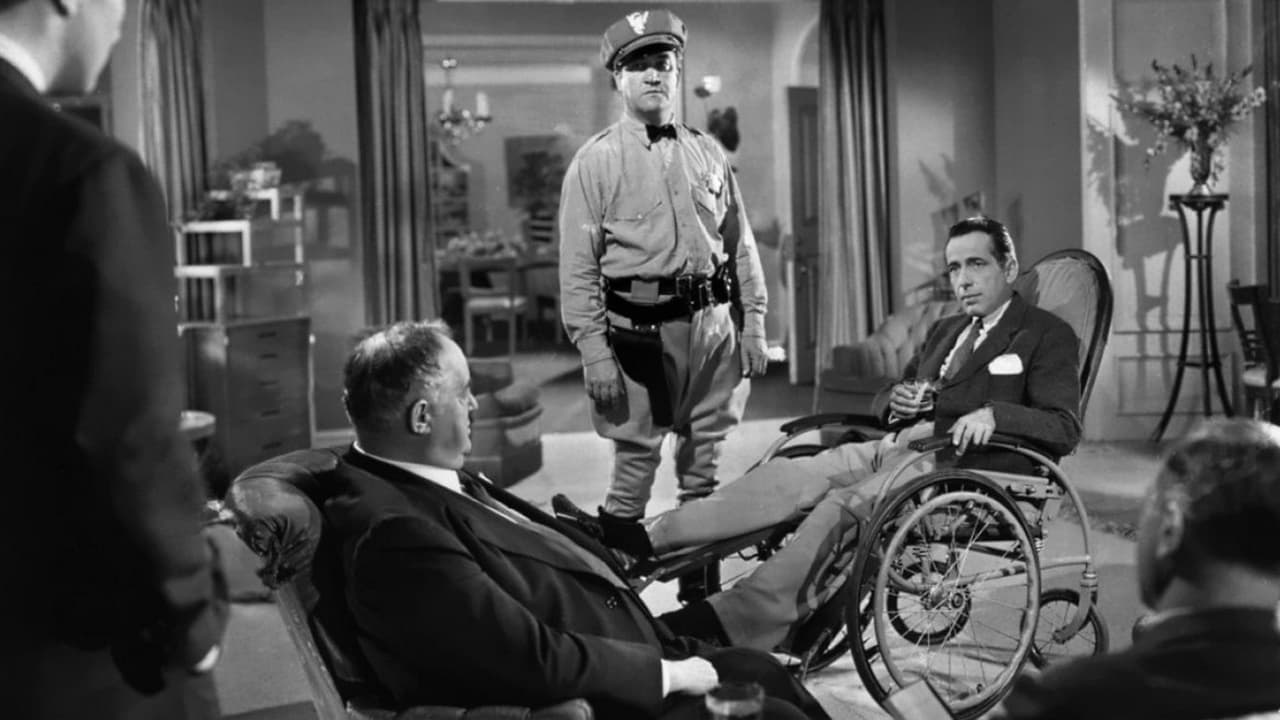
Conflict – scene
The Graveside Encounter Perfume Among the Headstones

The scene is set at night in the cemetery where Kathryn Mason is buried. Gerstad lights the sequence with a narrow, directed source that picks out individual gravestones and leaves the surrounding terrain in near-total darkness, so that Mason moves through space as through a tunnel. The camera holds at a middle distance, refusing to grant him the close-up that might elicit sympathy; he is rendered small against the stone and the dark, his silhouette swallowed by shadow whenever he pauses.

The scene functions as the film's thesis made visual: Mason's guilt, which he has contained behind a composed exterior throughout, is here given an external address. The cemetery is the one location where his rationalism cannot operate, where the gap between intention and accident collapses into something he cannot explain or dismiss. That Gerstad shoots it without expressionist excess – no canted angles, no obvious distortion – makes the unease more durable; the horror is not in the style but in the fact of a man standing alone before what he wished into being.

Visual Language

The Cinematography

🎞️
Merritt B. Gerstad – Director of Photography

Merritt B. Gerstad's work on Conflict is restrained in a way that serves the film's particular moral argument. Working on studio-constructed interiors with occasional location inserts, Gerstad eschews the deep-shadow expressionism common to contemporaneous Warner noir and favors instead a high-contrast but relatively composed frame, the better to emphasize how ordinary Mason's world appears. The lighting in the domestic interiors – warm, well-furnished rooms – creates a deliberate irony: normalcy as cover, comfort as concealment. Where shadow does accumulate, it tends to gather around Mason specifically rather than filling the frame, implicating the man rather than the environment. The cemetery sequence and the final confrontation make the most explicit use of darkness as moral space, but even here Gerstad maintains compositional clarity. Lens choices remain largely conventional – no distorting wide angles to signal psychological disorder – which reinforces the film's argument that premeditated evil need not announce itself through distortion.

In the Catalogue

Themes & Motifs

Availability

Where to Watch

Also in the Directory

See Also