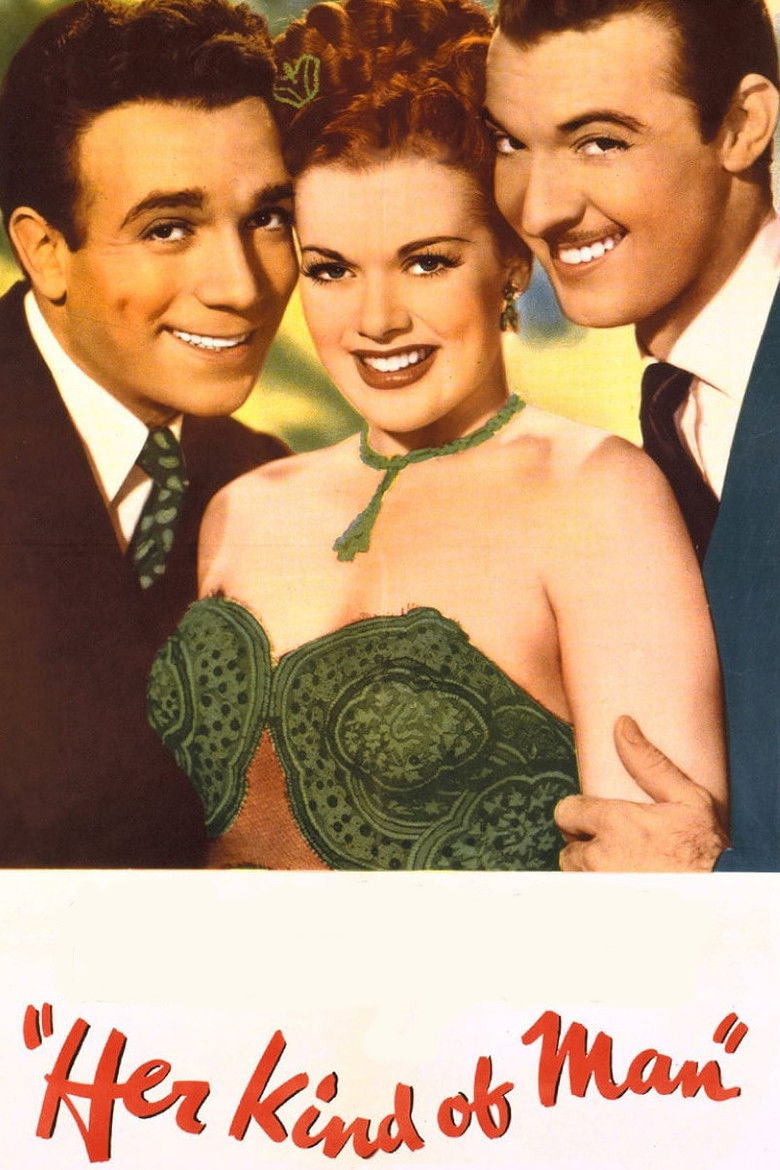
Don Corwin (Dane Clark) is a singer with a checkered past who arrives in a city where the nightclub rackets are controlled by the smooth, dangerous Steve Maddux (Zachary Scott). Don takes a job performing at Maddux's club, where he meets Georgia King (Janis Paige), a young woman whose ambitions and vulnerability make her easy prey for men like Maddux. Georgia's guardian of sorts is Ruby Marino (Faye Emerson), a world-weary woman who understands the club's moral economy better than anyone, married to the affable but compromised Joe Marino (George Tobias).
Don's attraction to Georgia puts him on a collision course with Maddux, whose proprietary interest in the women around him is less romantic than territorial. As Don attempts to pull Georgia out from under Maddux's influence, old associations and new betrayals accumulate. The club's backroom dealings, overseen by the syndicate figure Felix Bender (Sheldon Leonard), tighten the frame around Don, and loyalties that seemed fixed begin to shift under pressure from money and fear.
Her Kind of Man operates within the Warner Bros. postwar noir cycle, using the nightclub as a moral arena where aspiration and corruption are indistinguishable from each other. The film frames Don's pursuit of Georgia as a contest between genuine feeling and a world that trades in manufactured sentiment, and it refuses to let any character remain entirely clean. The resolution is less a triumph than an accounting.
Her Kind of Man sits in the middle tier of Warner Bros.' postwar noir output – competent, occasionally atmospheric, and revealing in what it takes for granted. Frederick de Cordova, better known later for television work, handles the nightclub milieu with efficiency rather than distinction, but the casting does real work. Zachary Scott had refined his particular brand of charming menace in Mildred Pierce the previous year, and he brings the same lacquered threat to Maddux. Dane Clark, perpetually cast as the outer-borough everyman, makes Don's anger feel earned rather than performed. What the film exposes about its moment is the postwar anxiety around masculine legitimacy – who has a right to a woman, a livelihood, a future – encoded in the language of club ownership and criminal franchise. Faye Emerson's Ruby is the film's most honestly written character, a woman who has already settled the question the others are still fighting over, and her pragmatism cuts through the surrounding sentiment with welcome precision.
– Classic Noir
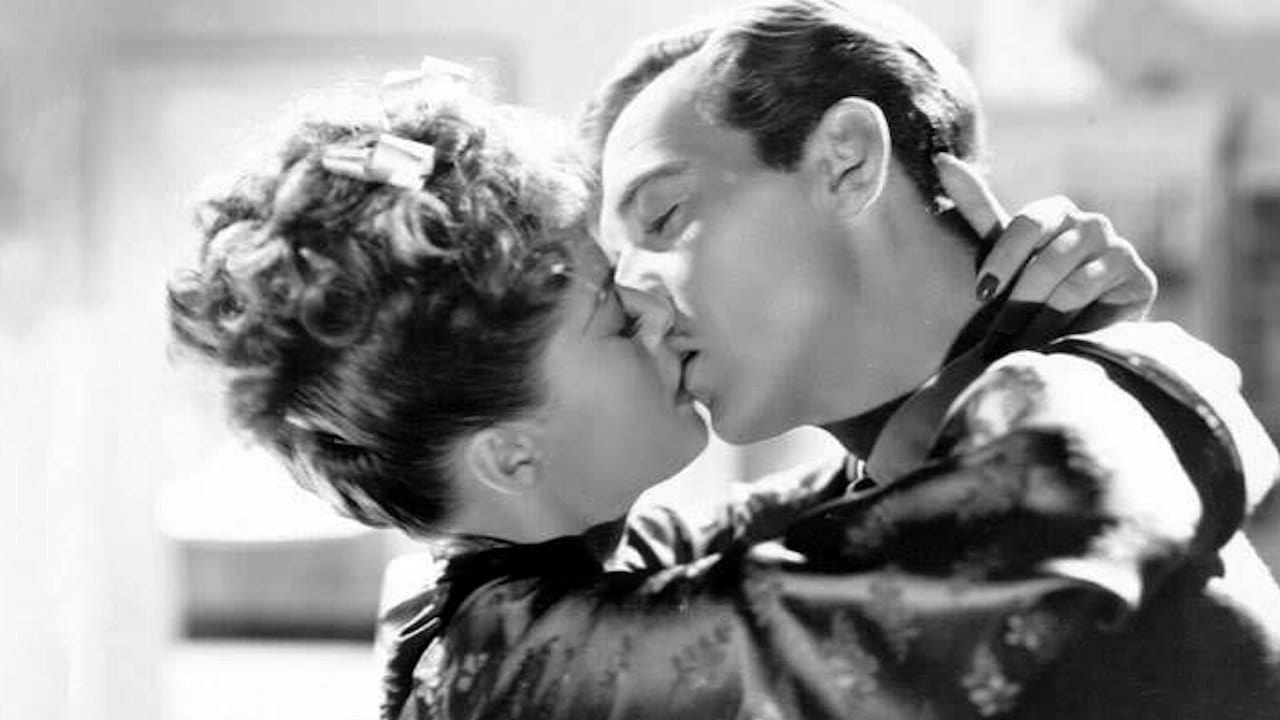
Carl E. Guthrie lights the dressing room in a shallow wedge, the mirror behind Georgia fragmenting her reflection while Maddux stands in the doorway with the corridor light behind him, reducing him to silhouette and implication. The camera holds at a slight low angle, compressing the space between the two figures and suggesting enclosure rather than intimacy. As the conversation turns, Guthrie lets the practical bulbs around the mirror provide the only warm source, so that Georgia's face is caught between flattery and threat.
The scene condenses the film's central argument: that the spaces women occupy in this world – dressing rooms, clubs, back offices – are never truly theirs. Maddux does not need to raise his voice. The composition has already established the power relation. Georgia's performance smile, held a beat too long, signals that she understands the terms even if she has not yet accepted them.
Carl E. Guthrie's work on Her Kind of Man is studio noir in the functional tradition – disciplined rather than experimental, but purposeful in how it maps moral atmosphere onto architecture. Guthrie favors mid-range lenses that flatten depth slightly, pressing figures against backgrounds of venetian-blind shadow and cigarette haze without the exaggerated expressionism of a John Alton. His lighting setups in the club sequences use practical sources – stage footlights, bar backlight – to create pools of visibility surrounded by intentional darkness, so that characters who step forward into light do so as a kind of declaration. The studio interiors are dressed with enough depth to suggest a real city's back geography, and Guthrie's shadow work on Zachary Scott is notably precise: Maddux is rarely fully illuminated, a choice that keeps threat ambient rather than declared. The cinematography serves the film's moral logic by treating clarity itself as something that must be earned.
TCM remains the most reliable broadcast home for Warner Bros. titles of this period; check the schedule for air dates and the TCM app for on-demand availability.
MaxSubscriptionAs a Warner Bros. title, Her Kind of Man may appear in the Max library of classic studio catalogue holdings, though availability shifts seasonally.
Archive.orgFreeVerify current availability, as public domain status for this title is uncertain; any version present may vary in print quality.