Films People Pull a Fast One Night Beat Reading Room On TV Shop
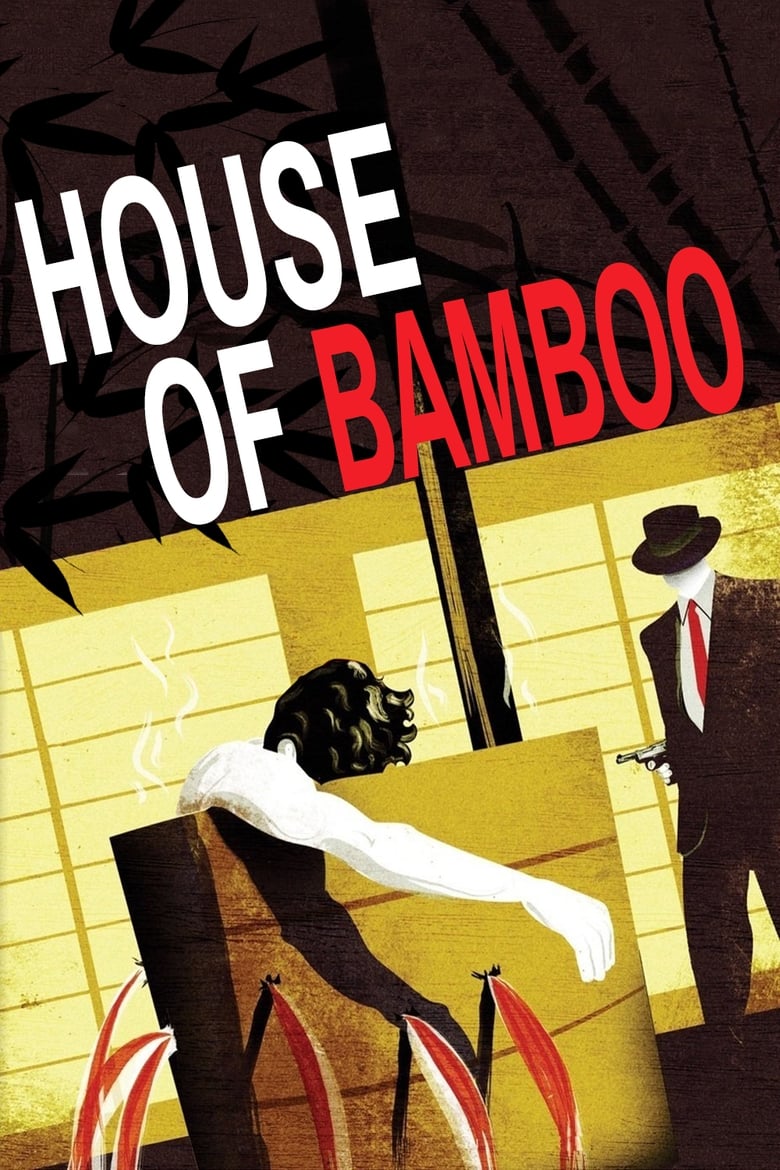
House of Bamboo 1955
1955 20th Century Fox
★★★☆☆ Notable
Film Noir · 102 minutes · Black & White

House of Bamboo

Directed by Samuel Fuller
Year 1955
Runtime 102 min
Studio 20th Century Fox
TMDB 6.2 / 10
"An American infiltrates Tokyo's criminal underground, and the line between justice and corruption dissolves in the heat."

When a Japanese military supply train is robbed and an American soldier killed, U.S. Army Criminal Investigation Division officer Eddie Kenner arrives in postwar Tokyo under cover, posing as an ex-convict to penetrate the gang responsible. His point of entry is Sandy Dawson, a calculating American expatriate who runs a tight, disciplined syndicate from behind a veneer of legitimate business interests. Dawson's operation recruits only American veterans, exploiting their displacement and their silence, and he takes an immediate, appraising interest in the newcomer.

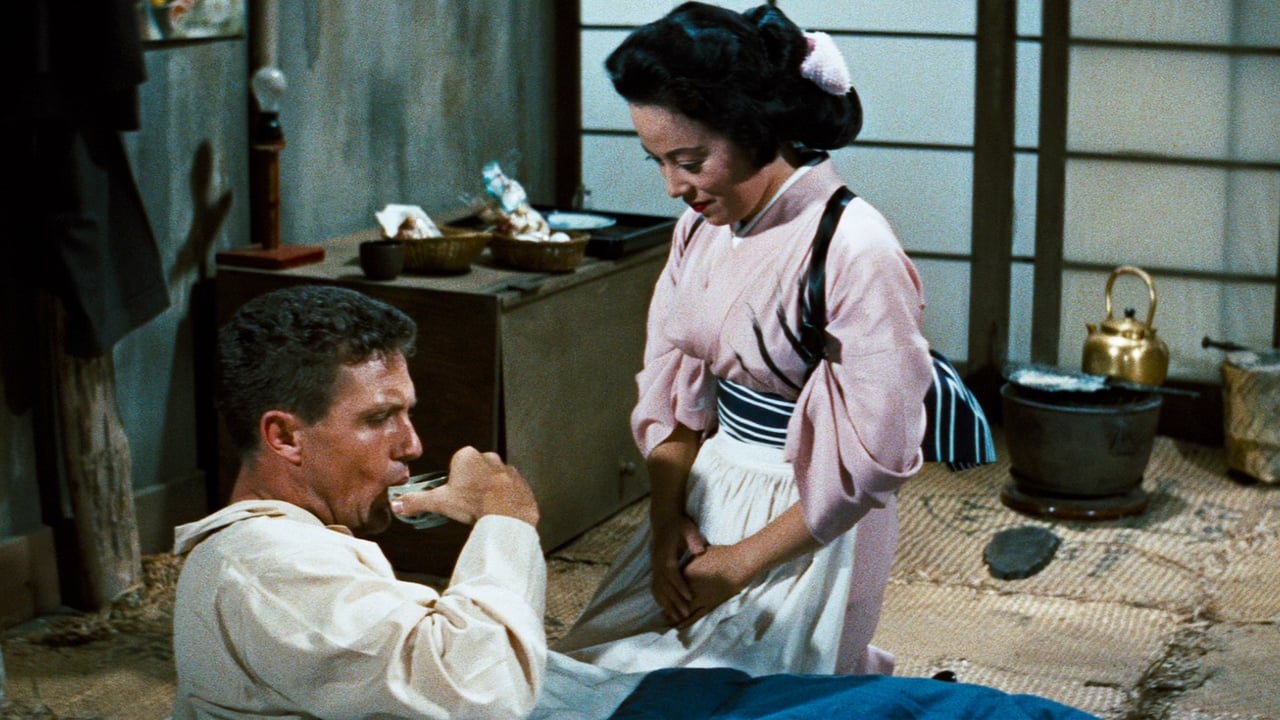
Kenner's cover deepens when he assumes the identity of Griff, a recently killed syndicate member, and inherits Mariko – the Japanese woman Griff kept as a companion – as part of his assumed life. What begins as operational convenience develops into genuine attachment, complicating Kenner's mission and placing Mariko in direct danger. Meanwhile, Japanese inspector Kito pursues his own investigation from the outside, and Dawson grows increasingly suspicious of the man he has taken into his inner circle, testing him with escalating acts of violence.

House of Bamboo plants its corrupt American patriarch in the middle of Japan's reconstruction, using the occupied city as both a moral landscape and a visual one. The film belongs to a cycle of location-shot noirs that leveraged foreign settings to externalize the dislocation of postwar American identity – where the syndicate functions as a shadow institution, orderly and hierarchical, that mirrors the very military culture it has corrupted. Fuller stages the collision between infiltration and intimacy across Tokyo's temples, bathhouses, and department store rooftops, arriving at a conclusion that is as much about exposure as it is about justice.
Classic Noir

House of Bamboo is one of Samuel Fuller's most formally composed films, and its ambitions reach beyond the crime picture frame that nominally contains it. Shot on location in Japan in CinemaScope and color – an unusual commitment for a noir-adjacent production – it uses the postwar Tokyo setting to interrogate the American abroad with a frankness that Hollywood rarely managed in 1955. Robert Ryan's Sandy Dawson is among the more disturbing figures in Fuller's gallery of obsessives: his possessiveness toward Kenner carries a homoerotic charge that the film neither explains nor deflects, and Ryan sustains it without melodrama. Robert Stack is a cooler, more functional presence as the undercover officer, which is precisely the point – Kenner is a mechanism, while Dawson is a man. The film is not without structural compromises; its romantic subplot with Mariko sits uneasily beside the harder material. But Fuller's instinct for the image that carries ideological weight – the pachinko halls, the elevated rooftop finale – keeps House of Bamboo anchored where it matters.

– Classic Noir
3 ★★★☆☆ Notable
Credits

The Crew

DirectorSamuel Fuller
ScreenplayHarry Kleiner
CinematographyJoseph MacDonald
MusicLeigh Harline
EditingJames B. Clark
Art DirectionLyle R. Wheeler
ProducerBuddy Adler
Performances

The Cast

Close Reading

The Signature Scene

House of Bamboo – scene
The Rooftop Amusement Park Carousel Gun at the Summit

The sequence takes place atop a department store amusement park, a circular ride spinning slowly against the Tokyo skyline. Joseph MacDonald's camera uses the wide CinemaScope frame to keep the carousel in perpetual lateral motion while Fuller cuts to tightening angles on Dawson, isolated at the center of a turning world he can no longer control. The color palette is bleached and hard in the afternoon light, offering none of the shadow cover that convention assigns to a noir climax – the exposure is total, institutional, almost surgical.

The location choice is Fuller's argument made spatial: a children's ride as the killing ground of a man who built his authority on order and loyalty. Dawson's fall is not tragic in the classical sense because Fuller refuses him the dignity of shadow. The bright, public, almost absurd setting strips him of the mystique that Ryan's performance had carefully accumulated, and the carousel's mechanical indifference – it keeps turning – insists that the apparatus outlasts the man who thought he commanded it.

Visual Language

The Cinematography

🎞️
Joseph MacDonald – Director of Photography

Joseph MacDonald, who had already shot Fuller's Pickup on South Street in 1953, brings a different discipline to House of Bamboo – one shaped by the demands of anamorphic color photography on actual Japanese locations. Where Pickup on South Street worked in close, MacDonald here operates in wide, using the CinemaScope frame to embed characters in environments that dwarf and judge them: temple courtyards, bathhouse interiors, the steel geometry of the Tokyo train yards. Natural light is integrated with controlled fill rather than suppressed, which means shadows function less as concealment than as contrast – the moral rot is visible in full daylight, and MacDonald's exposure choices ensure it reads that way. Inside Dawson's operation, the lighting setups tighten and warm, conferring a false domesticity on the syndicate's inner rooms. The cinematography consistently refuses the consolation of darkness, which makes House of Bamboo formally distinct from much of the genre and reinforces Fuller's argument that corruption in the postwar world operates in plain sight.

In the Catalogue

Themes & Motifs

Availability

Where to Watch

Also in the Directory

See Also