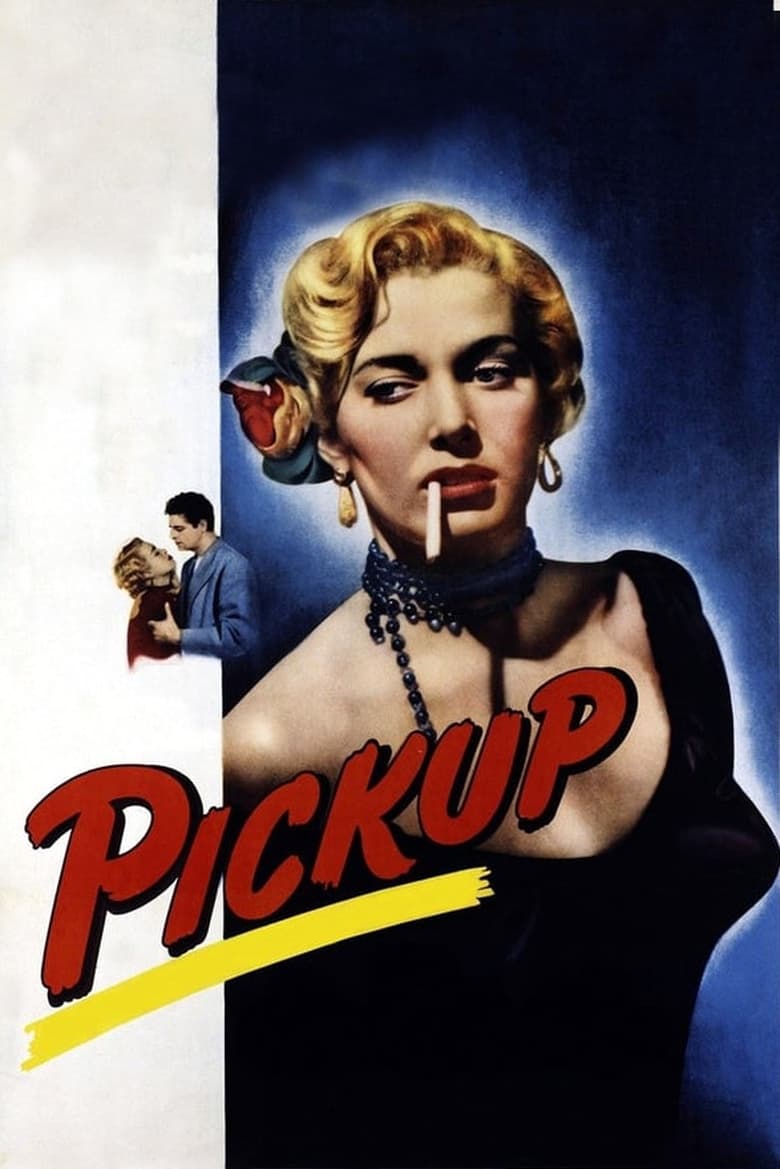
Jan 'Hunky' Horak is a middle-aged Czech immigrant working as a railroad trackman in a small California town – decent, solitary, quietly resigned to the margins of American life. When a young drifter named Betty crosses his path, Hunky is undone by something closer to need than love. Despite the gap in their ages and, more critically, in their ambitions, he marries her, installing her in a life she has no intention of keeping.
Betty makes no secret of her restlessness. She gravitates toward Steve Kowalski, a younger man from her own world, and the two begin an affair that Hunky, through a combination of pride and self-deception, refuses to fully confront. The film builds its tension not through violence but through humiliation – the slow, meticulous degradation of a man who knows what is happening to him and cannot stop it. A peripheral figure, the tramp known only as 'The Professor,' functions as a kind of mournful chorus, observing the wreckage from a safe and useless distance.
Pickup belongs to the postwar cycle of low-budget independent noirs that examined the failure of the American domestic ideal through the lens of erotic obsession and class. Written, directed, produced by, and starring Hugo Haas, the film turns its modest resources into an advantage, finding in tight spaces and unglamorous locations a moral atmosphere that bigger productions rarely risked. The ending follows the logic of the genre with a bluntness that offers no comfort.
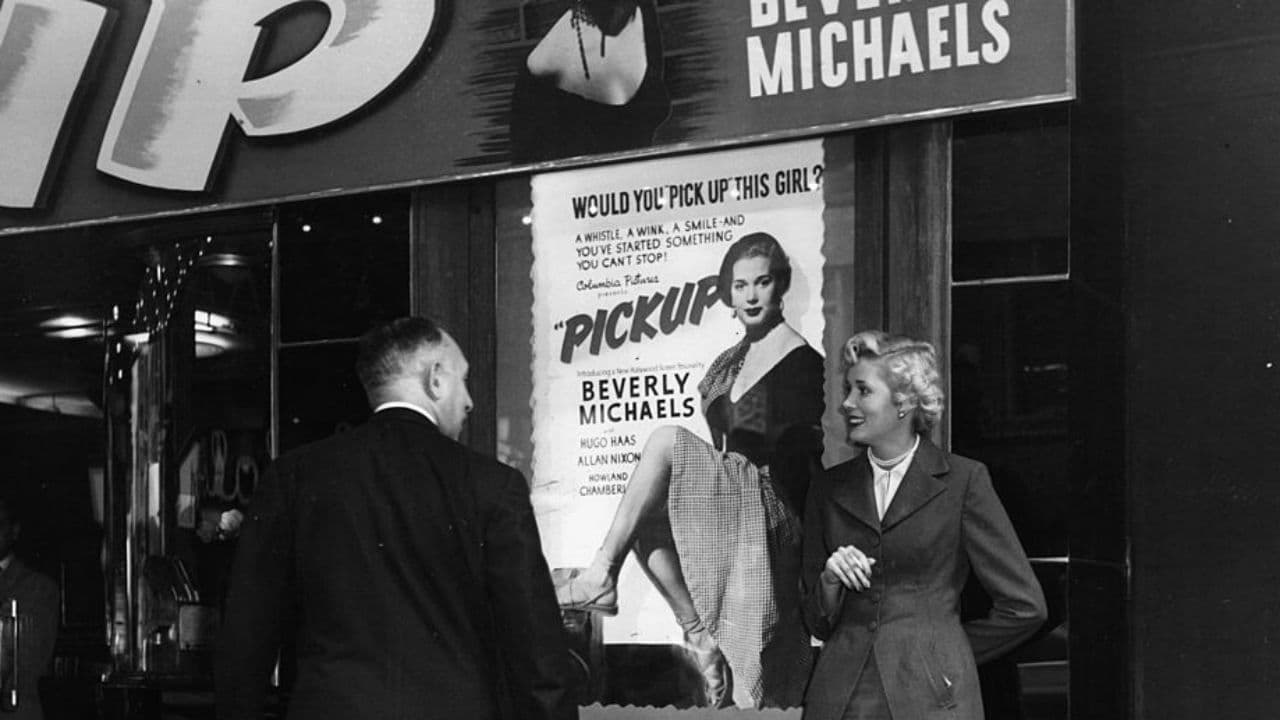
Hugo Haas occupies an eccentric corner of the American noir canon – a Czech émigré filmmaker who used the low-budget independent sector in the early 1950s to make a series of films preoccupied with older men destroyed by younger women. Pickup is the most disciplined of these. What distinguishes it from mere exploitation is the specificity of Haas's self-portraiture: Jan Horak is not a fool but a man who understands his situation and chooses delusion anyway, which is a sharper psychological observation than most A-pictures of the era managed. Beverly Michaels is effective precisely because Betty is never softened into a femme fatale archetype – she is instead a working-class woman doing a cold calculation, which makes her more plausible and the film's critique more uncomfortable. The film's immigrant anxiety and its meditation on men displaced by age, origin, and expectation give it a subtext that situates it firmly in the postwar moment. At 78 minutes it wastes nothing.
– Classic Noir
Paul Ivano holds the camera low and wide as the freight train tears through the frame, the light failing behind the hills. Hunky stands at the edge of the track, not quite in the path of anything, his body language suggesting a man caught between two inertias. The composition isolates him against the moving machinery – everything else in motion, he alone static – and the shadow of the passing cars cuts across his face in rhythmic intervals, a visual metronome counting out a life in which nothing is advancing.
The scene crystallizes the film's central argument: that Hunky's tragedy is not bad luck but a failure of motion, an inability to move when movement was still possible. The train – the dominant industrial symbol of the film's railroad-worker milieu – does not threaten him here; it simply passes him by. That indifference is more damning than any act of violence the narrative will later provide.
Paul Ivano, a cinematographer with roots in the silent era, brings to Pickup a visual economy suited to its constrained budget and emotional register. Working on location in and around Los Angeles's industrial margins rather than studio sets, Ivano makes the physical environment do moral work: the flat glare of midday exteriors strips away any romantic atmosphere, while the interiors – cramped rooms lit with a single hard source – reduce the characters to figures in a trap. There is little shadow play in the expressionist sense; instead, Ivano uses overexposure and harsh frontal light to create a world that is mundane and merciless in equal measure. Close-up framing of Haas's face emphasizes the cartography of age against Michaels's studied blankness, and the recurring use of depth-of-field separation – Hunky in focus, the world behind him soft and indifferent – reinforces the film's argument about isolation. The visual language never strains for poetry; it earns its moments by refusing them.
Pickup is in the public domain and streams free on the Internet Archive; print quality varies but several watchable transfers are available.
TubiFreeTubi has carried Pickup as part of its classic noir catalog; availability may shift, but it is among the more reliable free streaming options for this title.
Amazon Prime VideoSubscriptionHas appeared on Prime Video via third-party channels; verify current availability as catalog listings for public domain titles change frequently.