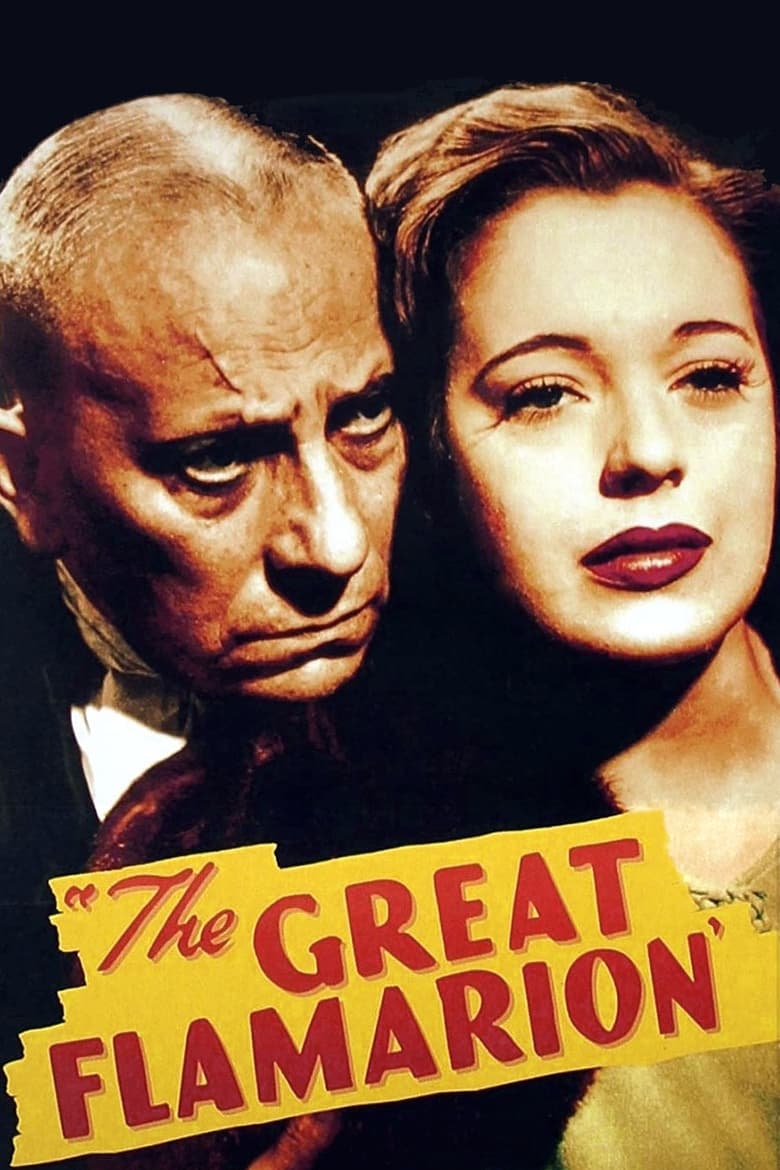
The Great Flamarion is a vaudeville marksman whose act depends on absolute control – he fires live rounds around his two stage partners, Al Wallace and Al's wife Connie, with mechanical precision. Flamarion is a cold, solitary man who has built his identity around the suppression of feeling, particularly toward women. When Connie begins paying him deliberate attention, something in that carefully maintained discipline begins to give way.
Connie is not what she appears. She is calculating and restless, bound to the dissolute, unreliable Al in a marriage she wants to escape. She reads Flamarion's vulnerability clearly and exploits it, drawing him into a conspiracy that serves her purposes rather than his. Al's drinking and erratic behavior provide the cover she needs, and Flamarion, blinded by an attachment he cannot name or govern, allows himself to become an instrument in another person's design.
Structured as a retrospective confession narrated by a dying man, the film belongs to a strand of noir preoccupied with men who believe themselves immune to sentiment and are destroyed by precisely that belief. Flamarion's expertise with firearms becomes an ironic counterpoint to his helplessness in human affairs, and the stage setting gives the story an atmosphere of performance and illusion that runs beneath every scene.
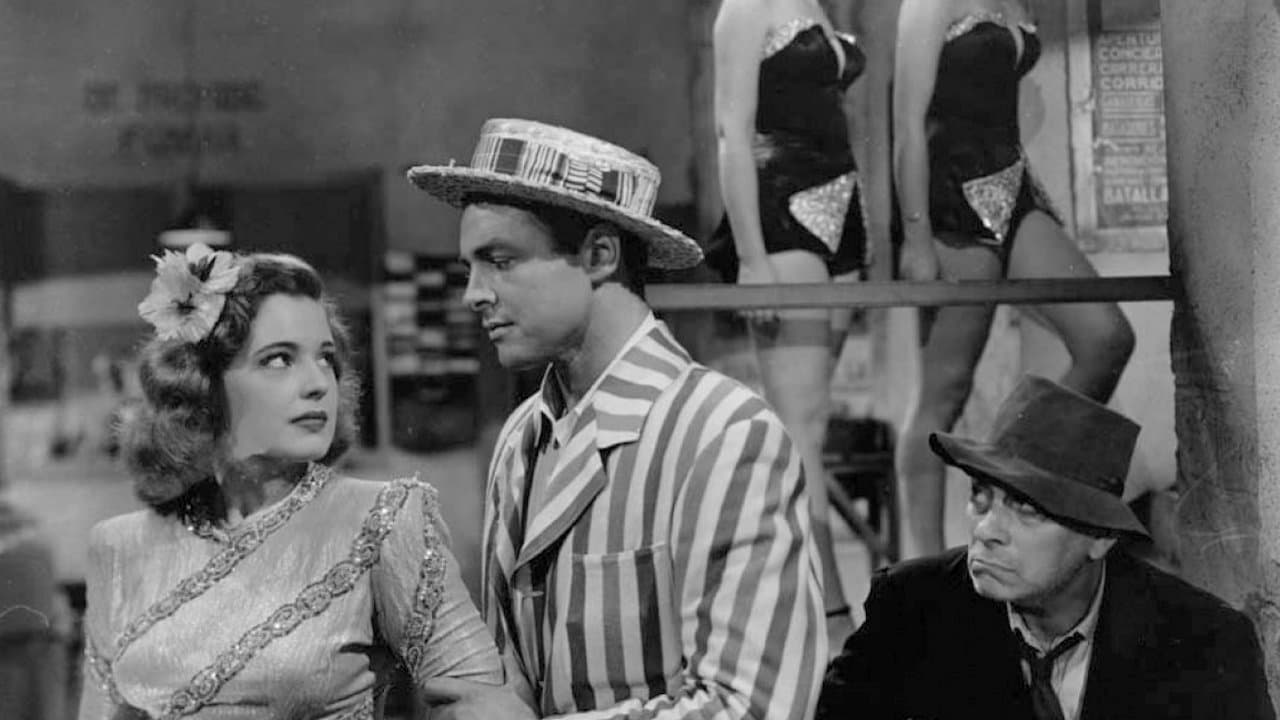
Great Flamarion is an early and instructive example of what Anthony Mann would refine over the following decade. Made for W. Lee Wilder's modestly scaled production company on a compressed budget, it lacks the visual authority Mann would develop with John Alton on the Republic pictures, yet it already demonstrates his interest in male rigidity as a psychological fault line. Erich von Stroheim carries the film through force of bearing alone – his Flamarion is not sympathetic but he is legible, a man whose entire self-conception depends on mastery and who is therefore constitutionally unable to recognize manipulation until it has finished its work. Mary Beth Hughes, often underestimated, gives Connie a mercenary clarity that makes the femme fatale function feel earned rather than formulaic. The flashback structure places the audience in the position of the already-condemned, and the vaudeville milieu introduces a layer of tawdry spectacle that quietly comments on the characters' performance of identity. As a document of noir's early formation, the film repays attention.
– Classic Noir
The camera holds close on Connie in the cramped backstage corridor, the key light angled sharply from one side so that half her face drops into shadow. James S. Brown Jr. keeps the composition tight, crowding the frame with the practical clutter of a working theatre – rope, canvas, the edge of a flat – so that Flamarion, when he enters, has nowhere to position himself at a comfortable distance. The shallow depth of field blurs the background into an undifferentiated dark, isolating the two figures in a space that feels improvised and therefore dangerous.
What the scene argues is that Flamarion's control is spatial as much as psychological – he manages risk by managing distance – and that Connie's method is simply to eliminate that distance. The moment his face enters the light, the same light that has been framing her, the transfer of power is already legible. The shot does not editorialize; it observes, which is what makes the transaction feel inexorable rather than melodramatic.
James S. Brown Jr. works within the constraints of a low-budget studio production to produce imagery that is functional and occasionally pointed. The lighting throughout favors hard sources and steep angles, consistent with the noir house style of the mid-1940s, but Brown applies them with some intelligence to the backstage and theatre settings, using the architecture of the performance space – wings, flies, the apron – to generate natural shadow patterns that serve the story's moral logic. The stage itself becomes a site of controlled illusion, and Brown's choices reinforce this: when characters are performing, the lighting is theatrical and legible; backstage, it fragments. Lens choices remain conventional for the period, with little distortion or expressionist exaggeration, which means the film earns its darker moments through composition and placement rather than optical effect. The result is not innovative cinematography but it is competent and occasionally more than that, particularly in the confined interior scenes where restriction becomes an asset.
The film is in the public domain and available in multiple transfers on Archive.org, making it the most immediately accessible option, though print quality varies by upload.
TubiFreeTubi has carried public domain noir titles from this period and likely hosts Great Flamarion, though availability should be confirmed at time of viewing.
KanopyFree with library cardKanopy occasionally carries restored or cleaned-up public domain prints through library partnerships, which may offer a more stable viewing experience than Archive.org uploads.