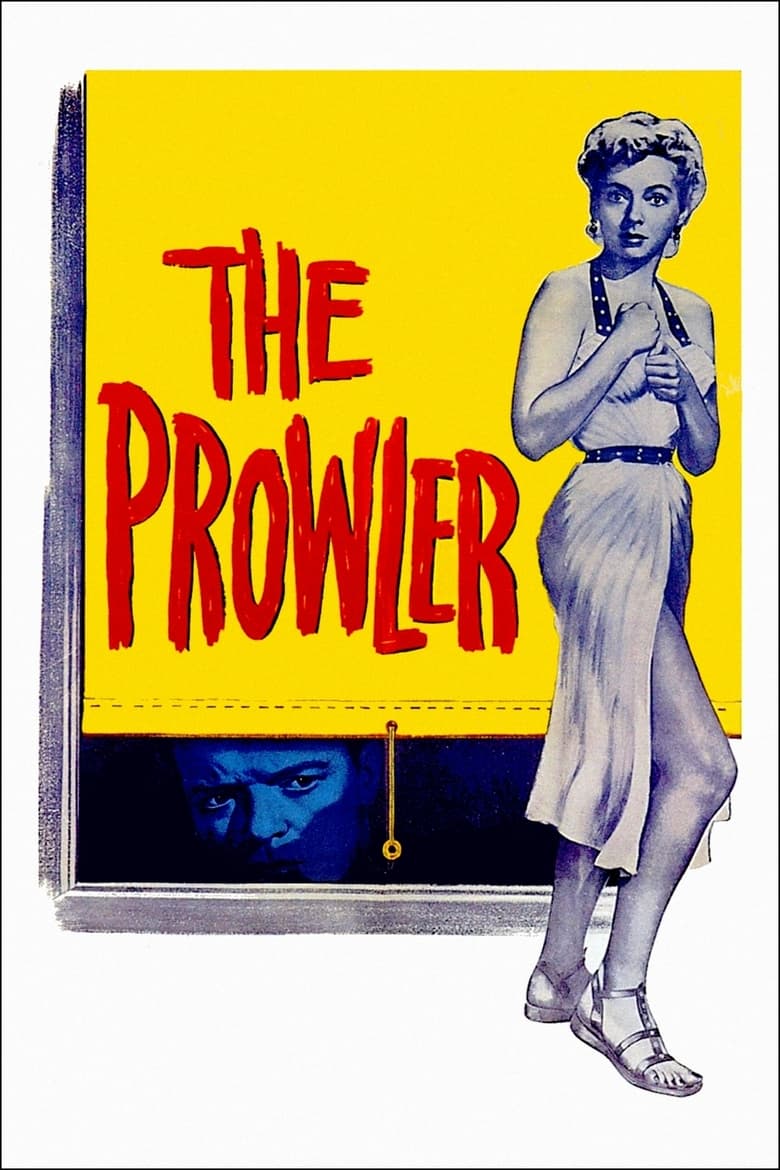
When a patrol car responds to a reported peeping tom in a quiet Los Angeles suburb, Officer Webb Garwood meets Susan Gilvray, a restless, unhappily married woman whose husband is a late-night radio personality. Garwood is handsome, calculating, and acutely aware of everything he does not have – money, status, a way out of the uniform. Susan is lonely in a particular American way, stranded in a comfortable house with a man she has stopped loving. The call should have been routine. For Garwood, it becomes an opening.
Garwood engineers a return visit and then another, and the two begin an affair conducted in the negative space of her husband's broadcast schedule. When he proposes marriage and Susan hesitates, Garwood's patience gives way to something colder. A late-night shooting – ruled justifiable homicide, Garwood the hero cop who killed an intruder – removes the obstacle. He and Susan marry quickly, and the plan that was never quite spoken aloud appears to have succeeded. But Susan is pregnant, the timeline is wrong, and the couple retreats to an abandoned Nevada ghost town to wait out the birth in hiding, far from questions neither of them wants answered.
The Prowler belongs to that strain of postwar American noir in which the crime is not passion but premeditation, and the true subject is class resentment wearing the costume of desire. Losey frames the American dream itself as the motive – Garwood does not want Susan so much as he wants what Susan represents. The film presses steadily toward a reckoning that has the quality of inevitability rather than surprise, and it earns that quality honestly.
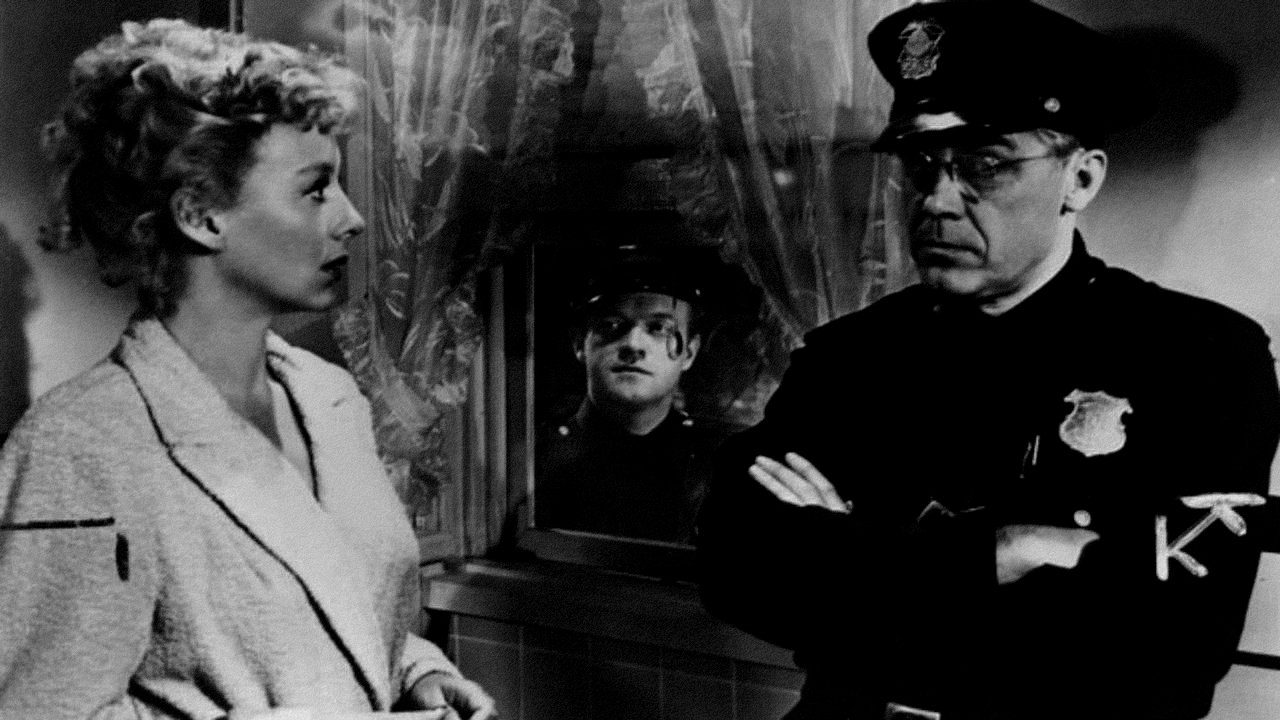
The Prowler arrives in 1951 as one of the period's most cold-eyed dissections of American ambition, and its reputation has grown steadily as its targets have come into sharper focus. Joseph Losey, working under the political pressures that would soon force him out of Hollywood entirely, directs Dalton Trumbo's screenplay – credited to Hugo Butler – with a precision that refuses sentiment. Van Heflin's Webb Garwood is not a romantic criminal; he is a study in competence deployed in the service of want. The film is unusual in its refusal to grant Garwood charisma as an alibi: we understand him without sympathizing with him, which is a harder thing to arrange. Evelyn Keyes brings a quality of damaged intelligence to Susan that keeps the film from becoming a simple predator-victim transaction. What Losey achieves is a picture about the machinery of aspiration in postwar America – the belief that the right move, made at the right moment, can purchase a life one was not born to. The ghost town finale gives that belief its proper setting: a place that tried and was abandoned.
– Classic Noir
Losey and Arthur C. Miller stage the film's climax in the ruins of Calico, the empty streets and roofless structures reducing the frame to geometry: pale walls, black sky, the hard cone of a flashlight or a car's headlamps cutting through absolute darkness. Miller does not soften the location. The ground is pale and flat, and Garwood moving through it casts no romantic shadow – the light is too direct, too indifferent. Compositions are wide enough to make the single figure look exposed, without cover, the architecture of fraud stripped to its literal shell.
The sequence makes the film's argument visually explicit. Garwood has spent ninety minutes constructing a life from scratch – the right woman, the right crime, the right story – and the ghost town is what that construction actually looks like when the window dressing is gone. The space around him is not threatening in a conventional noir sense; it is simply empty, which is worse. What the scene reveals is not guilt but vacancy, and that distinction is what separates The Prowler from the more morally consoling crime pictures of its era.
Arthur C. Miller – a three-time Academy Award winner whose credits run from How Green Was My Valley to Anna and the King of Siam – brings to The Prowler a controlled, unsentimental eye that suits Losey's purposes exactly. Miller works in tight registers of grey, avoiding the operatic shadow play of more expressionist noir in favor of a municipal flatness: the Gilvray house is well-lit in a way that reads as sterile, the patrol car interiors confined and slightly ugly, the Nevada exteriors bleached and exposed. Where shadows appear, they are functional rather than decorative – the venetian blind patterns that fall across Garwood in the early domestic scenes are less a visual flourish than a notation of surveillance and enclosure. Location shooting grounds the film in a recognizable Southern California landscape that makes Garwood's aspirations legible; this is not a dreamscape but a real place where real people measure themselves against a standard they did not set. Miller's lens choices keep the frames close to newsreel matter-of-factness, which is the correct register for a story about the ordinary machinery of murder.
The Criterion Channel streams a clean print and situates the film within broader noir and Losey retrospective programming, making it the preferred destination for serious viewing.
TubiFreeTubi has carried The Prowler in its classic noir library; picture quality varies, but the platform is free and requires no subscription.
Archive.orgFreeA public domain version is available on Archive.org, though transfer quality is inconsistent and this option is best treated as a fallback.