Films People Pull a Fast One Night Beat Reading Room On TV Shop
Undercover Man 1936
1936 Supreme Pictures
★★★☆☆ Notable
Film Noir · 57 minutes · Black & White

Undercover Man

Directed by Albert Ray
Year 1936
Runtime 57 min
Studio Supreme Pictures
TMDB 7.0 / 10
"A lawman rides into a town where the judge's daughter is the only honest thing left."

Steve McLain, an undercover operative, arrives in a small Western town where criminal influence has quietly hollowed out the local order. Ace Pringle runs his outfit from the shadows, and the town's institutions – its sheriff, its courthouse – have bent to accommodate him. McLain's assignment is to gather evidence, stay invisible, and avoid the kind of trouble that ends careers and lives.

McLain's cover begins to slip when he becomes entangled with Linda Forbes, daughter of Judge Forbes, a man whose integrity is either admirable or dangerously naive given what surrounds him. Pringle's enforcer Slim and the erratic Dizzy Slocum close in, and McLain finds that loyalty in this town is a commodity traded at whatever price the moment demands. The judge's position makes Linda both a liability and an unwitting asset in McLain's operation.

Undercover Man operates at the intersection of the Western and the nascent crime thriller, deploying familiar genre furniture – the corrupt syndicate, the compromised authority figure, the agent who must deceive everyone including those he means to protect – against a dusty frontier backdrop. The film belongs to a cycle of late-Depression programmers that dressed noir instincts in Western clothes, testing how far institutional corruption could be dramatized within the B-picture form.
Classic Noir

Undercover Man arrives in 1936 as a Supreme Pictures programmer that deserves more attention than its origins might suggest. Albert Ray, a director who worked almost exclusively in the Poverty Row economy, understood the constraints of the form and rarely wasted footage. The film situates its corruption narrative inside a small-town Western framework at a moment when Hollywood was beginning to work out that crime was not merely urban. The syndicate structure Pringle operates – diffuse, practical, indifferent to law – anticipates the organized-crime films that would dominate a decade later. Johnny Mack Brown brings a physical restraint to McLain that keeps the film from tipping into simple heroics; his undercover identity requires him to be readable as dangerous, which complicates audience sympathy in productive ways. For a 57-minute B-Western, Undercover Man demonstrates a coherent moral argument: that institutional legitimacy is always provisional, always dependent on somebody willing to act outside its protection.

– Classic Noir
3 ★★★☆☆ Notable
Credits

The Crew

DirectorAlbert Ray
ScreenplayAndrew Bennison
Performances

The Cast

Close Reading

The Signature Scene

Undercover Man – scene
The Jailhouse Confrontation Light Through Barred Glass

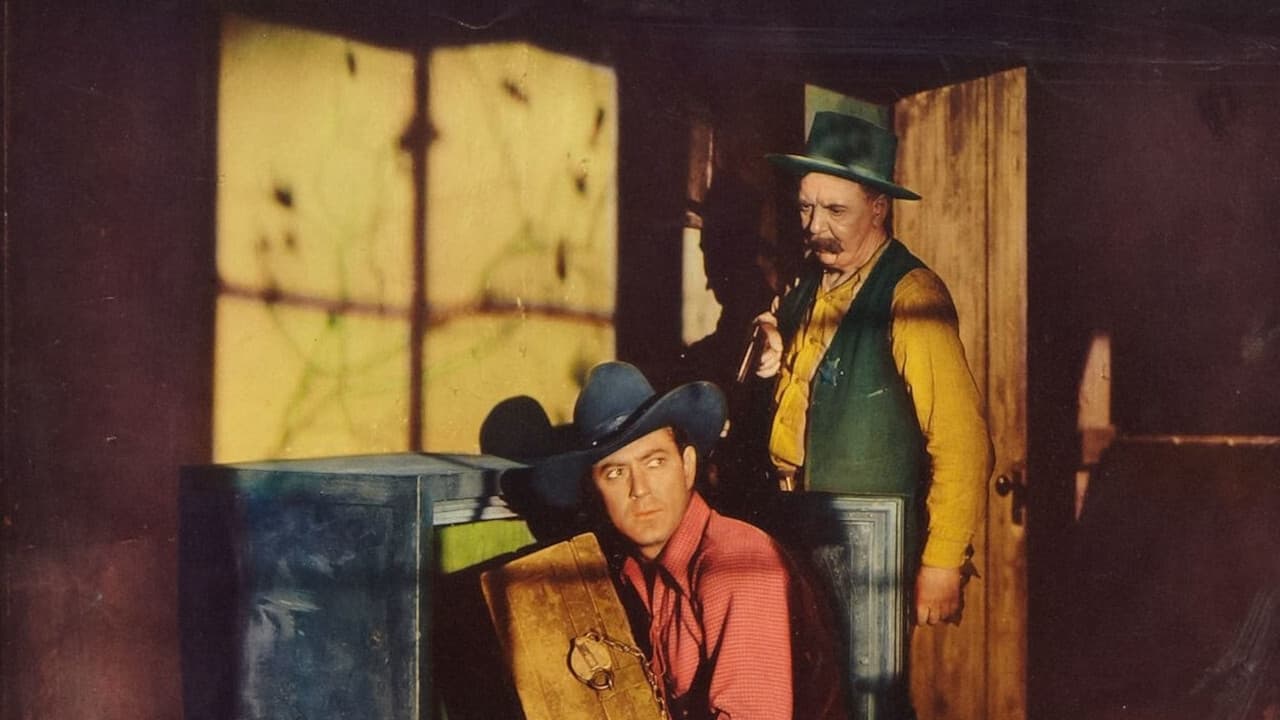
The camera holds at a medium distance as McLain faces Pringle's men inside the jailhouse anteroom. What light exists enters through a small barred window set high in the wall, casting a ladder of shadows across the floor and the lower halves of the men in frame. The composition places McLain slightly off-center, with empty space to his left suggesting vulnerability rather than confidence. The shadow bars fall across faces rather than bodies, implicating everyone in the room in the film's central argument about confinement.

The scene makes visible what the screenplay can only imply: that the law's physical architecture – its cells, its windows, its locks – offers no reliable protection for the man operating inside it without sanction. McLain is neither prisoner nor free agent in this space, and the divided light says so plainly. His position within the frame, caught between the door and the bars, is the film's clearest statement about the undercover condition.

Visual Language

The Cinematography

🎞️
Director of Photography – Director of Photography

The cinematographer on Undercover Man is not documented in surviving production records, a common condition for Supreme Pictures releases of this period where crew credits were irregularly preserved. What the film demonstrates, regardless of attribution, is a working knowledge of low-key lighting applied to confined interiors. The jailhouse and office sequences favor single-source setups that leave significant portions of the frame unlit, a practical choice that carries genuine moral weight. Location exteriors – street fronts, a corral approach, a road approach at dusk – are shot with the flat, functional clarity typical of Poverty Row Westerns, but the interior work shows more deliberate shadow construction. The contrast between the open-sky exterior grammar and the enclosed, shadow-defined interior grammar tracks the film's argument about where danger actually lives: not in open country but in rooms where alliances are made and broken. The lens choices are conservative, prioritizing legibility, but the lighting decisions within those framings are consistently purposeful.

In the Catalogue

Themes & Motifs

Availability

Where to Watch

Also in the Directory

See Also