Films People Pull a Fast One Night Beat Reading Room On TV Shop
Born to be Bad 1950
1950 RKO Radio Pictures
★★★☆☆ Notable
Film Noir · 94 minutes · Black & White

Born to be Bad

Directed by Nicholas Ray
Year 1950
Runtime 94 min
Studio RKO Radio Pictures
TMDB 6.0 / 10
"A woman without conscience moves through a world of men who should know better."

Christabel Caine arrives in San Francisco with modest circumstances and immodest ambitions. She moves into the household of her wealthy Aunt Clara, where she meets Donna, a warm and trusting young woman engaged to Curtis Carey, a successful publisher. Christabel studies the situation with the patience of a surveyor and begins positioning herself accordingly, drawing Curtis's attention while accepting the mentorship of Nick Bradley, a cynical novelist who sees through her almost immediately – and is drawn to her anyway.

Christabel engineers a relationship with Curtis, displacing Donna with calculated grace rather than overt cruelty. She marries into wealth and social standing, but the arrangement satisfies only her material instincts. Nick remains a complication she cannot fully dismiss: he knows what she is, articulates it to her face, and the honesty becomes its own form of attraction. Meanwhile Gobby, a painter who has observed Christabel since before her ascent, carries feelings she will use when convenient and discard when they are not.

Born to Be Bad belongs to a minor but coherent cycle of postwar noir in which the femme fatale operates not through violence or criminal conspiracy but through social manipulation – the drawing room as crime scene. The film is less interested in punishment than in anatomy, tracing how a particular kind of self-interest moves through respectable society with minimal resistance, and what that reveals about the men and institutions that fail to resist it.
Classic Noir

Nicholas Ray directing a Joan Fontaine vehicle is a pairing that produces tension between form and content, and that tension is part of what makes Born to Be Bad worth returning to. Ray was constitutionally drawn to characters living at an angle to the social arrangements around them, and Christabel is exactly that – a woman who has understood the rules well enough to exploit them while observing their surface forms. Fontaine, whose screen persona was built on vulnerability and victimhood going back to Rebecca, inverts that persona here without entirely abandoning it; Christabel retains a quality of apparent innocence that is itself the instrument of her manipulation. Robert Ryan, cast as the novelist who names her game, brings the film's most honest intelligence: his Nick is neither heroic nor ruined, simply lucid in ways the narrative cannot fully reward. The film sits within RKO's postwar noir output as a social-register variant – less violent than Crossfire, less expressionist than the studio's harder crime pictures – but it documents with some precision the specific anxieties of a postwar moment in which upward mobility and moral legibility had come apart.

– Classic Noir
3 ★★★☆☆ Notable
Credits

The Crew

DirectorNicholas Ray
ScreenplayEdith R. Sommer
CinematographyNicholas Musuraca
MusicFriedrich Hollaender
EditingFrederic Knudtson
Art DirectionAlbert S. D'Agostino
CostumesHattie Carnegie
ProducerRobert Sparks
Performances

The Cast

Close Reading

The Signature Scene

Born to be Bad – scene
The Library Confrontation Nick Names What She Is

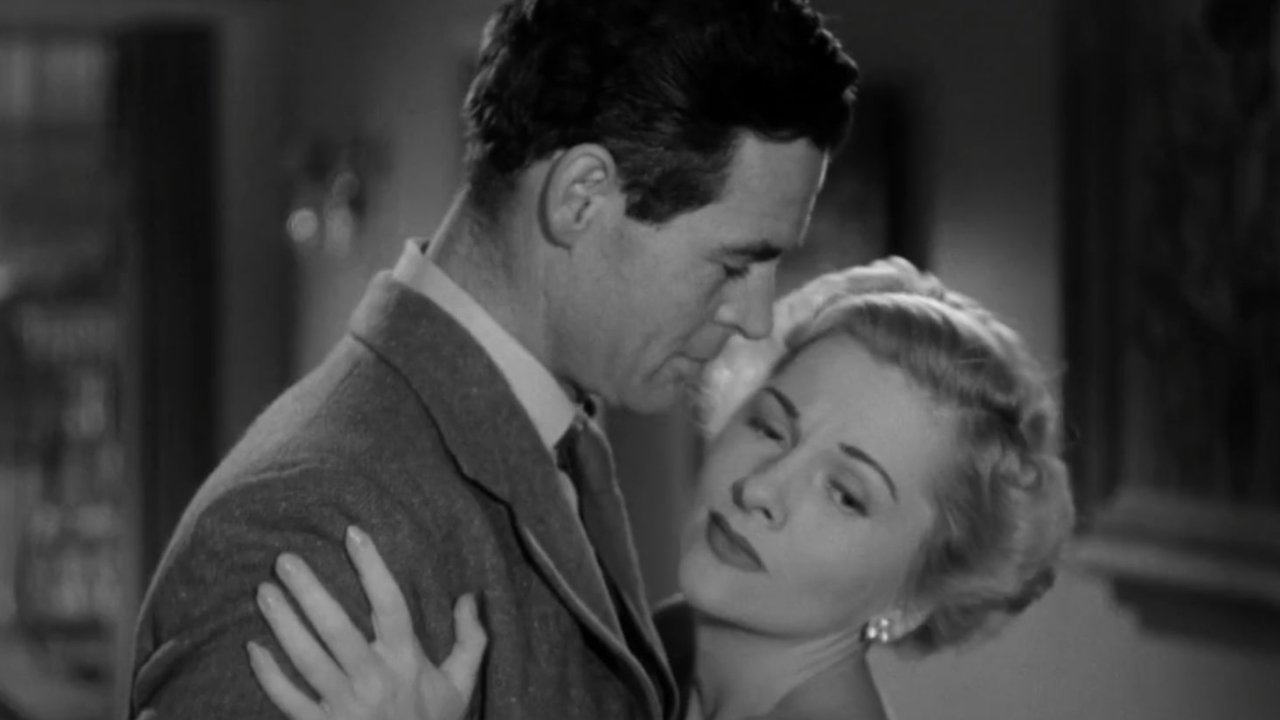
The scene is staged in a domestic interior, bookshelves filling the background as a token of the cultivated world Christabel has entered. Musuraca places the key light at a slight angle to Fontaine's face, leaving one cheek in shadow without tipping the image into full expressionist darkness – the effect is unease rather than menace, a world still recognizable as respectable. The camera holds in medium two-shot for much of the exchange, denying either character the isolation of a close-up until the moment Nick speaks his diagnosis plainly. Then a cut to Fontaine's face: still, faintly amused, neither denying nor confirming.

The scene carries the film's central argument in miniature. Nick's analysis is correct and useless; naming the thing does not neutralize it. Christabel's stillness in response is not exposure but confirmation of her method – she absorbs observation without reaction because observation has no leverage over someone who feels no shame. The film here acknowledges that moral clarity in a single character does not constitute a corrective force, which is a more honest position than most Hollywood product of the period was willing to occupy.

Visual Language

The Cinematography

🎞️
Nicholas Musuraca – Director of Photography

Nicholas Musuraca, whose shadow work on Cat People and Out of the Past had helped define RKO noir's visual grammar, applies a restrained version of his toolkit to Born to Be Bad. The film is shot almost entirely on studio sets, and Musuraca uses that control to maintain a consistent tonal temperature – interiors that feel prosperous and slightly airless, light sources that motivate naturally but are arranged to keep faces in partial revelation. He avoids the steep chiaroscuro appropriate to street-level crime pictures; Christabel's world is well-lit by social convention, and the unease has to be carried in composition and in the way figures relate to their surroundings rather than in outright shadow. Deep-focus staging in the larger domestic scenes keeps secondary characters in legible relation to the principals, allowing Ray to conduct ensemble observation even in scenes nominally focused on one character. The result is a cinematographic approach that serves the film's argument: evil that operates in respectable daylight requires a different visual register than evil that operates in the dark.

In the Catalogue

Themes & Motifs

Availability

Where to Watch

Also in the Directory

See Also