Jim Austin is the editor of a modest newspaper in Kennington, a mid-sized American city that prefers its peace undisturbed. When a local private investigator named Nelson is found dead under circumstances the police are quick to dismiss, Austin begins pulling at a thread that connects the death to an illegal gambling operation protected by respectable men – men Austin knows by name. His wife Marge watches the investigation gather momentum with a dread she cannot quite articulate, sensing that the machinery of the town is designed to outlast any one man's conscience.
As Austin presses further, the resistance he encounters is not the open hostility of gangsters but something quieter and more corrosive: the indifference of officials, the calculated silence of neighbors, the gentle suggestions from people he trusts that some stories cost more than they are worth. Police chief Gillette is neither a villain nor an ally but an institution unto himself, and Murray Sirak's widow sits at the edge of the frame as a figure who knows precisely what happened and understands equally well the price of saying so. The syndicate operates not through violence alone but through the town's own appetite for normalcy.
Captive City belongs to a small but coherent cycle of early-1950s noir that turned the camera away from the city waterfront and toward the courthouse square – films that found corruption not in the shadows of back alleys but in the fluorescent light of civic life. Wise structures the film as a chase narrative that doubles as a civic argument, bracketing his story with actual Senate testimony to anchor the fiction in documented fact. The thriller mechanics serve a documentary impulse, and the result is a film less interested in suspense than in the precise anatomy of institutional failure.
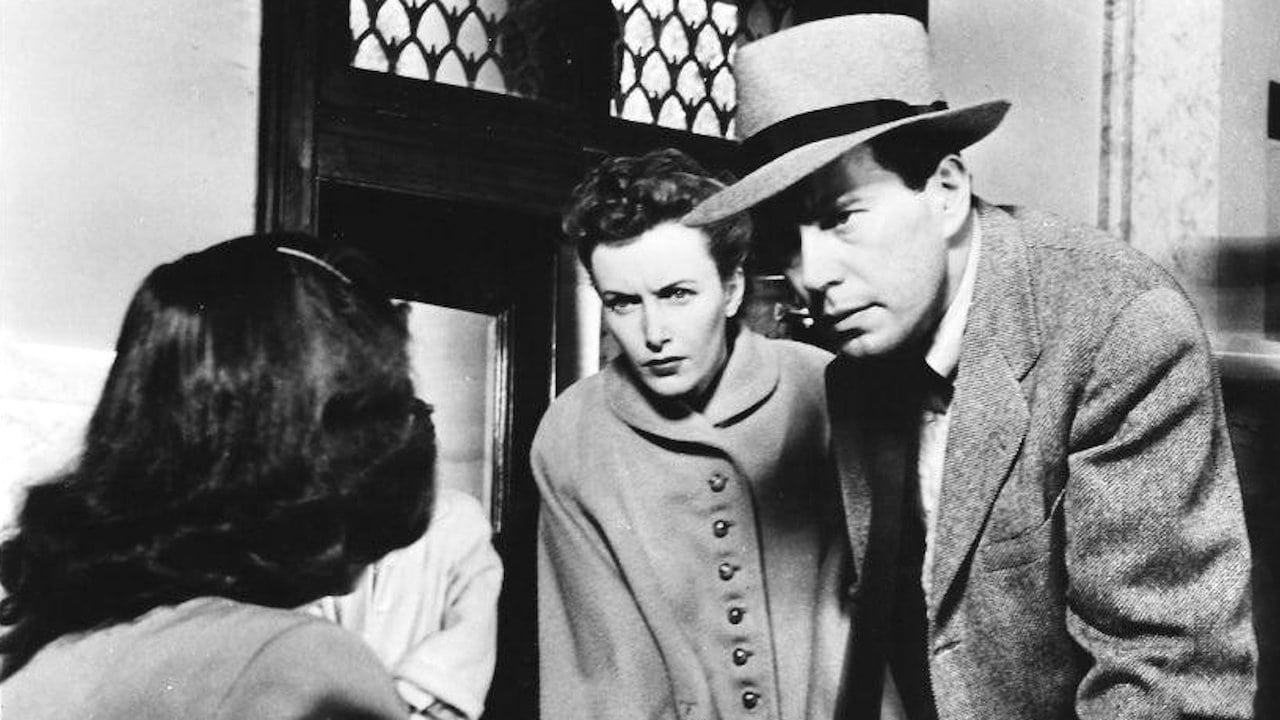
Robert Wise made Captive City the year before he delivered The Desert Rats and two years before Executive Suite, and the film reflects a director consolidating a style built on efficiency and moral seriousness rather than visual flourish. The picture's most significant context is the Kefauver Committee hearings of 1950–51, which exposed organized crime's penetration of American municipal government and generated genuine public alarm. Wise uses Kefauver's actual televised testimony as a framing device, lending the fiction the gravity of a civic document. What distinguishes the film within the corruption-exposure cycle is its focus on the mechanisms of complicity rather than the biography of villainy: the syndicate's hold on Kennington depends not on fear alone but on the collective preference of ordinary people for an undisturbed life. Lee Garmes brings a restrained precision to the location-inflected photography that keeps the film from tipping into sensationalism. Jerome Moross's score is disciplined where a lesser production would underscore every revelation. The film does not reach the psychological density of the best noir, but it performs its civic argument with care and without condescension.
– Classic Noir
Garmes lights the scene with a single dominant source angled from above and to the left, casting the desk in a pool of working light while the edges of the room dissolve into a gray that neither threatens nor reassures. Wise keeps the camera at desk level, so that the stacks of paper and the telephone occupy the foreground and Austin's face is partially obscured by the apparatus of his own profession. The composition places bureaucratic objects between the audience and the man, and when Austin finally looks up, the slight reframing required to find his eyes carries a small but precise weight.
The scene establishes something the film will return to: that the instruments of accountability – the press, the telephone, the filed report – are inert without the will to use them, and that will is exactly what Kennington has quietly surrendered. Austin's isolation here is not melodramatic; it is administrative. The city is not threatening him in this moment. It is simply not answering, and the silence of an office at the end of a working day becomes the film's central image of civic abdication.
Lee Garmes, whose career stretched from Josef von Sternberg's Shanghai Express to Hawks's Scarface, brings to Captive City a discipline that matches the film's argumentative rather than atmospheric intentions. Shooting partly on location in Reno and partly on controlled studio sets, Garmes avoids the expressionist shadow work that defines the more stylized end of the noir spectrum and opts instead for a high-contrast realism in which ordinary spaces – a diner, a newsroom, a residential street at dusk – become quietly hostile through the control of available-source lighting and careful lens placement. The depth of field is consistently managed so that background figures remain legible, a choice that reinforces the film's thesis that guilt is distributed across a visible community rather than concentrated in a single dark figure. There are no camera movements deployed for emotional underscoring; Garmes and Wise reserve motion for narrative information, and the restraint gives the film a procedural credibility that its more expressionistic contemporaries trade away for atmosphere.
Tubi has carried Captive City in a watchable transfer and remains the most accessible free option for casual discovery.
Archive.orgFreeA public domain print is available for streaming and download, though picture quality varies across uploads.
KanopyFree via LibraryAvailable through participating library systems; confirm availability with your local library card before searching.